
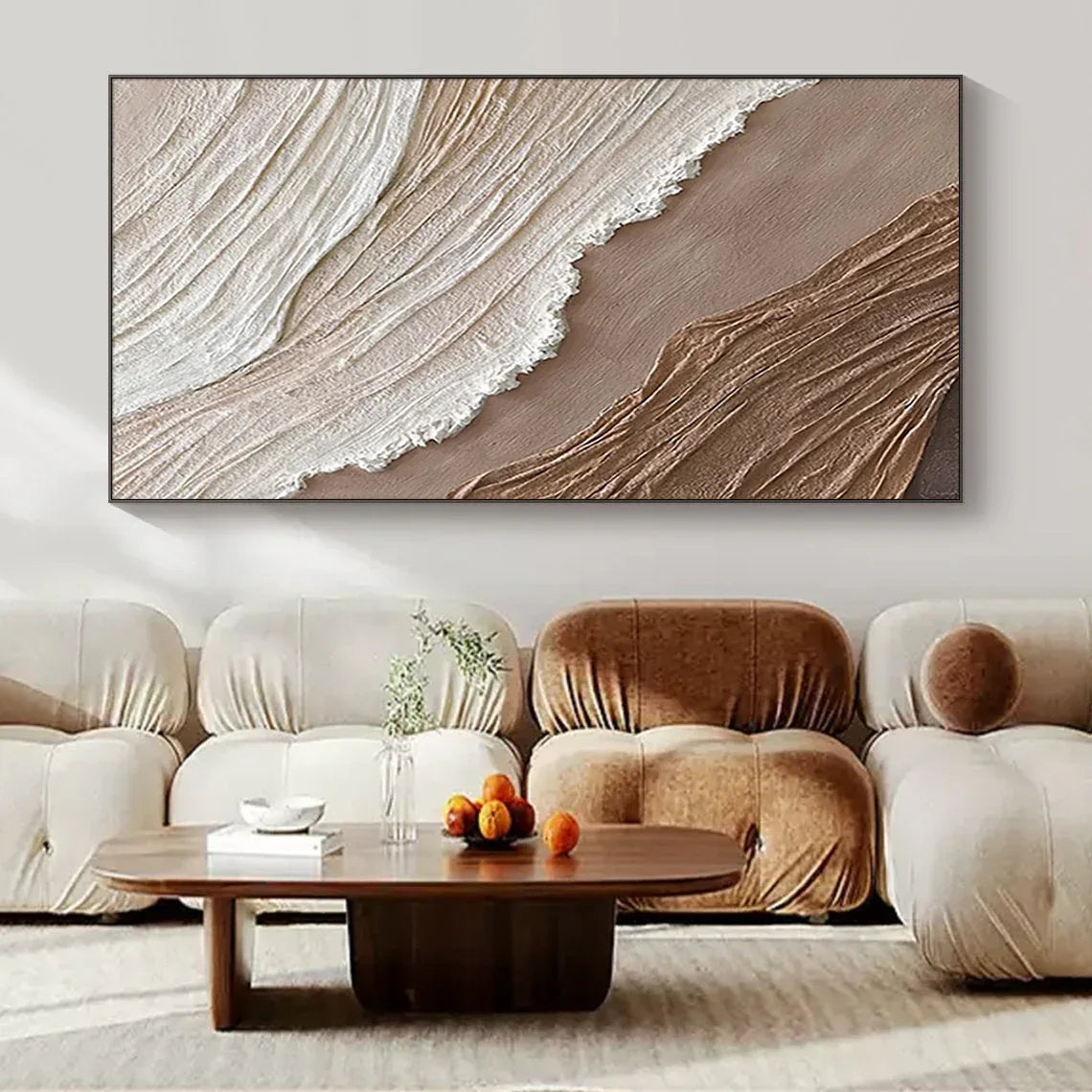
Earthly Harmony Abstract Art represents more than decoration—it embodies nature’s balance through texture, form, and subtle color movement. Minimalist abstract sand wave texture oil paintings combine organic earth tones, soft relief surfaces, and calm composition to create a meditative focus. They bring tranquility and natural beauty into spaces designed for mindfulness, inviting viewers to reconnect with tactile simplicity and visual harmony.
The Essence of Earthly Harmony in Modern Design
In minimalist interior design, harmony means achieving balance between nature and space. Earthly Harmony art captures the quiet rhythm of sand, waves, and wind using oil paint layered on textured surfaces. The earthy palette enhances the connection between visual art and the natural environment. Designers and collectors favor this genre for its grounding energy—each painting mimics the calm motion of coastal sand dunes or ocean tides, infusing serenity into modern living and working spaces.
The Rise of Minimalist Textured Wall Art
Global interior design trends show a clear shift toward natural-inspired wall art, emphasizing texture over detailed imagery. Sand wave oil paintings are particularly valued for their multi-dimensional surfaces that change with light throughout the day. Through plaster layers, mineral pigments, and oil mediums, artists recreate topographical impressions that evoke earth’s subtle movements. This approach not only enriches visual experience but also aligns with wellness-oriented décor, turning every wall into a sensory landscape.
Market Trends and Data on Abstract Wall Decor
According to design market analysis, textured neutral artworks are among the fastest-growing segments in luxury décor, showing increasing adoption in residential, hospitality, and office environments. Minimalist abstract textures offer flexibility—they pair with Scandinavian, Japandi, and Mediterranean styles while providing timeless visual depth. Collectors now prioritize artworks that translate tactile authenticity into quiet, contemplative beauty, making minimalist sand wave oil paintings a must-have for curated modern interiors.
At Artextured, we believe art should do more than decorate—it should transform spaces and inspire experiences. Founded in Xiamen, our collective unites contemporary artists and advanced material designers to craft pieces that combine refined texture, acoustic performance, and timeless appeal. Each artwork expresses our vision of merging visual artistry with subtle sensory presence—transforming ordinary walls into spaces of harmony and reflection.
Core Techniques Behind Sand Wave Texture Oil Painting
Artists use layering techniques such as impasto, dune molding, and sand texturing to mimic natural wave formations. The surface is sculpted before oil pigments are applied, resulting in gentle tonal shifts across ridged textures. Once dried, the piece exudes organic fluidity—each ridge reflects light differently, producing depth that moves as daylight changes. This hand-textured craftsmanship makes every Earthly Harmony painting distinctive and immersive.
Comparison: Earthly Abstract vs. Contemporary Minimalism
Real User Experiences and Artistic ROI
Interior designers report higher engagement and satisfaction when textured sand wave paintings are used in lobbies, studios, or tranquil home settings. Beyond their beauty, these pieces create measurable emotional effects—viewers experience reduced stress and improved focus. Collectors note long-term value as well, since the enduring materials and neutral aesthetic ensure relevance across evolving design eras. The tactile appeal and timeless tone palette enhance both well-being and investment potential.
Future Trend Forecast: The Era of Textured Serenity
The next evolution in minimal abstract wall art focuses on multisensory design. Expect greater use of sustainable materials like natural sand, eco-resins, and organic oils to emphasize environmental consciousness. Textured artworks will integrate more functional benefits such as sound diffusion and thermal moderation, turning aesthetics into experience. Earthly Harmony art stands at the crossroads of art and architecture—soft waves, layered motion, and earthy rhythm creating harmony between people and the spaces they inhabit.
FAQS
What makes Earthly Harmony Abstract Art unique?
Its foundation lies in natural balance, merging earthy textures and fluid abstraction to create a tranquil, immersive effect.
How are sand wave texture oil paintings crafted?
Artists blend oil pigments with sand and plaster layers to hand-shape wave-like reliefs that echo the movement of earth and water.
Why is minimalist textured art trending in interior design?
Because it reflects today’s desire for calm, sustainable aesthetics that offer depth without distraction and transform rooms into contemplative environments.
Where should Earthly Harmony Art be displayed?
It complements living rooms, luxury hotels, and wellness studios—adding elegance through neutral tones and natural patterns.
The Emotional Power of Earthly Harmony
The calm flow of a sand wave texture painting speaks through silence. Earthly Harmony Abstract Art restores the viewer’s connection to nature with simplicity and grace. Its tactile surfaces, oil depth, and minimalist movement invite introspection—a perfect symbol of balance in contemporary life. When form meets feeling, and earth meets imagination, harmony is not just seen—it’s felt in every layered contour and quiet shade.