
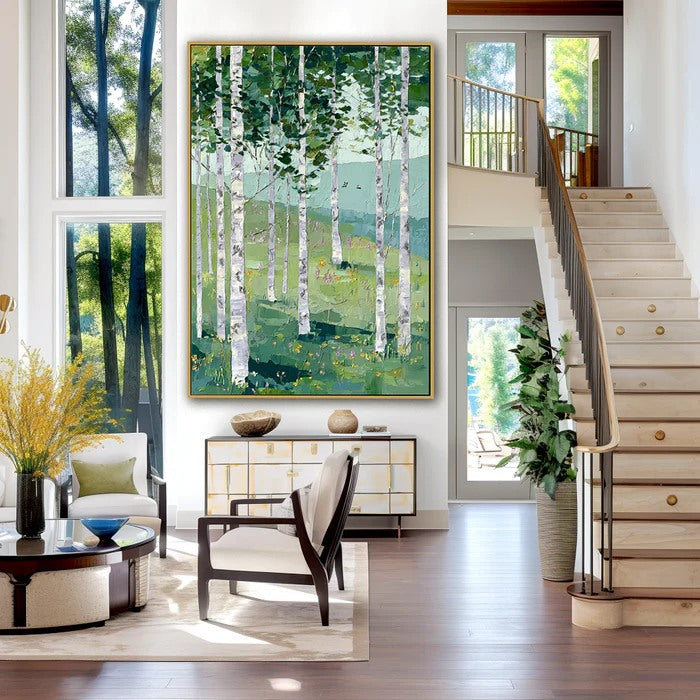
Floral oil painting in 2026 has entered a new era defined by color sophistication, sensory depth, and emotional storytelling. Artists around the world are redefining traditional palette choices, moving from minimalist neutrals toward bold, layered hues inspired by both nature and digital culture. The signature tones leading this evolution—sage green and metallic gold—symbolize serenity and opulence, creating a dialogue between organic calmness and modern luxury that resonates deeply in contemporary art markets.
check:Tree/Flowers Oil Painting
Emerging Market Trends and Data
According to recent data from global art market analyses in early 2026, color-driven trends now influence nearly 60% of consumer purchase decisions for hand-painted artwork. Paintings with balanced contrast and tactile finishes, particularly those featuring botanical motifs, perform exceptionally well in interior design markets. Collectors are seeking pieces that integrate sustainable pigments and tactile impasto techniques, signaling a definitive shift toward long-lasting visual value.
At Artextured, we believe art should do more than decorate—it should transform spaces and inspire experiences. Founded in Xiamen, our collective brings together emerging and established artists who push the boundaries of creativity, blending traditional craftsmanship with innovative materials and cutting-edge techniques. This fusion aligns perfectly with the 2026 color narrative, where texture and tone unite to redefine aesthetic harmony.
Core Color Narratives and Painting Techniques
Sage green dominates interior aesthetics this year for its calming and adaptable versatility. It aligns with the wellness movement, offering a grounding visual presence that enhances mindfulness and biophilic spaces. Metallic gold, by contrast, injects warmth and reflective light into environments, complementing contemporary interiors that value understated grandeur over flamboyance.
Painters increasingly use palette knives, soft glazing, and dry brushing to express complex tonal layers. The interplay between matte greens and gleaming metallics creates a sensory rhythm that feels alive under shifting daylight. Artists are infusing micro-textures of silver ochre, soft moss, and rose-tinted highlights to amplify dimension and emotional resonance.
Competitor Comparison Matrix
Top Artistic Materials and Innovations
In 2026, eco-friendly oil mediums, plant-based varnishes, and recycled canvas fabrics are rapidly gaining adoption. The innovation lies not just in pigment chemistry but in sustainability and sensory appeal. Premium oil paints now feature ultra-fine metallic flake suspension, producing shimmering effects without compromising archival stability. The rise of AI-assisted palette mapping tools also allows artists to experiment with real-time hue forecasting, ensuring each composition aligns with evolving market preferences.
Real User Cases and Artistic ROI
Art studios and interior designers report measurable ROI improvements when integrating color-trend-aligned floral oil paintings into commercial and residential projects. For hotel lobbies and boutique offices, wall art featuring sage-green florals has increased client retention and ambient satisfaction scores. Private collectors describe gold-hued florals as “emotional anchors”—luxurious yet grounding, capturing both nostalgia and innovation.
Future Trend Forecast for 2026–2027
Looking ahead, the convergence of biophilic impulses with metallized pigments will continue to shape floral art. Expect more experimentation with translucent layering, iridescent varnishes, and mood-responsive lighting interactions. Soft pastels such as eucalyptus green or lilac frost will emerge as bridging tones between cool and warm palettes, while bold gilding will appear not only in abstract petals but also in textural backgrounds.
As sustainable creativity becomes intrinsic to luxury markets, artists are expected to integrate upcycled materials and experimental metallic blends that maintain visual softness. The union of natural greens and metallic radiance represents a new visual language in painting—one that celebrates both ecological awareness and timeless elegance.
Relevant FAQs
What makes sage green and metallic gold significant in 2026 floral paintings?
These colors embody balance—combining the earthy calm of nature with the reflective depth of luxury design, aligning with modern wellness and sophistication.
How do painters achieve metallic effects in oil media?
Artists use pearlized pigments, metallic flakes, or specially formulated varnishes that capture and refract light while preserving the texture of traditional oil paint.
Why are sustainable materials important for future oil painting trends?
Collectors increasingly value artworks created with environmentally conscious techniques. Eco-friendly paints and recycled canvases ensure longevity while reducing environmental impact.
Which interior spaces benefit most from these color palettes?
Spa environments, minimalist homes, and hospitality venues favor sage-based art for serenity, while gold-infused paintings fit well in statement settings that demand visual warmth.
Conversion and Closing Impression
For art collectors, interior designers, and creative professionals, 2026 is the year to embrace chromatic evolution. Investing in floral oil paintings that merge sage tranquility with gold luminosity means bringing a piece of the future into today’s interiors. This color synergy isn’t just a design choice—it’s a declaration of aesthetic progress.