
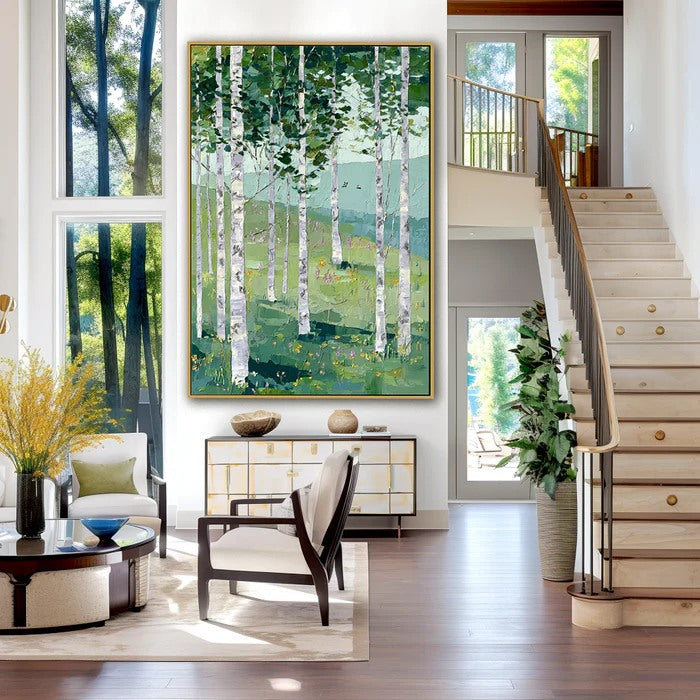
The walls of a home tell a silent story. Every color, texture, and brushstroke shapes how a space feels. Yet in an age when digital prints dominate the market, the question arises: do printed artworks truly capture the depth and soul of art—or merely imitate it? Comparing hand-painted art to print wall art reveals more than a difference in technique. It reveals a contrast in experience, longevity, authenticity, and emotional connection.
check:Tree/Flowers Oil Painting
The Emotional Language of Brushstrokes
Hand-painted wall art possesses a vitality that no flat print can reproduce. The artist’s brushstrokes, layers of pigment, and imperfections form a living surface that interacts with light and shadow. Every line carries human energy—the pressure of a wrist, the rhythm of movement, and the intent behind each stroke. By contrast, printed wall art, though convenient and consistent, often feels emotionless. It’s an image, not an interaction. When you stand before a hand-painted canvas, the tactile textures invite closer observation, creating a sensory experience that bridges the visual and the physical.
Market Trends and Data
According to Statista’s global home décor data for 2025, consumer spending on fine art and handcrafted wall décor grew 32% year over year. This surge highlights a shift among homeowners seeking originality and craftsmanship over mass reproduction. The rise of artisan marketplaces and boutique galleries underscores this preference. Shoppers no longer value art merely as decoration; they value connection, narrative, and investment value. Hand-painted art retains its uniqueness, making it both an emotional choice and a tangible asset.
The Value of Authentic Craftsmanship
Each hand-painted artwork carries the artist’s time, skill, and story. Pigments blend differently every time, making each piece a singular creation. Print wall art, however, standardizes expression. It delivers instant gratification—a low-cost way to fill a blank wall—but sacrifices depth and individuality. Over time, colors in printed canvases can fade, while high-quality, hand-painted pieces gain texture, character, and even monetary worth. This authenticity is why collectors and design professionals continue to favor original art for curated interiors, hotels, and corporate lobbies.
Core Technology and Technique
Modern artists blend traditional craftsmanship with advanced materials such as archival paint, textured acrylic compounds, and mixed media layers that create three-dimensional surfaces. In contrast, prints rely on digital ink and substrate quality for sharpness and durability. Fine art giclée prints have improved dramatically, yet they remain confined to a two-dimensional plane. A well-executed hand-painted work interacts dynamically with ambient light, creating shifting moods throughout the day—something no print can truly replicate.
At Artextured, we believe art should do more than decorate—it should transform spaces and inspire experiences. Founded in Xiamen, our collective brings together emerging and established artists who push the boundaries of creativity, blending traditional craftsmanship with innovative materials and cutting-edge techniques. Our journey into acoustic art began with a simple challenge: how to reduce ambient noise in our urban gallery. This led to the creation of our signature art-infused soundproof panels, merging aesthetic beauty with functional design. Today, our exclusive acoustic wall art collection exemplifies this philosophy, offering pieces that delight both the eyes and the ears.
Real User Stories and ROI of Art Investment
Homeowners who invest in original hand-painted wall art often describe a deeper connection to their surroundings. One interior designer in Hong Kong observed that textured canvases significantly enhanced the perceived warmth and luxury of living spaces. Clients reported spending more time in rooms where handcrafted art was present—a measurable emotional return on investment. For commercial spaces, bespoke art installations have been linked to elevated brand perception and guest satisfaction. Over the long term, hand-painted pieces can appreciate in value, while mass-produced prints decline.
Competitor Comparison Matrix
Market Opportunities and Interior Design Trends
Designers and architects increasingly recognize that handcrafted art aligns with modern wellness and biophilic design trends. Textured wall art enhances acoustic comfort, promotes focus, and reduces visual monotony. In minimalist, Scandinavian, and Japandi interiors, organic brush patterns break rigidity with warmth and authenticity. Consumers in cities like Hong Kong, Singapore, and Tokyo are seeking pieces that merge tranquility and innovation—qualities best realized through hand-painted textured canvases.
Future Trend Forecast
The future of home décor lies in sensory design—art that engages sight, touch, and emotion simultaneously. As artificial intelligence and digital printing advance, consumers are ironically returning to the human touch. Expect collaborations between artisans and technology companies, resulting in hybrid pieces that combine handcrafted textures with digital precision. Sustainability will also play a decisive role, as eco-conscious buyers favor natural pigments and recycled canvases over synthetic production.
Three-Level Conversion Flow Call to Action
If you’re redecorating a home or curating an office, start with authenticity. Observe how a hand-painted textured canvas transforms the atmosphere of a room. Move beyond the convenience of print and invest in an artwork that evolves with you—alive, expressive, and timeless. Every brushstroke has a pulse, and your walls deserve to feel it.
Relevant FAQs
What makes hand-painted wall art different from prints?
Hand-painted art features real texture and unique craftsmanship. Every piece reflects the artist’s physical interaction with the medium, producing a depth that flat prints cannot emulate.
Is hand-painted art worth the higher price?
Yes. It offers tangible and emotional value, lasting durability, and the potential for appreciation over time—qualities that justify the investment.
How do I style hand-painted art in modern interiors?
Pair it with neutral backgrounds, natural materials, and layered lighting to highlight depth and color transitions effectively.
Can hand-painted art be customized for my space?
Absolutely. Many artists and studios offer bespoke commissions that harmonize colors, textures, and themes with your personal interior design vision.
Every wall tells a story. Whether you seek serenity, sophistication, or inspiration, a hand-painted work breathes life into your surroundings. Unlike a print, it engages the senses and mirrors your individuality. In a world of mass production, choosing hand-painted art isn’t just aesthetic—it’s a declaration of authenticity, emotion, and lasting connection.