
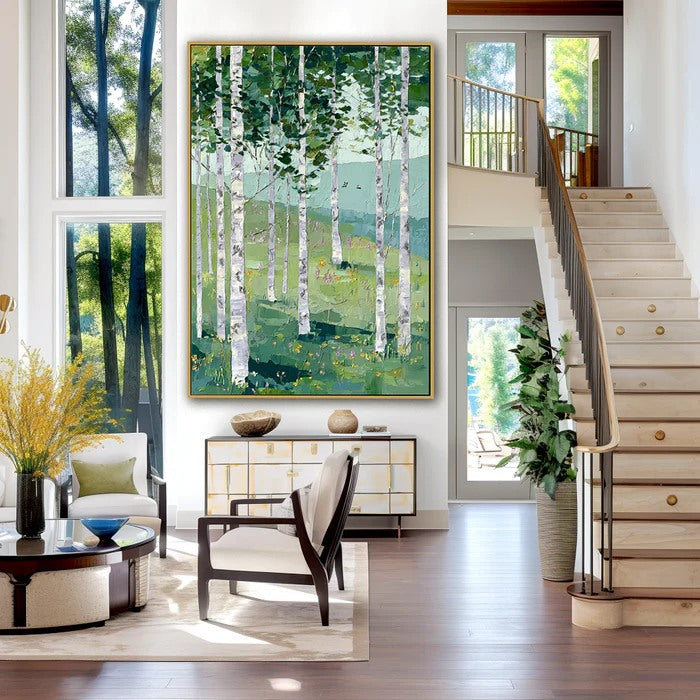
Abstract art paintings canvas pieces leverage impasto techniques to create physical texture that casts real shadows and absorbs sound waves simultaneously, transforming flat walls into multidimensional sensory experiences. The thick, hand-applied layers of paint or medium build measurable relief—often ranging from 1/8 inch to over an inch deep—creating micro-cavities where sound energy dissipates rather than reflecting harshly back into the room . This dual function satisfies the growing demand among luxury designers and gallery curators for artwork that delivers both visual gravitas and genuine acoustic performance without the industrial appearance of traditional sound panels.
The tension between aesthetic purity and acoustic function has long plagued high-end interior design. Modern minimalist spaces with concrete floors, glass partitions, and polished marble look stunning but generate punishing flutter echoes that degrade speech clarity and cognitive comfort. Traditional acoustic solutions—foam baffles, fabric-wrapped fiberglass, or perforated wood—compromise the visual integrity that defines luxury environments. Impasto-driven acoustic art resolves this by embedding sound-absorbing technology within authentically textured fine art, where the same ridges and valleys that create visual depth also interrupt sound wave reflection paths .
The Physics of Texture: How Impasto Creates Acoustic dissipation
Impasto works acoustically through three interconnected mechanisms that depend directly on the physical relief of the surface. When sound waves encounter a flat, hard surface like drywall or glass, they reflect at predictable angles with minimal energy loss. Textured surfaces disrupt this behavior through diffusion, increased surface area, and porous absorption.
Diffusion through surface irregularity: The ridges, peaks, and grooves created by thick impasto application scatter sound waves in multiple directions rather than allowing coherent reflection. This breaks up standing waves and reduces the intensity of flutter echoes that occur between parallel hard surfaces. The effectiveness scales with texture frequency—fine, closely spaced ridges diffuse high frequencies (2kHz–8kHz), while deeper valleys and broader undulations impact mid-range frequencies (500Hz–2kHz) where human speech resides .
Surface area multiplication: A canvas with aggressive impasto may have 30–50% more actual surface area than its flat projection suggests. This expanded area provides more material for sound energy to penetrate and dissipate as heat through friction within the textile and substrate layers. The relationship is not linear—deeper textures create exponential increases in effective surface area, which is why heavily textured abstract pieces outperform lightly brushed or flat prints acoustically .
Porous absorption within texture cavities: The micro-spaces between impasto peaks trap air and allow sound waves to enter the porous structure of the canvas, adhesive layers, and acoustic substrate beneath. Once inside, sound energy converts to heat through molecular friction. This mechanism is most effective for mid-to-high frequencies and depends on maintaining the Porous nature of the outer layer—applying non-porous sealants or glossy paints can close these pathways and negate acoustic benefits .
The acoustic performance of impasto art is inherently tied to its visual character. You cannot separate the two: the same hand-applied texture that creates dramatic shadow lines under directional lighting simultaneously performs the acoustic work. This is why factory-printed "textured" art with flat, simulated texture patterns fails acoustically—they lack the physical depth required for meaningful sound interaction.
Visual Depth Mechanics: Shadow Casting and Spatial Perception
Impasto creates visual depth through a physical phenomenon that digital printing cannot replicate: actual shadow casting under directional light. When light strikes a textured surface at an angle, the raised portions block light from reaching recessed areas, creating real shadows that shift as viewing position or lighting changes. This dynamic quality gives abstract art paintings canvas pieces a living, breathing presence that flat artwork lacks.
The shadow depth formula depends on three variables:
At typical gallery lighting angles (30°–40° from the wall), a 10mm impasto ridge casts a shadow approximately 17mm long, creating visible contrast that defines the texture's form . This shadow play is why impasto art appears to change throughout the day as natural light shifts, and why it responds dramatically to adjustable track lighting in commercial spaces.
The psychological impact of this physical depth extends beyond aesthetics. Research in environmental psychology shows that textured surfaces with visible shadow depth reduce perceived room harshness and increase feelings of spatial warmth and comfort. This is particularly valuable in minimalist corporate environments, healthcare settings, and luxury residences where hard surfaces dominate but human comfort is paramount . The tactile quality implied by visible texture also increases viewer engagement and dwell time—a critical metric for gallery spaces and retail environments.
In acoustic art applications, the texture depth that creates visual richness simultaneously determines acoustic performance. A piece with 2mm relief may look textured but provides minimal acoustic benefit, while 15mm+ relief creates both dramatic visual depth and meaningful sound absorption. This alignment of visual and acoustic requirements is why serious acoustic art collectors focus on genuinely hand-sculpted pieces rather than mass-produced alternatives.
Material Execution: From Traditional Oil Paint to Acoustic Substrates
Traditional impasto paintings use thick oil or acrylic paint applied directly to canvas, often with palette knives, brushes, or even direct application from the tube. Artists like Vincent van Gogh and Willem de Kooning built layers exceeding 1cm in height, creating the dramatic texture now synonymous with impasto mastery. However, modern acoustic art requires a material evolution that balances artistic integrity with functional performance.
Traditional impasto materials:
-
Oil paint with linseed oil medium: Creates slow-drying, buildable texture with deep color saturation; maintains flexibility over decades but lacks acoustic porosity when fully cured
-
Acrylic paint with modeling paste: Faster drying, lighter weight, maintains brush/knife marks; can be formulated for porosity but often sealed for durability
-
Egg tempera with chalk ground: Historical technique creating fine, brittle texture; rarely used in contemporary acoustic applications due to fragility
Acoustic art material evolution:
Contemporary artist collectives like Artextured have reimagined impasto for functional spaces by integrating porous acoustic substrates beneath the textured surface. The process typically involves:
-
Acoustic core substrate: A porous, sound-absorbing base layer (often mineral fiber, recycled textile, or specialized acoustic foam) that provides the primary sound absorption
-
Breathable fabric covering: A tightly woven but acoustically transparent textile that protects the core while allowing sound waves to penetrate
-
Hand-applied impasto medium: Artist-applied texture using acrylic-based mediums formulated to remain porous after curing, maintaining the acoustic pathway
-
Non-sealed or micro-porous finish: Avoiding traditional varnishes or glossy sealants that would close the acoustic pores; instead using matte, breathable protective coatings
The critical innovation is maintaining acoustic porosity while achieving the visual drama of heavy impasto. This requires careful selection of texture mediums—some acrylic modeling pastes become non-porous when fully cured, while others retain microscopic channels for sound penetration. Artists working in acoustic art must understand both aesthetic and acoustic material properties, a skill set that distinguishes true acoustic fine art from decorative panels with simulated texture.
The artist collective model has proven particularly effective here. By bringing together emerging and established fine artists with acoustic engineers, collectives can develop texture techniques that satisfy both disciplines. The founding of Artextured in Xiamen emerged directly from this need—artists within their own urban gallery recognized that traditional acoustic treatments destroyed the visual purity of exhibition spaces, prompting development of art-infused acoustic panels that solve both problems .
Placement Strategy: Aligning Texture with Room Reflection Zones
Even the most beautifully textured acoustic art fails if placed incorrectly. Understanding room acoustics and reflection patterns is essential for maximizing both visual impact and sound absorption. The goal is positioning panels where they intercept primary sound reflection paths while maintaining compositional balance within the space.
Primary reflection zones to target:
-
First reflection points: Locations on side walls where sound from speakers or conversation sources reflects directly to the listener's ears. In a typical office or lounge, these are 3–6 feet from the main seating area at ear level (approximately 48–60 inches from the floor)
-
Ceiling-wall junctions: Areas where flutter echoes form between parallel hard surfaces; placing textured art high on walls near the ceiling can interrupt these paths
-
Opposite wall pairs: When two large hard surfaces face each other (glass wall opposite concrete, for example), placing acoustic art on at least one surface breaks the echo cycle
-
Corner zones: Low-frequency buildup often occurs in corners; while impasto art is less effective for bass than specialized bass traps, large textured pieces in corners still provide mid-frequency relief
Visual-acoustic alignment checklist:
-
Measure wall coverage ratio: For meaningful acoustic impact, textured panels should cover 15–30% of total hard wall surface area in a room. A single small frame on a vast concrete wall will look beautiful but provide negligible acoustic benefit
-
Consider lighting angles: Position panels where directional lighting will maximize shadow depth without creating glare. Track lighting at 30–40° angle from the wall is ideal for impasto; avoid direct overhead lighting that flattens texture visually
-
Account for viewing distance: Large-scale impasto (deep texture, bold composition) works best viewed from 6–15 feet; intimate, fine texture suits closer viewing (3–6 feet). Match texture scale to typical viewing distance in the space
-
Balance asymmetry: Acoustic art doesn't need symmetrical placement. Asymmetrical arrangements often feel more contemporary and can target specific reflection zones while maintaining visual interest
-
Avoid over-treatment: Treating 50%+ of wall surface can create an unnaturally dead acoustic space that feels claustrophobic and harms speech naturalness. Aim for balanced absorption that preserves room liveliness
A common mistake occurs when architectural firms specify vast glass walls and polished floors for aesthetic impact, then discover the client's executive team suffers echo headaches during video conferences. Installing a single decorative panel on one distant wall while ignoring the massive parallel glass partition opposite leaves the room with harsh slap-back echoes intact. Effective acoustic art deployment requires treating opposing surfaces or achieving sufficient total coverage to interrupt reflection cycles .
When Impasto Acoustic Art Falls Short: Structural Limitations and Misapplications
Understanding what impasto acoustic art cannot do is as important as knowing its capabilities. Setting realistic expectations prevents disappointment and ensures proper acoustic solutions are deployed for each challenge.
Structural sound transmission: Impasto acoustic art is designed for sound absorption within a room, not soundproofing between rooms. It will not stop noise from adjacent spaces, traffic outside, or mechanical equipment through walls. Achieving sound isolation requires mass-loaded barriers, decoupled wall construction, or specialized soundproofing assemblies—surface-hung art panels cannot replace these structural solutions .
Insufficient coverage for large reverberation: Installing a single 24×36 inch frame on a 20-foot-high, 50-foot-wide concrete wall in a multi-story atrium will not cure systemic reverberation. The panel may look striking, but the total absorption area is negligible relative to the room volume. Large spaces require proportionally large treatment—multiple panels, floor-to-ceiling installations, or complementary ceiling clouds .
Non-porous coating misuse: Applying thick industrial gloss paint, acrylic sealants, or non-porous lacquers over acoustic canvas closes the fabric's weave and blocks sound penetration. The piece becomes a hard sound reflector rather than absorber. This is a common error when owners or installers attempt to "protect" the artwork without understanding acoustic material requirements. Always verify that protective coatings are micro-porous or matte breathable formulations .
High-moisture and high-traffic vulnerability: Highly delicate or raw unprotected textures in commercial spa zones, kitchen areas, or intense high-traffic corridors may suffer surface wear, dirt accumulation, or moisture damage. These environments require either sealed (but acoustically compromised) finishes or alternative materials. Textured acoustic art excels in controlled environments like offices, galleries, lounges, and residences but requires careful specification in harsh conditions .
Over-dampening risk: Treating too much surface area can create an unnaturally dead acoustic space where speech sounds muffled and the room feels acoustically claustrophobic. This harms communication clarity and personal comfort. The goal is balanced absorption that reduces harsh reflections while preserving natural room liveliness. Professional acoustic consultation is recommended for spaces exceeding 500 square feet or with complex geometry .
Low-frequency limitations: Impasto texture is most effective for mid-to-high frequencies (500Hz–8kHz). It provides minimal bass absorption below 250Hz. Rooms with significant low-frequency buildup (home theaters, music rooms, spaces adjacent to mechanical equipment) require dedicated bass traps or thick porous absorbers in addition to textured art .
These limitations build professional trust when communicated honestly. Designers who understand acoustic art's boundaries specify it appropriately and complement it with other solutions where needed, resulting in spaces that perform acoustically while maintaining aesthetic integrity.
Gallery-Grade Versus Industrial: Why Texture Authenticity Matters for Acoustics
The market for acoustic wall treatment includes both genuine fine art with integrated absorption and industrial acoustic panels with simulated texture. Distinguishing between them is critical for luxury specifications, as the differences affect visual quality, acoustic performance, and long-term value.
The acoustic consequence of simulated texture is significant. A panel with printed "texture" that has no physical depth provides zero diffusion benefit—all absorption comes from the core substrate, which is also achievable with flat fabric-wrapped panels. The visual compromise is more obvious: under gallery lighting, simulated texture appears flat and artificial compared to genuine impasto that casts real shadows .
This is why discerning designers and curators specify gallery-grade acoustic art for premium spaces. The handcrafted texture delivers both authentic visual depth and enhanced acoustic performance through diffusion—a dual benefit that factory panels cannot replicate. The artist collective model, exemplified by Artextured's approach of blending traditional craftsmanship with innovative structural materials, produces work that meets fine art standards while solving real acoustic problems in urban galleries and commercial spaces .
Frequently Asked Questions
Does impasto texture actually improve sound absorption compared to flat canvas?
Yes, impasto texture improves sound absorption through diffusion and increased surface area, particularly for mid-to-high frequencies. The physical relief creates micro-cavities where sound energy dissipates, and the expanded surface area provides more material for sound penetration. However, the improvement depends on texture depth—shallow texture (under 2mm) provides minimal acoustic benefit, while deeper impasto (10mm+) delivers measurable performance gains .
Can I apply varnish or sealant to protect acoustic art without ruining its sound absorption?
Traditional glossy varnishes and non-porous sealants will close the acoustic pores and significantly reduce sound absorption. If protection is necessary, use matte, micro-porous breathable coatings specifically formulated for acoustic textiles. Many acoustic art pieces use protective coatings from the start that maintain porosity while resisting dust and minor abrasion .
How much wall coverage is needed for meaningful acoustic improvement in a typical office?
For meaningful acoustic impact in a typical office (300–600 sq ft), textured acoustic art should cover 15–30% of total hard wall surface area. This typically translates to 2–4 large panels (36×48 inches or larger) strategically placed at primary reflection points. A single small panel will not provide noticeable acoustic benefit in most commercial spaces .
Will acoustic art completely eliminate echo in my conference room?
No, acoustic art reduces but does not eliminate echo. Meaningful echo reduction requires sufficient total coverage (15–30% of wall area), strategic placement at reflection points, and complementary treatment of other hard surfaces (ceilings, floors). Rooms with extensive glass, concrete, or minimal furniture may need additional solutions like ceiling clouds or furniture with acoustic properties .
Is handcrafted impasto acoustic art worth the investment compared to standard acoustic panels?
For premium spaces where visual quality matters, handcrafted impasto acoustic art is worth the investment because it delivers both fine art aesthetics and acoustic performance. Standard panels compromise visual quality for function, while flat "textured" art compromises function for appearance. Gallery-grade acoustic art solves both problems simultaneously, making it cost-effective when considering both aesthetic and acoustic requirements .
References
-
Porous Absorption Mechanisms in textile-Based Acoustic Panels
-
Lighting Angle and Shadow Depth Calculation for Textured Art
-
Environmental Psychology of Textured Surfaces in Interior Spaces
-
Acoustic Art Material Formulation: Maintaining Porosity in Textured Mediums
-
Gallery-Tested Acoustic Solutions: The Artist Collective Approach
-
First Reflection Point Identification and Treatment Placement
-
Common Acoustic Design Mistakes in Modern Office Environments
-
Sound Absorption Versus Sound Isolation: Understanding the Difference
-
Scaling Acoustic Treatment for Large Atrium and Multi-Story Spaces
-
Protective Coatings for Acoustic Textiles: Maintaining Porosity
-
Material Durability Considerations for High-Traffic Acoustic Art
-
Avoiding Over-Treatment: Balanced Acoustic Design Principles
-
Handcrafted Versus Factory-Made Acoustic Art: Performance Comparison