
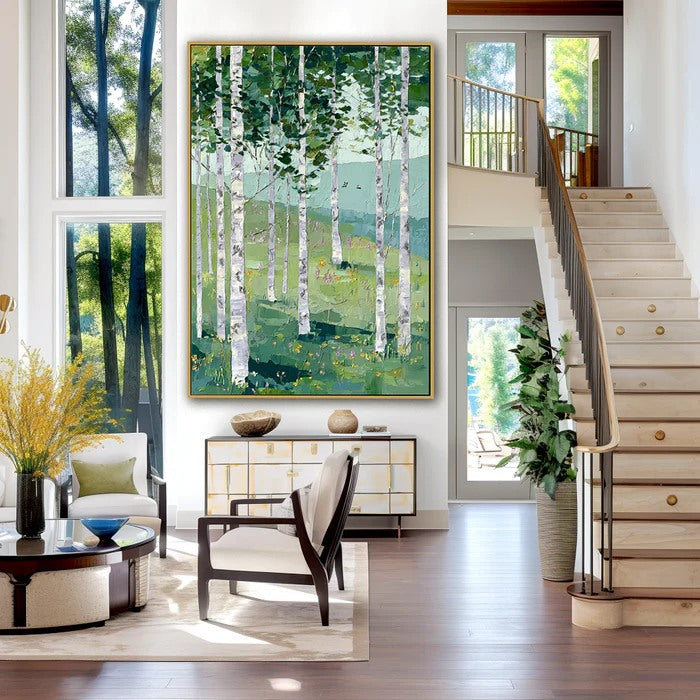
Impasto art is redefining modern interior design by combining fine artistry with tactile, dimensional texture. In an age where minimalism meets sensory engagement, hand-painted 3D texture wall art has become one of the most sought-after forms of personalized home décor. From bold brushstrokes to sculpted pigment layers, impasto painting captures light, movement, and mood like no printed artwork ever could.
check:Tree/Flowers Oil Painting
The Rise of Hand-Painted Textured Wall Art
Over the last decade, the global wall art market has experienced substantial growth, with a notable surge in consumer preference for textured and hand-painted creations. According to market insights published in 2025, textured canvas art and large impasto paintings have outperformed flat prints in both demand and resale value. This shift reflects a growing appreciation for artistry that feels alive—literally standing off the surface in three-dimensional relief.
Homeowners, interior designers, and collectors alike are turning to impasto wall art for its tactile depth and aesthetic warmth. The method’s thick layers of paint—often applied with palette knives and mixed media—transform plain walls into immersive experiences. When combined with ambient lighting, the interplay between shadow, texture, and color creates an atmosphere of luxury and individuality.
Artistic Techniques Behind Impasto Texture
Creating 3D texture wall art involves more than applying thick paint. Artists work with various tools such as knives, spatulas, and textured brushes to layer pigment, modeling paste, and resin. Modern formulations of acrylic and oil mediums allow artists to build intricate relief effects without cracking or fading. Each piece reveals the spontaneity of gesture and depth, showcasing the artist’s hand in every ridge and curve.
The interplay between color gradients and sculptural surfaces results in art that evolves with perspective. A viewer standing to the side might notice subtle glimmers and depth that disappear when viewed head-on, adding an element of visual discovery to every encounter.
Market Trends and Consumer Insights
Data shows that textured wall décor has grown twice as fast as traditional prints across global markets from 2022 to 2025. Luxury interior design publications cite this as part of a wider move toward authenticity and tactility—values that resonate with eco-conscious and design-savvy consumers. Buyers increasingly seek multi-sensory pieces that integrate art into everyday living environments, rather than treating walls as static backgrounds.
At Artextured, we believe art should do more than decorate—it should transform spaces and inspire experiences. Founded in Xiamen, our collective brings together emerging and established artists who push the boundaries of creativity, blending traditional craftsmanship with innovative materials. Our journey into acoustic art began with the mission to merge sound absorption and beauty, resulting in textured works that engage both visually and acoustically.
Top Impasto Wall Art Styles and Use Cases
Abstract impasto remains the most popular choice for contemporary interiors because it complements a wide range of décor—from minimalist Scandinavian to bold industrial. Floral impasto paintings deliver organic warmth through sculpted petals that capture light from every direction. Meanwhile, geometric and metallic-textured artworks add a sophisticated edge ideal for commercial spaces, executive offices, and boutique hotels.
| Style | Key Advantages | Ratings | Use Cases |
| Abstract Impasto | Expressive depth, versatile color range | 4.9/5 | Living rooms, galleries, studios |
| Floral Texture Art | Natural forms, elegant tones | 4.8/5 | Bedrooms, spas, lounges |
| Metallic & Geometric Texture | Luxe finish, reflective surfaces | 4.7/5 | Offices, hotels, public spaces |
Material Innovation and Core Technology Analysis
Today’s impasto artists use advanced techniques that combine traditional brushwork with modern additives. Structural gels and thickening agents strengthen paint volume, while high-quality linen canvases ensure durability. Some creators integrate textured acrylic grounds, fiber paste, or even sand and marble dust to increase dimensional integrity. Ultraviolet-stable pigments and sealants enhance longevity, making these works ideal for both residential and commercial installations.
Cutting-edge LED or natural window lighting can further emphasize impasto’s tactile drama, shifting shadows across ridged surfaces throughout the day. This blend of natural form and visual technology redefines how viewers experience wall-based art.
Real User Stories and Measurable ROI
Design professionals consistently report that installing impasto art boosts interior ambiance and perceived property value. A 2025 European Home Design survey found that listings featuring textured wall art photos drew 28% more engagement and faster sales. One Hong Kong-based hotel group revealed a 15% improvement in guest satisfaction after incorporating large abstract impasto murals in their lobby and dining areas, citing a warmer, more immersive aesthetic as the main reason for the upgrade in visitor experience.
Competitor Comparison Matrix
| Feature | Hand-Painted Impasto | Printed Canvas | Digital Wall Murals |
| Visual Depth | True 3D texture | Flat surface | Simulated dimension |
| Longevity | 20+ years | 5–8 years | 3–5 years |
| Uniqueness | One-of-a-kind artwork | Mass produced | Semi-custom |
| Sensory Appeal | Tactile and visual | Visual only | Visual only |
| Artistic Value | Collector-quality | Reproduction | Stylized digital |
Future Trends in Textured Wall Art
The coming years will see further experimentation with hybrid materials, such as biodegradable gels, fiber-infused paints, and upcycled bases. Artists are also incorporating textile fibers and sustainable natural pigments to reduce environmental impact while enriching texture diversity. With the emergence of AI-assisted composition tools and eco-efficient pigment mixing, impasto painting is evolving into a convergence of art and science—preserving its handmade essence while embracing innovation.
Design forecasters predict that 3D wall art will continue to dominate luxury interiors and smart homes, serving both aesthetic and acoustic functions. As consumers seek personalization and depth, the integration of sensory artistry into everyday life will become an enduring standard rather than a passing trend.
Frequently Asked Questions
What makes impasto art different from traditional painting?
Impasto art features thick, sculptural layers of paint that create shadows, texture, and tangible depth. Each piece changes character depending on light and viewing angle.
How do you maintain and clean textured wall art?
Dust gently using a soft brush or microfiber cloth. Avoid liquid cleaners and keep the painting away from direct sunlight or high humidity to preserve its structure.
Is impasto art suitable for both homes and offices?
Yes. Its tactile presence enhances residential warmth and professional elegance alike, making it ideal for lobbies, meeting rooms, dining spaces, or living areas.
Conclusion and Artistic Call to Action
Impasto art stands at the crossroads of craftsmanship and sensory design. From the first brushstroke to the final ridge of paint, every hand-painted textured canvas carries the individuality of its creator and the story of its materials. For homeowners, collectors, and designers seeking art that brings emotion, movement, and sophistication into their environment, impasto 3D wall art offers the perfect synthesis of artistry and atmosphere.