
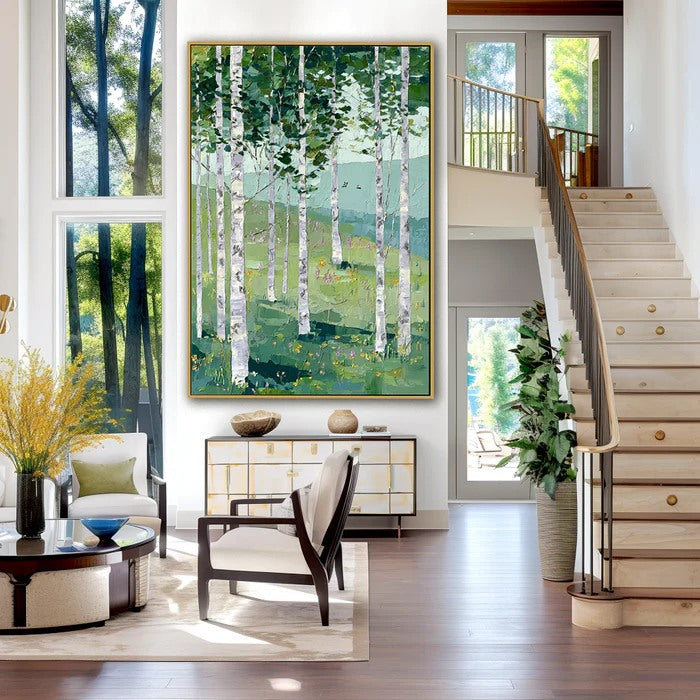
Living underneath an upstairs neighbor who constantly drops items creates a modern household dilemma that goes far beyond simple annoyance. Threads tagging "upstair neighbor dropping things reddit" serve as digital trauma centers where urban residents seek solidarity for a deeper structural issue: impact noise. Unlike ambient sounds, a sudden overhead thud triggers an immediate physiological startle reflex. While structural engineering changes are rarely possible in a rental or multi-unit condominium, the interior design of your own space can be deliberately optimized. By altering how walls receive light, control internal acoustic echo, and anchor human sightlines, you can interrupt the domestic stress loop and transform an exposed room back into a protective sanctuary.
The Spatial Mechanics of Overhead Noise Stress
Every unpredictable thump from above creates an architectural and emotional reaction inside minimalist or under-furnished modern homes. Parallel drywall surfaces left entirely bare create a fast, repetitive bouncing of sound known as a flutter echo. This acoustic phenomenon elongates the duration of sharp noises, making a brief overhead impact feel much more piercing and disruptive.
Furthermore, standard modern design relies heavily on smooth, highly reflective elements, including large windows, high-gloss lacquered furniture, and glass-covered prints. At night, these shiny surfaces catch the specular highlights from lamps, creating sharp points of ambient glare. When an unexpected overhead thud breaks the quiet, your visual system is already operating in a state of high alert. The combination of structural vibrations coming through the ceiling and visual micro-flickers bouncing off the walls forces the brain into a state of continuous visual vigilance, where you find yourself reflexively tracking the ceiling, waiting for the next impact.
Defining the Gravity Anchor Field on Your Walls
When an overhead ceiling feels unpredictable and structurally unstable, the vertical perimeter walls must visually communicate absolute stability. This design principle is known as establishing a gravity anchor field: a low-contrast, highly continuous visual band placed directly across your primary horizontal sightline. This treatment works by pulling human visual focus outward and downward, offering a powerful counter-balance to the disruptive acoustic stimuli originating from above.
Implementing a gravity anchor field requires prioritizing wide, large-format horizontal compositions over arrangements of small, scattered picture frames. A large, expansive canvas establishes a clear horizon line that the eyes can naturally rest upon. Over time, this deliberate focal point reduces the psychological tendency to glance upward after a sudden thud. Over an extended period, this subtle adjustment lowers the frequency of micro-startles and accelerates your sensory recovery time after an impact occurs.
Choosing Material Textures Over Flat Prints
Flat paper prints and digital posters can introduce color into a room, but they frequently behave like acoustic and visual mirrors under evening lighting conditions. To disrupt local sound reflections and lower environmental stress, the material composition of your wall decor must be chosen with care.
| Surface Medium | Light Interaction | Internal Room Acoustic Response | Perceived Psychological Weight |
| Glass-Framed Print | Highly reflective; produces sharp specular highlights | Amplifies impact noise via unhindered sound reflections | Sharp, restless, and visually distracting at night |
| Thin Flat Canvas | Semi-matte; offers minimal surface depth | Provides minimal disruption to internal wall-to-wall echo | Clean but lacks the physical presence to anchor a room |
| Heavy Textured Canvas | Diffuse; scatters light via microscopic shadows | Interrupts flutter echo and softens perceived sound sharpness | Grounded, stable, and visually reassuring |
Hand-crafted canvases featuring built-up paint layers, palette knife ridges, and dimensional brushwork alter how energy behaves in a room. The irregular, raised topography of a heavily textured oil painting functions on a micro-level to scatter local sound reflections rather than allowing them to bounce cleanly off flat drywall. Simultaneously, the matte texture absorbs harsh angles of light, enveloping the wall in soft micro-shadows that invite the eyes to rest without distraction.
Maximizing the Impact of Artwork Scale and Placement
Small, fragmented wall decorations keep your gaze darting across a room, which subconsciously mimics the tracking behavior induced by noise anxiety. To slow down the visual environment, select a single dominant artistic plane that establishes a clear scale.
-
Scale Selection: Choose a horizontal canvas spanning between 36 inches by 72 inches and 40 inches by 80 inches. A large statement piece commands the wall, turning the vertical surface into a stable architecture.
-
Palette Restraint: Look for low-chroma, earth-derived tones such as bone, warm sand, soft clay, mineral gray, and muted taupe. Avoid high-contrast geometric patterns that agitate the nervous system.
-
Seated Eye Level Alignment: Hang the artwork so that its horizontal center aligns perfectly with your eye level while seated in your primary activity zone—whether that is looking from a living room sofa, sitting at a home office desk, or resting in bed.
-
Visual Simplification: Keep adjacent wall areas completely clear of secondary decor. Allowing the large canvas to stand alone creates a zone of absolute visual quietude.
The Sensory Anchor Checklist for Noise-Stressed Rooms
-
Perform a Quick Clap Test: Stand in the center of the room and clap sharply once. If you hear a ringing metallic echo vibrating between the walls, your room is actively amplifying your neighbor's impact noises.
-
Eliminate Glass Reflection: Remove all glass-faced frames and high-gloss decorative objects from the wall directly facing your main seating area to eradicate visual startle triggers.
-
Establish One Dominant Horizon: Install a singular, wide horizontal canvas featuring a minimal palette to serve as your primary visual ground.
-
Verify True Tactile Relief: Select artwork that features visible, hand-applied paint relief and thick impasto ridges rather than flat digital reproductions.
-
Anchor Near Furniture Groupings: Center the chosen artwork relative to where your body actually rests over time, rather than forcing symmetry onto an arbitrary, empty wall space.
Real-World Scenarios and Spatial Limitations
The application of a texture-driven interior strategy yields different results depending on the specific room layout and the severity of the structural noise problem.
Bedroom Placed Directly Beneath the Noise Source
The traditional approach involves adding scattered small decorations, which ultimately fails to make the room feel secure. A superior approach uses a large, neutral-toned minimalist texture canvas behind the headboard or on the direct facing wall. This establishes a deeply restful focal plane that lowers spatial tension during late-night hours when the brain treats unexpected thuds as an immediate warning signal.
Living Room Where Frequent Thuds Disrupt Relaxation
The traditional approach relies entirely on white noise machines or turning up the television volume. A superior approach installs a large-format wabi-sabi fine art panel above the main sofa. The rich, organic texture absorbs evening light glare and grounds the room's sightline, ensuring that conversations and family activities remain anchored to the living space instead of being pulled toward the ceiling.
Limitations of Material Interventions
It is critical to establish realistic boundaries for this interior approach. Adding textured canvases and soft materials will not stop heavy structural vibrations or low-frequency thuds from travelling through solid floor joists. In addition, an oversized dark canvas can feel visually oppressive in exceptionally tight or narrow rooms. If your space is restricted, scale down the dimensions of the artwork slightly but maintain the single, uninterrupted visual plane concept.
Frequently Asked Questions
How can interior design help reduce the stress of an upstairs neighbor dropping things?
Interior design cannot stop structure-borne noise from entering a building's frame, but it can control how your room receives that noise. By removing highly reflective glass surfaces, introducing heavy matte textures, and establishing a wide horizontal focal point, you can reduce visual glare and lower internal room echo. This prevents your room from amplifying the sound and helps your nervous system settle more quickly.
What type of wall art works best in a low-stimulation room?
Large, horizontally oriented matte canvases featuring hand-applied paint textures and low-contrast, neutral color palettes work best. These pieces provide a stable visual horizon that anchors your gaze downward, preventing the eyes from constantly moving to track unpredictable overhead sounds.
Why should I avoid glass-framed artwork in a noise-stressed space?
Glass creates specular highlights and harsh glare that fluctuate under evening lighting. When sudden impact noise occurs, these reflective surfaces create instant visual flickers that heighten your physiological startle response, intensifying the overall feeling of household stress.
Does textured wall art actually reduce sound?
Textured art does not block heavy structural impacts coming from the ceiling. However, irregular, hand-built canvas surfaces help scatter local sound waves within the room. This breaks up flutter echoes and dampens the sharp, ringing bounce of sound, making overhead thumps feel less piercing to the ear.
Where should I hang a large canvas for the best spatial effect?
Center the canvas directly at your seated eye level within your main activity area—such as over a sofa, opposite a desk, or facing a bed. This positioning ensures that whenever an abrupt noise occurs, your eyes are naturally drawn to a calming visual anchor rather than looking toward the ceiling.
Closing Perspective
Market data compiled by Grand View Research indicates that the global wall art market valued at USD 61.01 billion in 2025 is expanding rapidly, with contemporary consumers increasingly prioritizing minimalist pieces, neutral palettes, and subtle designs that deliver functional calm. When a home is challenged by unpredictable overhead noise, selecting decor transitions from a matter of mere aesthetic preference to a practical strategy for emotional well-being. Handcrafted, textured artwork provides an effective visual and acoustic anchor, helping to reclaim a sense of domestic peace. By intentionally redesigning your vertical wall plane, you can effectively soften the impact of an unpredictable ceiling and restore a genuine sense of sanctuary to your daily life.
Explore the Collection
Discover original, hand-painted artwork collections designed to bring depth, material presence, and visual quietude to modern living spaces. Explore the complete range of hand-layered minimalist compositions, structural custom sizes, and calming textural treatments on the Artextured All Products Portfolio.
Sources
-
Artextured Brand Identity: Artextured Homepage
-
Market Intelligence: Grand View Research Wall Art Market Analysis 2025-2033