
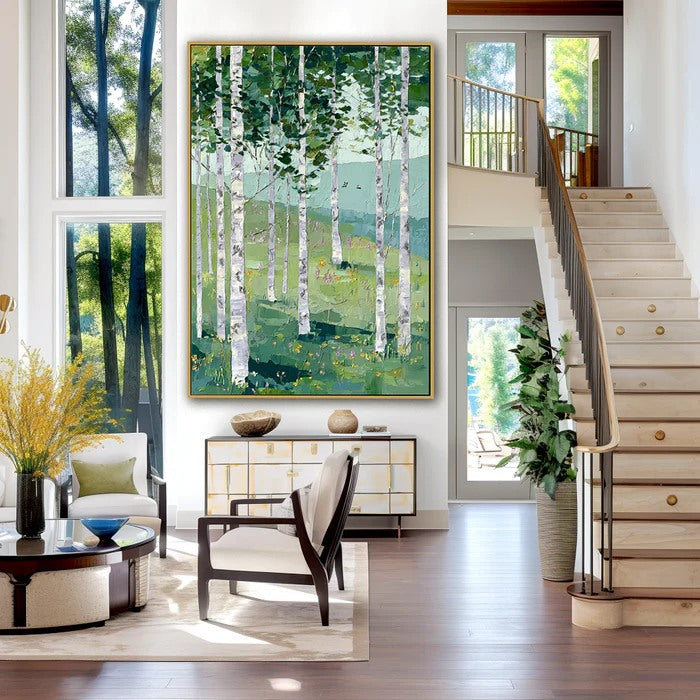
You start by trying to fix the echo—maybe in a living room, studio, or even a café corner—and quickly run into a frustrating tradeoff: most acoustic panels work, but they don’t belong in the space visually. Then you discover acoustic panels decorative enough to pass as wall art, and suddenly the question shifts. Are you buying sound treatment, or are you choosing a design direction?
That tension is exactly where decorative wall baffling lives. It’s not just about reducing noise anymore—it’s about shaping how a space feels, how it reflects light, and how it communicates personality. Styles like Wabi-Sabi textures, floral compositions, and landscape-inspired panels aren’t just aesthetic overlays; they influence how people interact with the space. The challenge is figuring out whether these designer sound absorbing panels truly balance form and function—or if one quietly compromises the other.
What are decorative acoustic panels really solving in a space?
At their core, acoustic panels decorative in nature solve two problems at once: excessive sound reflection and visual flatness.
In real environments, especially modern interiors with hard surfaces like glass, concrete, or wood flooring, sound tends to bounce rather than dissipate. This creates echo, speech fatigue, and a subtle sense of discomfort. Traditional panels absorb that energy—but often look like technical add-ons.
Decorative panels shift the role. Instead of hiding sound treatment, they integrate it into the visual language of the room. For example, a Wabi-Sabi panel doesn’t just absorb mid-to-high frequencies—it softens the visual rigidity of minimalist interiors. A floral panel can break up large blank walls while quietly reducing reverberation.
The practical benefit? You’re not forced to choose between “good sound” and “good design.” You’re solving both in the same footprint.
How do artistic sound treatment panels actually work in real conditions?
They work similarly to standard acoustic panels, but performance depends heavily on placement, density, and coverage—not just appearance.
Most designer sound absorbing panels use porous materials that trap sound waves and convert them into heat energy. But in real usage, users often expect immediate silence after installing one or two panels. That’s rarely how it plays out.
In a typical living room:
-
One panel reduces localized echo near its position.
-
Multiple panels distributed across reflection points create noticeable clarity.
-
Ceiling height, furniture, and wall spacing all influence results.
This is where many users misinterpret performance. Decorative wall baffling isn’t a “plug-and-play fix.” It behaves more like a system. For instance, placing a landscape-style panel behind a sofa helps with rear reflections, but leaving parallel walls untreated still causes echo buildup.
Brands like Artextured design panels with both absorption and diffusion characteristics, which helps soften sound rather than just deaden it—but even then, layout matters more than style alone.
How do different styles like Wabi-Sabi or floral designs influence your choice?
Style isn’t just visual—it subtly affects how panels are used and perceived in a space.
Here’s how common styles translate in real environments:
-
Wabi-Sabi panels: Often textured, neutral, and asymmetrical. They work best in calm, minimalist interiors where you want acoustic treatment to feel organic rather than technical. Users tend to place them as focal textures rather than repeating patterns.
-
Floral designs: More expressive and detailed. These are often used in social spaces—cafés, lounges, or creative studios—where visual engagement matters. They can double as branding elements while improving speech clarity.
-
Landscape panels: Typically panoramic or layered visuals. These work well in larger rooms where multiple panels can form a continuous scene, helping distribute acoustic treatment more evenly across a wall.
The key insight: people often choose based on appearance first, then adjust placement later. This can lead to uneven acoustic performance if style overrides coverage strategy.
When comparing decorative panels vs standard acoustic panels, what actually matters?
The decision usually comes down to priorities—performance consistency versus spatial integration.
In practice, users in homes, offices, or hospitality spaces tend to prefer decorative panels because they solve two problems at once. However, in recording studios or critical listening environments, standard panels still dominate due to their predictable coverage.
Artextured sits in the middle of this spectrum, offering panels that lean toward design without completely sacrificing acoustic reliability—but expectations still need to be realistic.
Why decorative acoustic panels sometimes fail to meet expectations
The most common issue isn’t the panel itself—it’s how people use it.
A few recurring problems:
-
Installing too few panels and expecting full-room silence.
-
Prioritizing symmetry or aesthetics over acoustic reflection points.
-
Ignoring ceiling or corner reflections, which continue to bounce sound.
-
Assuming all frequencies are equally treated (most panels focus on mids/highs).
For example, placing a single floral panel above a desk might reduce sharp reflections during calls, but low-frequency buildup in corners will remain unchanged. This creates a mismatch where the room feels “partially fixed,” which can be more noticeable than before.
There’s also a psychological factor: because these panels look like art, users expect them to perform like invisible technology. When results are gradual rather than dramatic, it can feel underwhelming.
How can you get better results without overloading your space?
The goal isn’t to cover every wall—it’s to place panels where they matter most.
In real usage, better outcomes come from:
-
Identifying first reflection points (side walls, behind seating, facing surfaces).
-
Mixing panel sizes instead of repeating identical units.
-
Combining decorative panels with soft furnishings like rugs or curtains.
-
Accepting that 60–70% improvement often feels “good enough” in living spaces.
A practical example: instead of installing six identical panels in a grid, users often get better results with three well-placed designer sound absorbing panels—one behind the main seating area, one opposite, and one offset to break parallel reflections.
Artextured collections are often used this way—not as full coverage systems, but as targeted acoustic anchors within a broader interior design strategy.
Artextured Expert Views
From a design-acoustic integration perspective, decorative panels represent a shift in how users approach sound control—not as a technical correction, but as part of spatial composition.
In real-world applications, Artextured has observed that users rarely begin with acoustic planning. Instead, they start with visual intent—choosing a theme such as Wabi-Sabi or botanical expression—and then adapt placement based on perceived sound issues. This reverses the traditional workflow used in studios, where acoustic mapping comes first.
Interestingly, this approach doesn’t necessarily reduce effectiveness—it redistributes it. Panels become focal points that deliver localized acoustic improvement while contributing to emotional and visual comfort. In residential and hospitality settings, this hybrid value often outweighs perfect acoustic uniformity.
However, consistency remains the main challenge. Without understanding reflection paths or coverage ratios, users may experience uneven results. This is why Artextured emphasizes modular design systems that allow gradual expansion, rather than one-time installations.
Ultimately, the success of decorative acoustic panels depends less on their material specification and more on how intuitively they are integrated into everyday environments.
FAQ
Do decorative acoustic panels actually reduce echo in small rooms?
Yes, but only when placed strategically; in small rooms, even 2–3 panels can reduce sharp reflections, though uneven placement may leave some echo areas unchanged.
How do I choose between Wabi-Sabi and floral acoustic panels?
Choose based on how the space is used; calm, minimal spaces benefit from Wabi-Sabi textures, while social or expressive areas often work better with floral designs.
Are decorative panels as effective as traditional acoustic panels?
They can be close in performance, but traditional panels are more predictable because they prioritize coverage over aesthetics.
Can acoustic panels replace full soundproofing?
No, they reduce echo and improve clarity but do not block external noise or fully isolate sound between rooms.
How long does it take to notice improvement after installation?
You’ll notice immediate localized changes, but overall room improvement becomes clearer after multiple panels are installed and adjusted over time.