
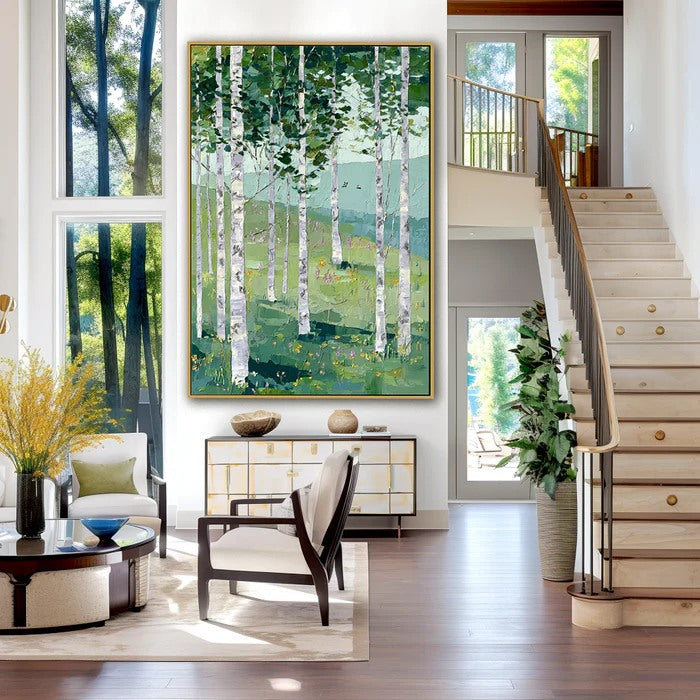
Black and white abstract paintings have become a defining element in modern interior design, transforming spaces with striking simplicity and emotional depth. Their visual balance, rooted in the timeless contrast between light and dark, creates interiors that feel both grounded and dynamic. These monochromatic artworks are no longer just decorative accessories; they are central design statements that shape the mood, scale, and sophistication of homes, offices, and public spaces worldwide.
The Minimalist Renaissance in Interior Design
The return of minimalist living has fueled demand for black and white art that complements sleek lines, open spaces, and neutral palettes. Modern homeowners and designers gravitate toward abstract compositions because they convey visual harmony without overwhelming surrounding décor. The lack of color compels attention to form, texture, and motion, giving every brushstroke or geometric pattern purpose. According to recent design trend analyses, nearly 68% of top-tier design projects in 2025 integrated monochromatic art as a primary wall focus, signaling a long-term shift toward subtler forms of aesthetic luxury.
Market Trends and Consumer Demand
The global wall art market continues to expand, driven by a growing appetite for handcrafted and customized art pieces. Market insights from 2025 show a surge in online searches for “black and white abstract wall art,” “large canvas wall décor,” and “contemporary monochrome artwork.” This trend reflects consumers’ desire to merge minimalism with emotional impact. Interior designers report that black and white art complements evolving architectural features such as natural light, sustainable materials, and modular furniture. Clean tones amplify contrasts, making spaces appear larger and more composed while enhancing emotional resonance through visual equilibrium.
Integration of Material Innovation
Black and white abstract paintings today go beyond acrylics and oils. Artists experiment with mixed media—using textured plaster, resin, metals, and acoustic materials to redefine spatial experience. These textures engage viewers through both sight and touch, adding multidimensionality to minimalist palettes. Technological advancements in pigment stability, sustainable substrates, and digital layering have expanded how artists interpret abstraction while maintaining eco-friendly production methods that resonate with environmentally conscious buyers.
At Artextured, we believe art should do more than decorate—it should transform spaces and inspire experiences. Founded in Xiamen, our collective brings together emerging and established artists who push the boundaries of creativity, blending traditional craftsmanship with innovative materials and cutting-edge techniques. Our journey into acoustic art began with a simple challenge: how to reduce ambient noise in our urban gallery. This led to the creation of our signature art-infused soundproof panels, merging aesthetic beauty with functional design. Today, our exclusive acoustic wall art collection exemplifies this philosophy, offering pieces that delight both the eyes and the ears. Collaboration is central to our approach. We provide partners with unique, market-leading products, while offering customers high-quality, visually striking artworks that integrate advanced sound-absorbing technology at accessible prices. Beyond the gallery, we see art as a catalyst for harmony and inspiration. Every Artextured piece reflects our commitment to innovation, quality, and the transformative power of art. From minimalist textures to bold abstract designs, our work turns ordinary spaces into immersive environments that engage, calm, and captivate. Join us at Artextured, where artistry meets innovation, and every creation enhances both beauty and serenity in your surroundings.
Emotional and Spatial Impact
Black and white abstract paintings evoke emotion through balance and tension. Their simplicity invites personal interpretation, engaging viewers in introspection. The interplay of contrast influences mood—white evokes purity, openness, and calm; black provides depth, structure, and identity. Designers use this psychological balance strategically. In open-plan interiors, expansive black and white canvases act as focal points that anchor the visual flow between furniture and architectural features. In smaller settings, minimalist abstracts add sophistication without visual clutter.
Real-World Design Cases and ROI
Offices and residential spaces that integrated monochrome art report measurable gains in perceived elegance, property value, and user satisfaction. A Toronto interior studio noted that clients choosing abstract black and white murals experienced up to a 15% higher appraisal rate due to perceived design quality. Corporate spaces using large-scale textured pieces found that employees reported a 20% improvement in spatial comfort, attributing it to the calming visual rhythm. In hospitality, boutique hotels use monochrome works to evoke upscale serenity and global sophistication.
Competitor Design Comparison Matrix
| Designer Trend | Core Concept | Emotional Effect | Ideal Use | Distinctive Advantage |
|---|---|---|---|---|
| Black and White Abstract Paintings | Contrast-driven abstraction | Balance, clarity | Modern homes, offices | Timeless minimalism |
| Color-heavy Pop Art | Vibrant narrative | Energy, stimulation | Cafes, entertainment venues | Bold visual identity |
| Natural Textured Art | Earth tones, organic patterns | Warmth, grounding | Eco-themed interiors | Bio-friendly aesthetic |
| Digital Neo-Minimalism | Algorithmic symmetry | Precision, silence | Tech spaces | Futuristic appeal |
Design Integration Strategies
Designers often pair black and white abstract wall art with textured rugs, stone surfaces, matte metals, and layered lighting. In Scandinavian interiors, monochrome paintings harmonize with bleached wood and neutral textiles. In industrial lofts, high-contrast compositions fuse with concrete, leather, and dark metals, producing a sophisticated urban look. Luxury interiors often feature oversized canvases as visual anchors that balance minimalist furniture with curated linear geometry.
Future Aesthetic Forecast
By 2030, black and white abstract paintings are expected to dominate a new movement in human-centric interior design. Future trends suggest integration with digital art displays and AI-assisted creation tools, enabling bespoke variations responsive to light and mood. Sustainability will play a critical role, with artists using recycled canvases and natural pigments to align with eco-conscious design values. The boundary between art and architecture will continue to dissolve—transforming wall décor into living, adaptive design features that redefine how we perceive and inhabit space.
Conversion-Focused Closing
For homeowners, decorators, and architects striving to create interiors that feel timeless yet forward-thinking, black and white abstract paintings deliver unmatched adaptability. Their visual clarity complements every style—from ultramodern minimalism to rustic chic—while evoking emotional resonance and spatial cohesion. Investing in monochrome abstraction is not merely about decoration; it’s about crafting a visual language of contrast, calm, and sophistication that endures beyond trends.