
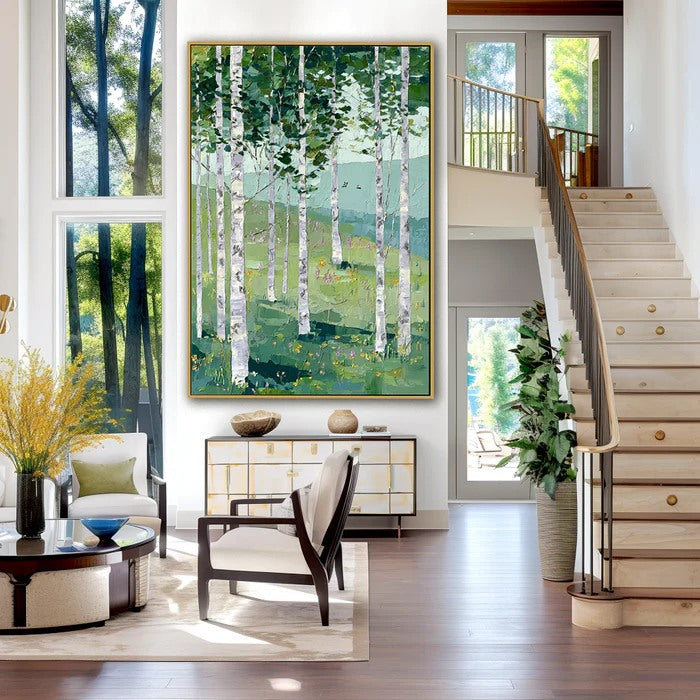
Mastering Impressionist tree painting techniques requires learning to see trees as masses of light and color rather than detailed outlines, using loose brushwork, broken color, and value simplification to capture how light filters through foliage. The key is painting big shapes first with large brushes, working from dark to light values, and applying thick impasto strokes that create vibrating color when viewed from a distance rather than attempting photorealistic leaf-by-leaf rendering.
Impressionist trees succeed when you simplify them into three core values—dark shadows, middle tones, and bright highlights—while using warm and cool color temperatures to show where sunlight hits versus where shadow falls. This approach, pioneered by Claude Monet and Renoir painting en plein air, creates the luminous, momentary quality that defines French Impressionism while avoiding the tight, overworked look that kills spontaneity.
See Trees as Light and Shadow Shapes Before Details
The most common mistake beginners make when painting Impressionist trees is starting with a detailed sketch of individual branches and leaves. This approach traps you in shorthand rendering rather than capturing the impression of light moving through foliage. Instead, isolate the big light and dark shapes first using a notan study—squint at your reference until details disappear and only four basic values remain visible.
Trees are generally darker values in a landscape, often darker than grass depending on species. Paint the tree shadows first to establish the tonal dynamic, then build middle values, and save your lightest values for the end when adding glossy leaves reflecting direct sun. This dark-to-light progression creates dimension when you scumble lighter colors over darker underlayers, allowing deeper tones to break through and creating highlights that glow from within.
Three simple values create tree form and tell the viewer what the light is doing:
-
Dark value: The shadow side of the tree mass and underside of foliage clusters
-
Middle value: The main body of green foliage in average light
-
Light value: Sunlit tops and edges where light hits directly
Determine where the sun is coming from before you paint, as this decision drives your entire value structure. Those three values create basic tree shape and structure without getting lost in branching minutiae.
Use Large Brushes to Force Simplification and Loose Stroke Work
Painting like an Impressionist requires starting with brushes much bigger than you think you need. Using a small brush invites you to paint every twig and leaf, which creates the tight, overworked look that Impressionists deliberately avoided. The biggest brush you can get away with forces you to chunk in shapes broadly and maintain the gesture of the tree rather than rendering each nook and cranny.
When working with large brushes, keep these principles in mind:
-
Simplify everything according to values: Trees especially benefit from big shape simplification rather than outline definition
-
Squint at your scene: Close your eyes halfway and paint only the shapes of what remains visible when details disappear
-
Vary brush direction: Use strokes going up and down, side to side, and diagonally to create movement and texture in foliage
-
Let go of perfection: Don't worry about matching strokes perfectly or blending them away. Texture is good, and bristle brushes with oil paint work best for this approach
Start slowly with large brushes and work progressively faster over time as your brushwork confidence grows. The goal is creating big shapes that suggest a tree rather than describing every branch. A variety of brushwork direction combined with varied color temperature creates the energy and vibration that defines Impressionist style.
Master Broken Color for Vibrating Foliage That Looks Alive
The broken color technique creates an optical illusion where colors mix visually on the canvas rather than being physically mixed on your palette. This works best when the painting is viewed at a distance, as your eyes fill in the gaps to absorb the impression of the artwork. As your eye moves between different colors, they appear to vibrate, optically mixing to create a larger idea of foliage rather than individual leaves.
When applying broken color to trees:
-
Layer complementary strokes: Blue and red brushstrokes scattered among each other blend at a distance to create purple hues in shadow areas
-
Create color temperature variety: Warm greens on sunlit edges, cool blues and blue-greens in shadowed areas
-
Leave pockets of underpainting visible: Don't cover every dark area with light colors. Gaps of darker tones shining through create depth and luminosity
-
Mix colors on canvas: When Monet physically blended paint, he did so by mixing on the canvas itself, leaving traces of unmixed colors that add to the impressions being created
For tree foliage specifically, use a variety of greens mixed from your primary colors rather than reaching for tube green. Mix yellow ochre with ultramarine for earthy shadow greens, cadmium yellow with cobalt blue for brighter mid-tone greens, and add touches of warm red or orange for sunlit highlights. This creates natural color harmony because all your greens come from a common source of primary colors.
Apply Impasto and Scumbling for Dimension and Texture
Impasto—the technique of using thick strokes of paint to create dimension—is essential for Impressionist trees. Short impasto strokes boost the sense of movement and vibration created by broken color layering. The paint should hold its shape when applied to the canvas, creating physical texture that catches light and adds another dimension beyond color.
Scumbling, also known as dry brush painting, involves applying a thin layer of paint with a dry brush over dried colors on your canvas. Typically, a lighter color is scumbled over a darker color so the darker tone shines through in places. This technique is perfect for:
-
Creating dappled light effects: Light yellow-green scumbled over dark green creates sunlight filtering through leaves
-
Adding foliage texture: Light taps of warm color over cool underlayers suggest individual leaf clusters without painting them literally
-
Building luminous highlights: Light colors applied lightly break in places, letting deeper tones peek through for glowing highlights
For Impressionist tree painting specifically, work wet on wet for the initial foliage mass to quickly capture the impression at a certain time of day, then let it dry before scumbling highlights on top. This layering approach creates dimension as the deeper tones break through the lightest tones, and the build-up of colors underneath makes highlights glow from within.
Understand Negative Space and Sky Holes Around Trees
The space around the tree—negative space—is just as important as the tree itself. Define this space by cutting in around the tree edges and creating sky holes within the foliage mass. These sky holes must be slightly darker than the main sky because less light passes through a small opening, naturally making it darker than the large expanse above.
Creating convincing sky holes requires:
-
Varying the size and shape: Don't make all sky holes uniform. Mix small pinpricks with larger openings for natural variety
-
Softening some edges: Make some sky hole edges soft and others crisp to suggest depth within the foliage
-
Painting sky up to chunky parts: When painting the sky around your tree, paint right up to the edges without leaving white canvas gaps
-
Using cooler, darker values: Sky holes should be slightly cooler and darker than your main sky color to create the illusion of depth
This negative space work prevents trees from looking like cutouts pasted on a sky background. The integration of sky holes within the foliage mass and clean edges where tree meets sky creates the impression that the tree belongs in its environment rather than floating in front of it.
Common Mistakes That Destroy Impressionist Tree Quality
Even experienced painters make mistakes when attempting Impressionist trees that undermine the loose, luminous quality they're trying to achieve. Understanding these pitfalls prevents frustration and helps you recognize when to stop working on a tree rather than overworking it.
Another critical mistake is applying heavy industrial glossy paint or thick acrylic sealants over functional areas, which closes the porous quality that lets light penetrate and create depth. While this matters more for acrylics than oils, the principle holds: avoid sealing your paint with varnish too early, as this flattens the texture and kills the vibration of broken color.
Over-dampening your painting by adding too many layers can also create an unnaturally dead appearance. The goal is balanced translucency where underlayers shine through, not complete coverage that eliminates all depth. Leave giant pockets in your foliage layers and try not to cover gaps of dark tones that provide luminosity.
Color Palette for Authentic Impressionist Trees
The Impressionists' palette differed significantly from Old Masters who used mostly earthy colors. Impressionists had the advantage of color innovations during the Industrial Revolution, with oil paints becoming cheaper and more colors available in tubes. A good starting palette for Impressionist tree painting includes:
Essential colors:
-
Titanium white
-
Ultramarine Blue
-
Cerulean Blue
-
Cadmium Yellow (light and deep)
-
Cadmium Red Light
-
Alizarin Crimson (or Quinacridone red)
-
Burnt Sienna
-
Yellow Ochre
Notice there are no pre-mixed greens. You mix authentic greens with these colors, which creates natural harmony because all your mixes come from a common source. This palette includes warm and cool versions of primary colors, enabling you to explore color temperature—a critical element for Impressionist trees.
Mixing tree greens:
-
Shadow greens: Ultramarine + Yellow Ochre (earthy, cool)
-
Mid-tone greens: Cobalt Blue + Cadmium Yellow (balanced)
-
Sunlit highlights: Cadmium Yellow Light + touch of White + tiny red (warm, bright)
-
Distant trees: More blue, less yellow, lighter value (atmospheric perspective)
Color temperature is an important concept for Impressionist painting. Warm sunny landscapes against cool shadows dominated with blue, violet, or cool greens create the vibrating contrast that defines the style. Consider complementary colors where one is dominant—a yellow-green wheat field with a blue-violet line of trees in the distance.
Practice En Plein Air to Capture Momentary Light Effects
A big part of French Impressionism was painting en plein air—outside. Painting outdoors creates a more candid painting, capturing the impression of a setting as seen through human experience rather than a studio reconstruction. Monet would often get the gist of a subject en plein air before finishing the artwork in the studio, using the outdoor session to capture the light and atmosphere.
For tree painting specifically, painting outdoors helps you understand:
-
How light moves through foliage: Direct observation shows you exactly where sunlight hits and where shadow falls
-
Color temperature shifts: Warm highlights against cool shadows become obvious when you see them in real light
-
Value relationships: Squinting at actual trees shows you the true value structure more clearly than photos
-
Atmospheric effects: Haze, humidity, and distance change how trees appear, affecting color and value
Monet would choose his subject matter carefully, studying it intently over a long period. His series featuring subjects like haystacks or water lilies had many paintings of identical settings, documenting studies at different times of day and through multiple seasons. Learning how a tree looks under different weather and lighting conditions is at the core of Impressionism.
If you can't paint outdoors, photograph trees at different times of day and use those references to understand how light changes the tree's appearance. But nothing replaces the candid impression you get from painting directly from nature.
Frequently Asked Questions
Do I need oil paint to paint Impressionist trees or can I use acrylics?
You can create Impressionist-style paintings with acrylics. If your acrylic paints aren't thick enough, mix them with an impasto medium to increase viscosity so the paint holds its shape when applied. Monet used traditional oils, but acrylics with the right medium work well for impressionist brushwork and broken color techniques.
How do I know when to stop working on an Impressionist tree?
Stop when you've captured the big light and dark shapes, applied broken color that vibrates at a distance, and added a few strategic highlights. If you keep adding more strokes and the tree starts looking tight or overworked, you've gone too far. The key is avoiding perfectionism and letting go before you destroy the loose, spontaneous quality.
Why do my Impressionist trees look flat instead of three-dimensional?
Your trees likely lack value contrast and color temperature variation. Ensure you have clear dark shadows, middle tones, and bright highlights. Mix your greens from primary colors rather than using tube green, and make shadow areas cooler (more blue) while sunlit areas are warmer (more yellow). Paint from dark to light and scumble highlights over dark underlayers for dimension.
What brush size should I use for painting tree foliage?
Use a much bigger brush than you're used to—often size 12 or larger for medium canvases. The biggest brush you can get away with forces simplification and prevents you from getting stuck painting individual leaves. Use the broad side of the brush for foliage masses and the tip only sparingly for occasional detail.
How do I mix realistic greens for different tree species?
Don't use tube green. Mix ultramarine blue with yellow ochre for earthy hardwood shadow greens, cobalt blue with cadmium yellow for balanced mid-tone greens, and add touches of warm red or orange for sunlit highlights. For evergreens, use more ultramarine and less yellow for cooler, darker greens. For autumn trees, add burnt sienna and cadmium orange to your green base.