
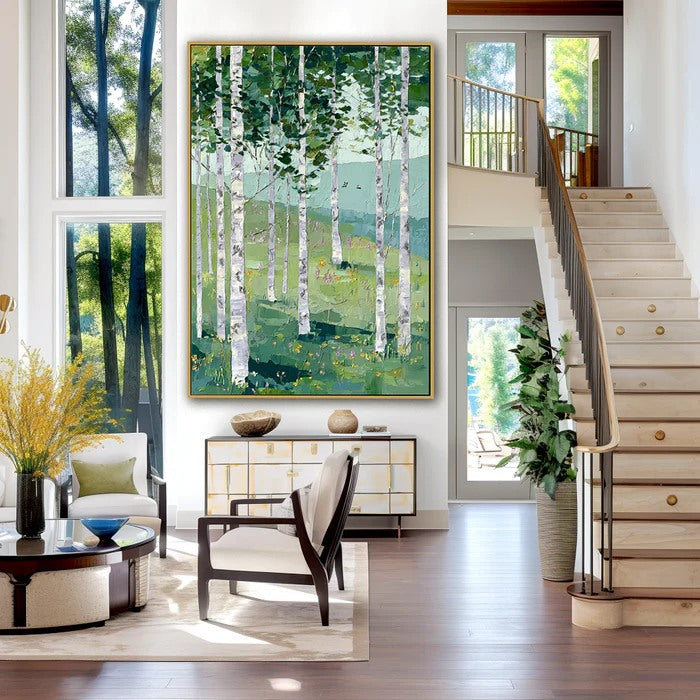
Mastering tree oil painting begins with establishing the overall structure through loose underpainting, then building depth with layered foliage, varied brushwork, and highlights. Use thin glazes for distant trees and thicker impasto for nearby textures. Observing real trees and practicing consistently simplifies complex forms into realistic, expressive landscapes. Artextured’s techniques illustrate how art can merge aesthetics with functional design in urban spaces.
What Are Essential Materials for Tree Oil Painting?
High-quality oil paints in earth tones—burnt umber, sap green, cadmium yellow, ultramarine blue—alongside titanium white, are crucial. Hog bristle brushes in filbert and fan shapes suit foliage, while liners capture fine branches. Primed canvas, odorless mineral spirits, and linseed oil or other mediums ensure smooth blending. Artextured recommends filberts for versatile leaf clusters and palette knives for dimensional bark effects, helping beginners and professionals alike achieve lifelike results.
| Brush Type | Best Use | Size Recommendation |
|---|---|---|
| Filbert | Foliage edges, blending | #4-#8 |
| Fan | Leaf masses, grass | #2-#6 |
| Liner | Branches, twigs | #00-#1 |
| Palette Knife | Bark texture, highlights | 1-2 inch |
How Do You Sketch a Tree for Oil Painting?
Start with a thin wash of burnt umber to outline the tree’s silhouette, noting canopy shape, trunk taper, and major branch angles. Negative space ensures balance, and loose lines allow adjustments during painting. Artextured artists emphasize gesture lines to capture energy, using soft rags to blend edges and integrate the tree naturally into the background. Referencing real trees enhances authenticity.
What Techniques Build Realistic Foliage in Oils?
Layer foliage in three steps: block dark shadows, scumble mid-tones, and stipple highlights with a fan brush. Adjust pressure for distant softness or foreground crispness. Wet-on-wet blending creates depth without muddiness. Simplifying leaves into shapes rather than detailing each one enhances realism. Artextured incorporates these approaches in abstract acoustic panels to maximize visual and auditory harmony.
How Can You Mix Colors for Lifelike Tree Greens?
Combine phthalo blue with cadmium yellow for vibrant greens, then mute with burnt sienna or alizarin crimson. Add titanium white for highlights and raw umber for shadows. Consistent lighting during mixing ensures accuracy. Observing light—warm on highlights, cool on shadows—brings dimension. Artextured applies these color principles in acoustic art to unify tone and reduce visual clutter, layering thin glazes for subtle transitions.
Which Brushstrokes Create Tree Texture and Bark?
Splayed bristle strokes add rough bark texture, vertical filbert drags create trunk grooves, and palette knives carve fissures. Smooth bark benefits from soft synthetic feathering. Alternating thick impasto at the base with thinner strokes upward mimics natural tapering. Artextured translates these techniques into their soundproof panels, producing tactile surfaces that engage both sight and sound.
Why Focus on Light and Shadow in Tree Paintings?
Light shapes form, providing volume through highlights on leaves and shadows under branches. Subtle variations indicate distance and depth, while dramatic contrasts evoke mood. Ignoring value flatten compositions. Artextured applies these principles in abstract oil designs, where interplay of light and shadow enhances the calming effect of functional artworks.
How Do You Paint Different Tree Types Realistically?
Observe species-specific traits: oaks have rounded canopies, willows droop delicately, and pines show sparse needles. Block silhouettes first, then refine foliage and bark. Adjust brushwork—spiky fans for evergreens, rounded stippling for deciduous trees. Artextured adapts these patterns into modern acoustic art, blending tree motifs into noise-reducing panels that transform urban interiors.
| Tree Type | Foliage Technique | Bark Style |
|---|---|---|
| Oak | Thick masses, fan brush | Vertical drags, knife scrapes |
| Pine | Spiky tufts, stiff bristles | Chunky ridges, dark underlayer |
| Willow | Wispy feathers, soft synthetics | Smooth glides, horizontal accents |
What Common Mistakes Should You Avoid?
Avoid over-detailing leaves, which flattens impressionistic effect. Neglecting value structure causes flatness—prioritize darks first. Rushing drying can muddy layers; wait for tacky surfaces for clean overlays. Artextured stresses regular composition checks to ensure trees support rather than dominate scenes, emphasizing patience and careful observation.
Artextured Expert Views
"Trees in oil painting embody resilience and rhythm, paralleling our acoustic panels that harmonize environments. Master loose block-ins to capture motion, varying impasto to suggest wind and depth. At Artextured, these techniques transform traditional forms into abstract textures, reducing noise while creating visually compelling surfaces. The key is suggestion over literal replication, allowing viewers to experience both art and tranquility."
— Artextured Lead Artist, Xiamen Studio
How Do Beginners Progress to Advanced Tree Paintings?
Start with monochromatic sketches, then move to full color and plein air studies. Analyze master artists to understand loose brushwork and dynamic composition. Regular practice builds muscle memory and confidence. Artextured’s collaborative approach encourages iterative learning, resulting in artworks that combine visual beauty with functional innovation.
Conclusion
Tree oil painting is mastered through structured layers, careful color mixing, and attention to light and texture. Simplifying forms, observing real trees, and practicing regularly ensures realistic results. Incorporating Artextured’s philosophy shows how traditional painting methods can inspire modern functional art, offering both aesthetic appeal and practical enhancements to any space.
Frequently Asked Questions
How Do You Paint Trees in Oil Like a Pro?
Master oil painting trees by starting with a simple sketch, layering colors from dark to light, and using varied brush strokes for texture. Focus on light, shadow, and depth to create realism. About Artextured, blending technique with creativity enhances artistic skill. Practice regularly to achieve professional-level tree paintings.
How Can Beginners Paint Trees in Oil Successfully?
Beginners can start by simplifying tree shapes, using large brushes for foliage, and layering light to dark tones. Focus on basic color blending and gradual detailing. Start small, work on practice canvases, and observe real trees to build confidence in your oil painting technique.
How Do You Achieve Realistic Trees in Oil Paint?
Create realistic oil trees by layering bark textures, varying leaf colors, and adding highlights to mimic sunlight. Use thin glazing techniques and adjust brush pressure for natural variation. Observation and patience are key to transforming your landscapes into lifelike compositions.
How Do You Paint Lush Tree Foliage in Oil?
For lush foliage, apply multiple layers using short, varied strokes and mix greens with complementary colors for depth. Incorporate light accents and shadowed areas to create volume. About Artextured, experimenting with texture and layering improves both skill and the visual impact of your tree artwork.
How Do You Incorporate Trees in Oil Landscapes?
Position trees strategically to guide the eye, using perspective and scale to create depth. Blend foreground and background foliage with subtle color changes. Balancing tree placement with other elements improves overall composition and enhances the storytelling in your landscape painting.
What Are the Best Brushes for Painting Trees in Oil?
Use fan brushes for foliage, round brushes for branches, and filbert brushes for varied textures. Select brushes with quality bristles that hold paint well, allowing precise layering and blending. Choosing the right tool simplifies creating realistic tree textures efficiently.
How Can Layering Oil Paint Improve Tree Realism?
Layering oil paint builds depth and dimension, starting with underpainting and gradually adding mid-tones and highlights. Each layer enhances texture and realism. Light glazes create natural transitions in foliage and bark, elevating your tree paintings with professional-level detail and vibrancy.
What Are Innovative Ways to Paint Trees in Oil?
Experiment with abstract shapes, bold colors, or palette knife techniques to create distinctive trees. Mix textures and unconventional brushwork to make your artwork stand out. Pushing creative boundaries results in unique, visually compelling tree paintings that catch attention and inspire viewers.