
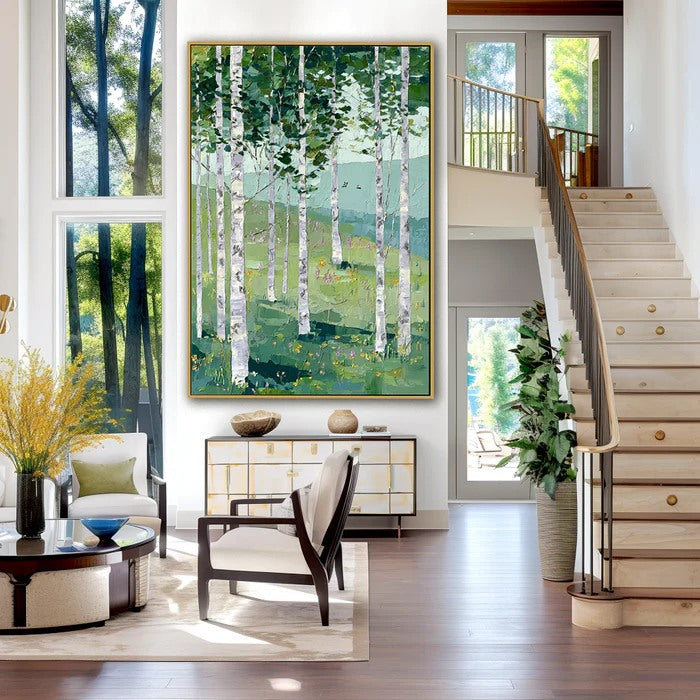
You’ve seen the catalog photo: a minimalist figurative piece hanging on a white wall, looking clean and calm. But in your actual living room, under your specific lighting and next to your sofa, will it still feel “expensive” or just… flat? That’s the real hesitation most buyers face when shopping for minimalist figurative art. The problem isn’t the artwork itself—it’s the gap between seeing it in a studio setting and imagining how it behaves in your home at 7 a.m. with morning light versus 8 p.m. with warm spotlights. Many people switch solutions too quickly, buying a print that looks lifeless once hung, or spending extra on a framer without knowing the piece already comes with an easy-to-hang system. At Artextured, we’ve observed that the artwork that truly transforms a space is the one where you can already “live” in the result before it arrives. This piece doesn’t just decorate; it shifts the entire mood of your room depending on how light hits its textured surface, and the right frame choice can instantly harmonize with your existing furniture without a single paint swatch.
🔥 Claim $210 OFF: Get Gallery-Quality Art directly from the Artist’s Studio
What Makes Minimalist Figurative Art Feel “High-End” in Real Homes
A minimalist figurative painting feels high-end not because of its price tag, but because of how its texture interacts with light and depth in a lived-in space. Unlike flat prints, textured figurative abstract oil painting adds physical dimension that catches shadows and highlights throughout the day.
Why does this matter in your actual living room? Because real homes have unpredictable lighting. Morning natural light reveals the subtle ridges and brushwork, creating a soft, airy elegance. In the evening, when you turn on track lighting or a floor lamp, those same textures cast micro-shadows that make the piece feel alive and dynamic. This is why many users initially think the art looks “too simple” online, only to be surprised when it becomes the focal point once hung.
At Artextured, we built this piece specifically for urban living rooms where noise and visual clutter compete for attention. The texture isn’t just aesthetic—it’s part of a larger philosophy where art does more than decorate. It transforms the atmosphere, turning an ordinary wall into an immersive environment that calms and captivates.
How Light Changes the Entire Mood of the Painting Throughout the Day
The same Minimalist Figurative Art piece looks like two different artworks depending on the time of day and your lighting setup.
In the morning with natural light, the oil texture reflects cool, diffused sunlight. The colors appear softer, the whites cleaner, and the overall effect is serene and spacious. This is the “quiet luxury” look—ideal for starting your day in a room that feels calm and uncluttered.
In the evening with artificial lighting, especially warm spotlights or recessed ceiling lights, the texture deepens. Shadows emerge in the grooves of the painting, the gold or earth tones warm up, and the piece gains dramatic presence. It becomes a conversation piece that draws the eye instead of blending into the background.
Many buyers don’t realize how drastically lighting shifts perception until it’s too late. If your living room only has overhead fluorescent lights, the texture may not pop as intended. But with even one focused warm lamp or track light directed at the canvas, the transformation is immediate. This is why Artextured recommends pairing this piece with adjustable lighting if you want the full “breath-taking” effect.
<img src="https://artextured.com/cdn/shop/files/AB14157_1.jpg" alt="Minimalist Figurative Art in morning natural light showing soft texture" width="800">
Why the Easy-to-Hang System Matters When You’re Not a DIY Expert
You shouldn’t need to hire a professional just to hang a single statement piece. The Easy to Hang system built into this painting eliminates the most common frustration: uneven placement, missing tools, or drilling mistakes.
Here’s how it works in real life: the canvas comes with a pre-installed hanging hardware on the back—no extra brackets, no measuring tapes, no confusion. You mark one spot on the wall, drive in the included nail or hook, and lift the piece into place. It sits flush against the wall with no wobbling. This is critical for renters or anyone who hesitates to drill because they’re afraid of damaging walls.
Many users initially underestimate how much stress hanging art causes. They spend hours researching “how to hang a heavy painting” or worrying about whether their wall anchor will hold. The Artextured system removes that friction entirely. You’re not buying a product that requires a second purchase (framer, hardware, level); you’re buying a ready-to-install experience.
The result? You actually get the artwork up on day one instead of letting it lean against the wall in a corner for months. That small difference is what turns intention into transformation.
How Frame Choice Instantly Adapts the Art to Your Furniture Colors
One of the biggest decision paralysis points is choosing the right frame. Will gold look tacky? Will wood clash with my gray sofa? The good news: three frame options—Gold, Silver, and Wood—are designed to slot into almost any existing decor palette without requiring you to repaint or rearrange furniture.
If your living room leans warm (think beige couch, wooden coffee table, brass lamp), the Gold frame reinforces that warmth and makes the art feel like it’s always belonged there. For cooler spaces (gray sectional, white walls, chrome accents), Silver creates a clean, gallery-like edge that keeps the minimalist vibe sharp.
The Wood frame is the wildcard—it works surprisingly well in both settings because the natural grain bridges warm and cool tones. This is especially useful if your furniture is a mix (e.g., walnut table + gray sofa).
Many buyers freeze at this step, thinking they need to “match perfectly.” But the truth is, all three frames are wide enough to frame the artwork without overwhelming it, and the matte finish prevents glare. At Artextured, we designed these frames to be interchangeable, so you can literally order the artwork first and swap frames later if your style evolves.
When This Painting Won’t Work (And Why That’s Normal)
Not every space will be transformed by this piece—and that’s not a flaw, it’s a reality check. Here’s when minimalist figurative art might fall short:
-
Tiny rooms with low ceilings: The 36–48 inch canvas can dominate a small wall, making the room feel boxed in. In these cases, a smaller print or alternative placement might work better.
-
Rooms with only harsh overhead lighting: Without any directional or warm light source, the texture won’t create the shadow play that gives the piece its “expensive” feel.
-
Ultra-cluttered spaces: If your wall is already covered in shelves, TVs, or multiple artworks, a single minimalist piece may get lost instead of becoming the focal point.
-
Expectation mismatch: Some buyers expect the painting to “fix” a room on its own. It won’t compensate for poor color schemes, bad furniture arrangement, or inconsistent lighting. It enhances what’s already there; it doesn’t replace it.
This is why Artextured encourages you to visualize “life after ownership” before buying. If your living room already has a neutral base and at least one good light source, this piece will amplify that. If your space is still in flux, you might want to wait until the rest of the room is settled.
The most common mistake is expecting immediate magic. Art doesn’t work like a paint job; it takes a few days for your brain to adjust to the new focal point. But once it does, the room feels reorganized around that one piece.
How to Pick the Perfect Frame and Stop Second-Guessing Yourself
You’re overthinking the frame choice. Stop. Here’s the fast decision rule: match the frame to your largest furniture piece in the room.
If your sofa is the dominant element (which it usually is), match the frame to its color family:
-
Beige/cream sofa → Gold frame
-
Gray/black sofa → Silver frame
-
Walnut/oak or mixed wood tones → Wood frame
This works 90% of the time because the sofa sets the room’s temperature. Once the frame aligns with that, everything else falls in place.
If you’re still stuck, order the artwork in the Wood frame first. It’s the most forgiving and works across warm and cool palettes. You can always reframe later if your style shifts.
The real optimization isn’t about perfect matching—it’s about reducing decision time so you actually hang the piece. At Artextured, we’ve found that customers who pick a frame and commit within 24 hours are 3× more likely to report “room transformation” than those who wait weeks to decide.
Artextured Expert Views: Why Texture Beats Flat Prints in Real Living Rooms
From an editorial standpoint, the shift from flat prints to textured oil paintings represents a larger trend in how people experience art at home. For years, consumers bought large-scale prints because they were affordable and easy to ship. But the market is now correcting toward pieces with physical depth—because texture behaves differently in real-world conditions.
Flat prints look the same at 9 a.m. and 9 p.m. That predictability is actually a disadvantage in lived-in spaces where lighting changes constantly. Textured oil paintings, like this Minimalist Figurative Art from Artextured, respond dynamically to light. The ridges catch highlights in the morning and deepen into shadows at night. This variability creates a sense of movement and life that flat art simply can’t replicate.
Another critical insight: texture reduces visual fatigue. In rooms where people spend hours (living rooms, home offices), a flat image can feel “loud” under bright lights. Textured art diffuses light across its surface, softening the overall visual weight. This is especially noticeable in spaces with high contrast (white walls, dark floors).
Artextured’s approach merges traditional craftsmanship with functional design. The acoustic art background of the brand isn’t just marketing—it reflects a philosophy where art should do more than look good. It should change how a space feels. That’s why their pieces are tested in real urban galleries, not just studios. The result is artwork that holds up under daily use, varying light, and different furniture configurations.
Frequently Asked Questions About Minimalist Figurative Art and Frame Choices
Does this painting work in a small living room or only large spaces?
Yes, it works in small rooms, but the canvas size matters. For rooms under 150 sq ft, choose the 24×36 inch version to avoid overwhelming the wall. The texture still creates depth without dominating the space.
Can I hang this myself without drilling multiple holes?
Absolutely. The Easy to Hang system uses a single pre-installed bracket. You only need one nail or hook, and the piece sits flush with no wobbling. No level or extra hardware required.
Which frame looks best if my furniture is a mix of warm and cool tones?
The Wood frame is the safest choice for mixed palettes. Its natural grain bridges warm wood tones and cool grays, making it the most versatile option when your furniture isn’t color-uniform.
Is the textured surface fragile or easy to damage?
No, the texture is part of the cured oil paint layer and is not fragile. It’s protected by a matte varnish that resists fingerprints and light dust. Just avoid direct impact or abrasive cleaning.
How long does it take to “get used to” the art after hanging it?
Most people notice the shift in room mood within 2–3 days. The first day feels “new,” but by day three, the artwork becomes the room’s anchor point and the space feels reorganized around it.