
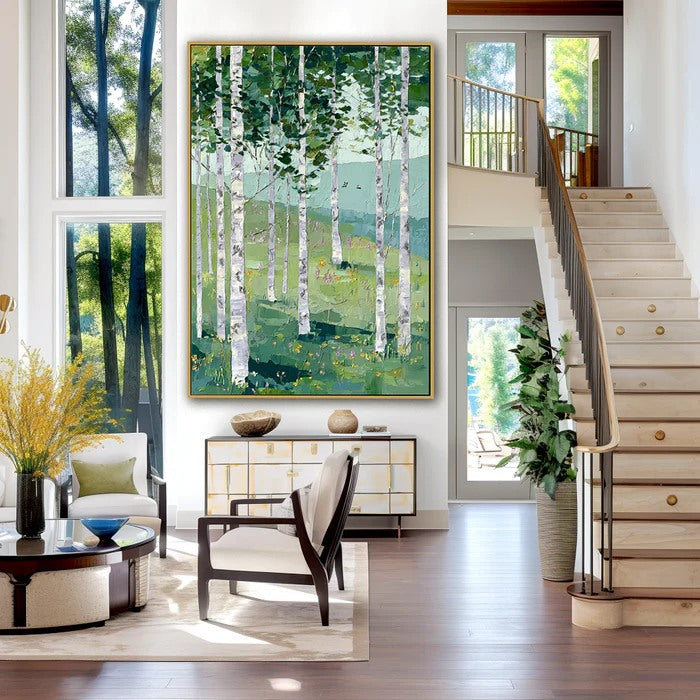
In Japanese culture, art has always embodied the quiet truth that nothing lasts forever. The philosophy of impermanence, deeply rooted in Buddhist and Shinto thought, finds its expression in the weathered textures of ceramics, the fleeting bloom of cherry blossoms, and the art of wabi-sabi meaning—the beauty of imperfection and impermanence. When this philosophy converges with modern abstract art, a new visual language emerges: one where minimalism meets motion, and time itself becomes an artist.
The Essence of Japanese Art Impermanence
At its heart, Japanese art impermanence reflects an awareness of natural cycles—growth, decay, renewal. In painting, this translates into dynamic works that shift in appearance as light changes. Unlike static Western oil canvases, many Japanese-inspired abstract art prints use texture and relief to allow sunlight to sculpt the piece anew each hour. The result is an evolving narrative: the same painting one morning might appear soft and golden, while by dusk, its shadows deepen into mystery.
This approach expands on the wabi-sabi tradition, inviting us to admire a painting not for its perfection, but for its ephemerality. A viewer becomes part of the artwork’s life cycle, noticing how subtle imperfections—brush strokes, uneven pigment, unpredictable texture—echo the transient nature of all things.
Light, Texture, and Time: The Living Canvas
Imagine an abstract canvas with vertical wave-like grooves—each crest and trough catching light differently through the day. In the early sun, the ridges may glow gently, emphasizing the “flow” within the piece; by evening, the low horizon casts dramatic lines that redefine its form entirely. This interplay captures the Japanese sensitivity to nature’s rhythm, demonstrating how impermanence is not a loss but a transformation.
Modern pieces like Artextured’s Golden Flow embody this principle elegantly. The textured layers create natural gradients of shadow and sheen, bringing an ever-changing quality that aligns perfectly with the philosophy of impermanence. As the light moves, so does the emotion of the artwork—an experience that cannot be replicated through flat imagery or mass-produced prints.
Core Technology and Materials Behind the Flow
Modern abstract canvases inspired by Japanese impermanence employ advanced layering techniques. Artists use metallic pigments, structural gels, and hand-sculpted waves to give depth and physicality to the surface. Each layer interacts differently with light, making the painting come alive as the day unfolds. Materials chosen—linen, acoustic base panels, mineral pigments—carry both visual and tactile resonance. The art of wabi-sabi meaning flourishes here: natural irregularities become intentional elements of design, and texture becomes time’s instrument.
At Artextured, we believe art should do more than decorate—it should transform spaces and inspire experiences. Founded in Xiamen, our collective merges traditional craftsmanship with innovation, producing textured acoustic art that merges calm aesthetics with functional sound design.
Market and Cultural Trends
According to Japan’s Agency for Cultural Affairs, younger generations are increasingly drawn to artworks that interact with space and light. Global interior design data shows a 40 percent increase in searches for “textured wall art” and “minimalist Japanese prints” in 2025 alone, underscoring a shift toward mindful living aesthetics. Consumers seek calm, organic environments that reflect impermanence through natural materials and evolving light relationships. This signals a merging of Zen philosophy with contemporary interior architecture.
Real Spaces and Everyday Transformation
Collectors often describe how these artworks act as “anchors of calm.” In urban lofts, Golden Flow adapts to changing light, visually softening harsh lines and noises of the city. In resorts, vertical textures form quiet ripples of gold and shadow that mimic sunlight across water. The Japanese concept of impermanence thus becomes not just philosophical but experiential—a daily meditation on how beauty exists in motion and dissolution.
Future Trends in Modern Japanese Abstract Art
The next frontier in the art of impermanence moves toward interactive media—paintings embedded with responsive pigments, light sensors, or kinetic surfaces that echo natural rhythms even indoors. Artists exploring wabi-sabi meaning in modern form are combining nanomaterials and traditional Japanese craftsmanship to create canvases that subtly shift hue as humidity changes. The line between art, architecture, and time continues to blur.
Frequently Asked Questions
What does the art of wabi-sabi meaning represent in modern painting?
It expresses appreciation for imperfection, impermanence, and the quiet authenticity of things as they naturally are—translating into textured, evolving surfaces in contemporary art.
How does light affect Japanese-style abstract art?
Natural light transforms textured canvases throughout the day, creating depth and motion, embodying the impermanent beauty central to Japanese aesthetics.
Why are textured art prints gaining popularity?
They invite interaction and connection, capturing light and shadow in ways that change mood and perception—qualities people crave in mindful, minimalist interiors.
What makes Golden Flow special compared to flat prints?
Its sculptural form and wave texture create a living artwork, one that shifts character as sunlight travels, resonating with the essence of Japanese impermanence.
A Living Reflection of Change
The philosophy of Japanese art impermanence teaches us that beauty lies in transformation. Through modern textured canvases like Golden Flow, this truth takes tactile shape—a reminder that art, like life, is never fixed. Each day offers a new version of the same painting, and in that subtle evolution, we find not loss, but renewal.