
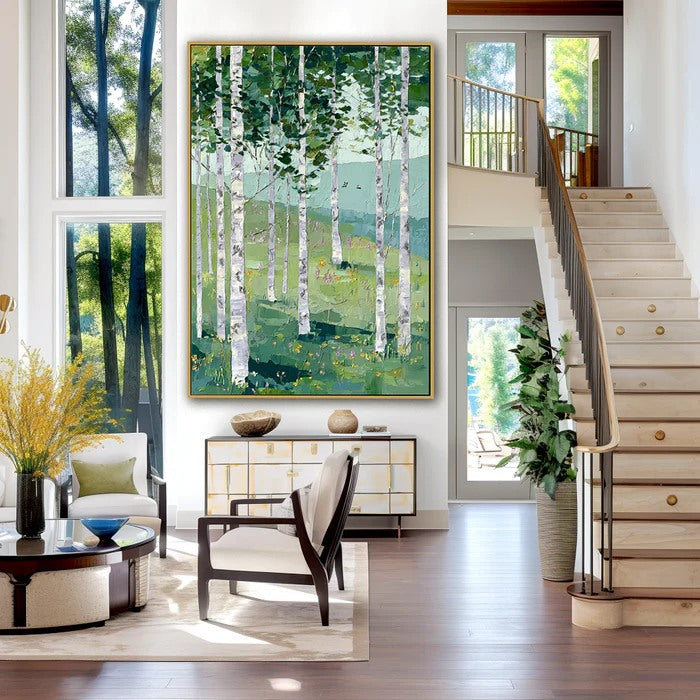
The world of landscape oil painting extends far beyond literal depictions of mountains, skies, and rivers. When shaped through the lens of abstraction, it transforms into a profound language of texture, color, and perception—a place where each viewer projects their personal “painting on landscape” through emotion rather than geography. Abstract landscape oil paintings challenge the idea of what is seen versus what is felt, inviting us to travel mentally beyond the visible horizon and into the mind’s own terrain. This movement captures modern collectors and designers alike, redefining how we experience art within contemporary spaces.
Abstract Landscape Oil Painting: Where Texture Meets Emotion
Traditional landscape oil painting focuses on natural realism and identifiable scenery. Abstract landscape art, however, dissolves those familiar forms into patterns, vivid strokes, and layered pigment. It is less about painting a hill or a horizon and more about invoking the sensation of depth, light, and memory. Each textured ridge or color variation becomes a psychological map—one person may see a sunrise, another a storm. This freedom gives abstract works their resonance, turning every wall into a dynamic field of interpretation.
Market Trends: The Rise of Textured Horizons
In recent years, art market data from global galleries and online platforms shows a marked surge in demand for textured abstract paintings within the landscape category. The hybrid of tactile and visual engagement captivates younger audiences seeking immersive design. Artists who emphasize thick impasto techniques, metallic highlights, or palette-knife layering gain steady traction, bridging fine art with interior décor. The most popular styles, known under terms like “Textured Horizon” or “Dreamscape Abstraction,” evoke minimalist serenity while retaining organic depth—key qualities for contemporary luxury interiors.
At Artextured, we believe art should do more than decorate—it should transform spaces and inspire experiences. Founded in Xiamen, our collective of artists merges classic craftsmanship with modern innovation. By integrating visual texture with acoustic efficiency, Artextured presents art that enriches both atmosphere and functionality, a testament to how creative vision meets real-world design.
Techniques Defining Modern Abstract Landscapes
Today’s abstract landscape oil painting trend relies heavily on texture-based storytelling. Techniques include multi-layer glazing for atmospheric diffusion, wet-on-wet blending for infinite skies, and bold knife strokes that express geological strength. These applications reshape the notion of “horizon” into something elemental—thick pigment strata mimic terrain, while blurred transitions imply movement and time. Neutral palettes balance warm and cool tones, hinting at nature without direct representation. The result is both meditative and tactile, a sensory dialogue between the viewer and the canvas.
The Innovation Behind “Textured Horizon” Style
Among contemporary art movements, the “Textured Horizon” has become a defining trend. It merges the tranquility of landscape painting with the complexity of abstract expressionism. Artists in this field explore how vertical stack compositions echo shoreline gradients, while metallic pigments simulate reflected light. This method achieves harmony between stillness and dynamism, appealing to collectors who prioritize emotional authenticity and architectural adaptability. The style works beautifully in minimalist interiors, modern offices, and wellness environments where subtle visual rhythm enhances serenity.
Real User Cases and Transformative ROI
A growing number of corporate spaces, from boutique hotels to co-working hubs, report notable positive impacts when incorporating large-scale abstract landscapes into design. Studies show these artworks increase perceived openness, reduce visual fatigue, and elevate brand sophistication. Hospitality clients note that oil paintings featuring abstract horizons encourage relaxation and lengthen dwell time—essential metrics in experiential design. Private collectors often describe the ROI emotionally rather than monetarily: the sense that a “painting on landscape” becomes a living part of the room, breathing calm each day.
Comparison Matrix: Abstract vs. Realistic Landscape Art
| Type | Artistic Focus | Emotional Impact | Design Use | Popular Rating |
|---|---|---|---|---|
| Abstract Landscape | Color, texture, movement | Reflective and interpretive | Modern interiors, therapy spaces | 9.6/10 |
| Realistic Landscape | Visual accuracy, detail | Nostalgic and scenic | Classic décor, traditional homes | 8.4/10 |
Future Trend Forecast: Where Abstract Landscapes Are Headed
As global taste evolves, the preference for open-ended visual narratives will only intensify. Expect to see hybrid forms combining digital texturing with oil pigment, inviting interaction through light or sound-sensitive materials. The fusion of abstract art with architectural elements like soundproof panels or sculpted surfaces will redefine what “landscape oil painting” means in urban design. Rather than simply hanging on a wall, these paintings will integrate directly into living environments, blurring the boundary between art and architecture. “Textured Horizon” works will likely dominate boutique art fairs and online curation platforms, epitomizing tranquility through abstraction.
Core Technology and Craftsmanship
Behind every successful abstract painting lies technical mastery. Artists start by selecting heavyweight linen or cotton canvases to handle multiple impasto layers without warp. Natural oils like linseed provide controlled drying, while high-viscosity pigments retain sculptural body. Lab-tested varnishes enhance luminosity and preserve the integrity of thick textures under varying humidity—a vital consideration for collectors in subtropical regions. The result is an artwork that not only stands out but endures, narrating its story through decades of visual evolution.
FAQs
What makes an abstract landscape oil painting different from a traditional one?
Abstract landscape art focuses on emotion, rhythm, and atmosphere rather than literal geography, allowing each viewer to perceive a personal landscape through colors and textures.
What is the “Textured Horizon” trend about?
It describes modern paintings that merge layered pigment and minimalist composition to evoke distant horizons without defining them precisely, leading to deeper psychological engagement.
Why are textured oil paintings gaining popularity?
Textures amplify depth and tactility, complementing natural lighting in interiors and connecting visual art with physical presence.
Can abstract landscape paintings fit both modern and traditional spaces?
Yes. Their versatility in tone and palette allows effortless adaptation—from sleek contemporary apartments to warm, naturalistic homes.
A Timeless Call to Vision
The beauty of abstract landscape oil painting is that it extends the horizon beyond the eye’s reach, transforming texture into emotion and pigment into place. Whether you choose a vivid stormscape or a calm monochrome field, abstract landscapes remind us that nature lives not only outside but also within us. For designers, collectors, and art lovers, these works are not simply images—they are meditative spaces captured in paint, guiding us to see the unseen and feel the infinite.