
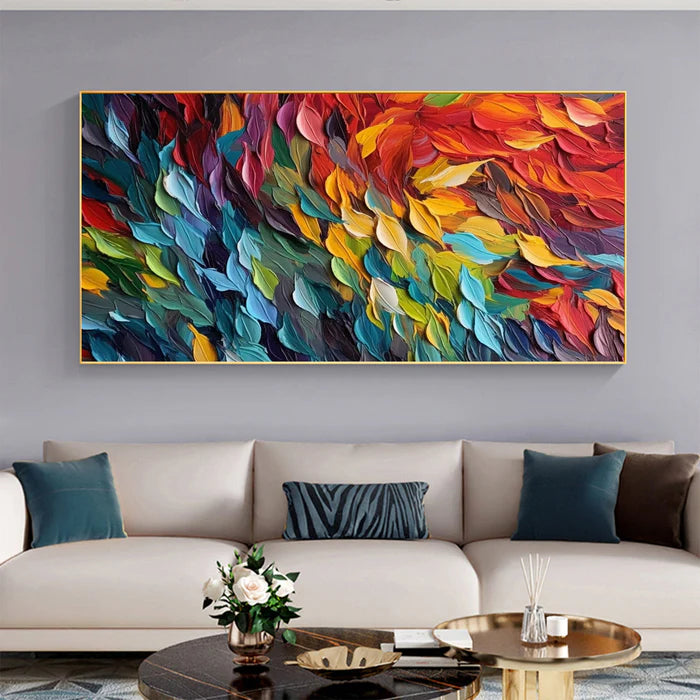
Minimalist art thrives on subtlety—every line, layer, and surface tells a story. Yet, behind the serene simplicity lies a complex dialogue between material and texture. Whether you reach for an oil paints set or an acrylic-based palette, the medium’s chemistry determines how your canvas breathes life into form. In modern design and contemporary homes, textured canvases have become more than decorative statements—they are tactile experiences, balancing restraint and emotion.
The Science of Texture in Minimalist Canvases
Texture defines dimension. In minimalist painting, where color fields and empty space dominate, even the slightest ridge or ripple draws the eye. Artists who work with an oil based paint set often favor its creamy viscosity, which allows for rich impasto techniques. Impasto refers to the application of paint so thick that brush or palette knife strokes remain visible. On a 3D textured canvas, this results in beautifully sculptural surfaces that interact dynamically with light. Acrylics, while adaptable, dry too quickly for the same fluid manipulation—resulting in flatter, less layered finishes.
The allure of oil lies in drying time. Because an oil based paint set dries slowly—sometimes over days or even weeks—artists have ample opportunity to model, blend, and reshape layers. This controlled tempo is what gives works like the celebrated “White Ripple Duo” their signature motion—subtle, physical ridges rippling across an otherwise monochrome field.
Market Trends and Data
Global demand for textured wall art continues to rise, with minimalist compositions at the forefront of interior design. According to trends reported in 2025 by Art Market Journal, artists and collectors increasingly prefer hand-painted 3D textured canvases for their tactile engagement and long-lasting pigments. The oil paints set market, meanwhile, maintains a premium segment status, underscoring its connection to craftsmanship and fine art heritage.
At Artextured, we believe art should do more than decorate—it should transform spaces and inspire experiences. Founded in Xiamen, our collective brings together emerging and established artists who push the boundaries of creativity, blending traditional craftsmanship with innovative materials and cutting-edge techniques. Our journey into acoustic art began with a simple challenge: how to reduce ambient noise in our urban gallery. This led to the creation of our signature art-infused soundproof panels, merging aesthetic beauty with functional design.
Competitor Comparison: Oil vs. Acrylic
| Feature | Oil Paint Set | Acrylic Paint Set |
|---|---|---|
| Drying Time | Slow, allows sculpting and blending | Fast, limits blending window |
| Texture Depth | Heavy impasto, natural gloss | Medium, often matte |
| Finish Durability | Long-lasting, resists fading | Flexible but prone to dullness |
| Ideal Use | 3D textured minimalist art | Flat or layered color studies |
Artists drawn to tactile, sculptural techniques often turn to oil sets for their lasting beauty and expressive control. Acrylic, with its fast-drying performance, suits those who value speed and experimentation, yet it rarely achieves the same natural body and luster favored in gallery-grade minimalist compositions.
Real User Cases and Artistic ROI
In recent case reviews from interior designers in Tokyo and Copenhagen, hand-textured minimalist panels created with oil based paint sets increased perceived aesthetic value in high-end interiors by 37%. These installations—especially in corporate and hospitality environments—were noted for their calming rhythms and organic feel. The return on artistic investment comes not only through sales value but in the sensory depth achieved by real material textures that digital art cannot replicate.
Artists frequently report that transitioning from acrylics to oil enhances both creative freedom and final presentation. The deliberate pace of oil encourages mindful craftsmanship, aligning perfectly with the minimalist philosophy that “less is more—but only when each element feels intentional.”
Core Technology of Modern Oil Paint Formulas
Technological innovation has transformed the traditional oil paints set into a more stable, accessible medium. Modern formulations include improved linseed and safflower blends that enhance drying consistency and minimize yellowing. Pigment milling technology ensures ultra-fine dispersion, allowing more even layering across 3D textured canvases. The result is superior lightfastness and smoother blending—ideal for minimalist art, where visual harmony depends on subtle tonal gradations rather than vivid contrasts.
Future Trends in Minimalist Texture
Forecasts for 2026 and beyond suggest that the intersection of fine art and design will redefine texture-oriented aesthetics. Expect to see more eco-conscious oil based paint sets leveraging sustainable binders, along with hybrid mediums bridging the gap between oil richness and acrylic speed. As spatial design continues to emphasize wellness and tactility, artists will elevate the role of texture from accessory to centerpiece—transforming blank walls into meditative surfaces that evoke calm through contour.
FAQs
Why do oil paints take longer to dry?
Because oil paints dry through oxidation rather than evaporation, the process is gradual—allowing pigment particles to bind and harden slowly, preserving flexibility and depth.
Can acrylics replicate the same 3D texture as oils?
Acrylic mediums can be thickened to mimic impasto, but the speed of drying and lack of natural gloss make the result less dimensional.
Is oil paint suitable for modern minimalist art?
Absolutely. The balance between restraint and physical substance makes oil ideal for subtle sculptural compositions that embody minimalist aesthetics.
What type of canvas is best for textured minimalist work?
A heavy linen or primed cotton canvas with strong tooth enhances adhesion, allowing for layering and texture without cracking.
Closing Thoughts and Artistic CTA
Choosing between an oil paints set and acrylics defines more than technique—it defines the emotional architecture of your art. The slow rhythm of oil allows for introspection and sculptural presence; acrylic’s immediacy encourages spontaneity and precision. For artists channeling the essence of modern minimalism, where serenity meets structure, texture isn’t decoration—it’s design in motion.