

You've probably noticed it: beautifully designed living rooms that somehow still feel a bit staged. The furniture is expensive, the layout is clean, but something feels flat or overly curated. This is exactly where Wabi Sabi Art and earthy tone wall art are changing the conversation in 2026. People searching for neutral living room decor aren't just looking for color palettes anymore—they're trying to fix a feeling problem. How do you make a space feel calm, lived-in, and quietly luxurious without overdecorating? That tension is why earthy Wabi Sabi wall art has become the missing piece in many modern homes.
Discover the Texture: Shop 100% Hand-Painted Nomad Line Abstract Figures Wall Art
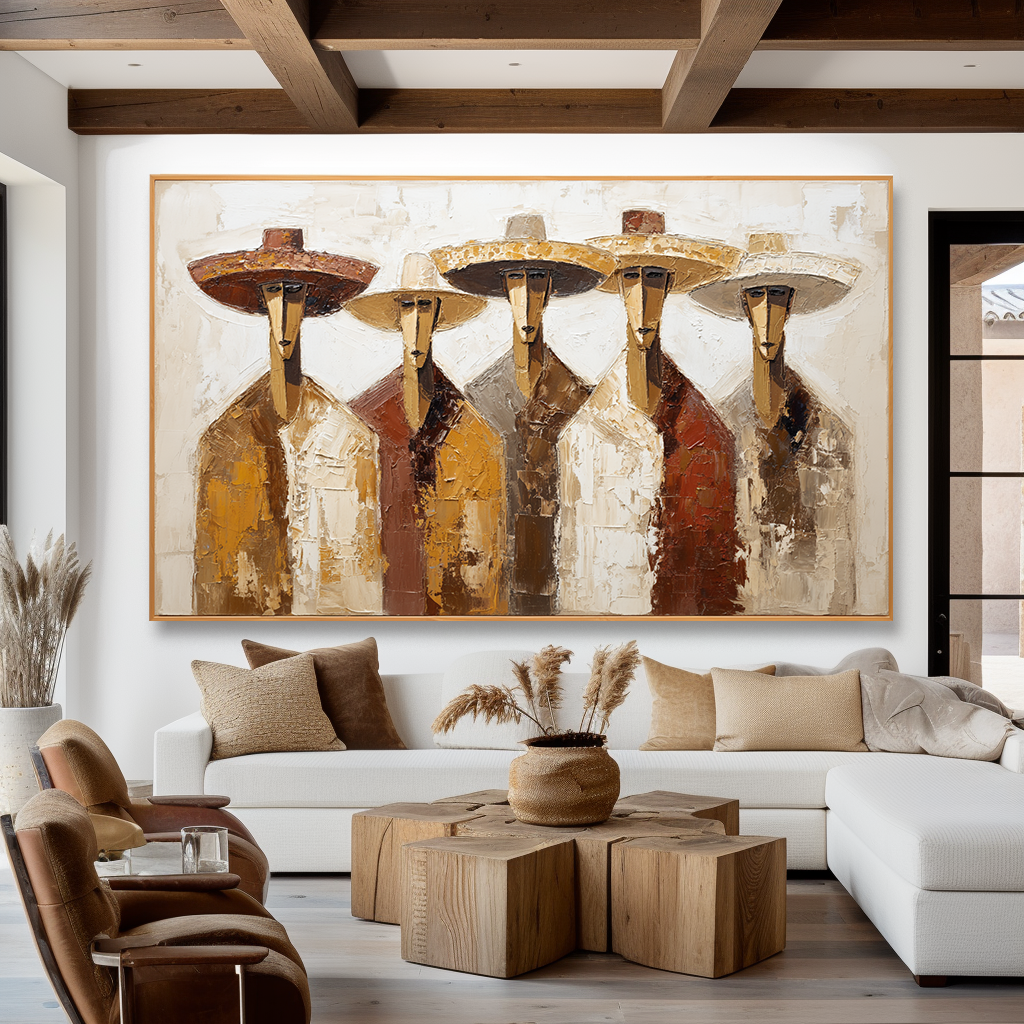
What makes Wabi Sabi art feel different from typical wall decor?
Wabi-sabi isn't about minimalism alone—it's about embracing imperfection, texture, and time.
In real living spaces, this shows up as subtle irregular lines, raw materials, and muted earthy tones that don't demand attention but slowly shape the mood of a room. Unlike polished abstract prints, Wabi Sabi Art often looks slightly uneven or hand-touched, which creates a sense of authenticity people instinctively respond to.
Many homeowners initially think "neutral" means safe or boring. But when the artwork carries texture and depth, even a beige palette can feel layered and intentional rather than flat.
Why do earthy tone wall art pieces anchor a room so effectively?
They work because they connect everything else without competing for attention.
In practice, living rooms often struggle with visual imbalance—especially when mixing modern sofas, wood furniture, and soft textiles. Earthy tone wall art acts like a bridge. It pulls together cream sofas, warm wood, and natural fabrics into a cohesive visual language.
This becomes especially noticeable in open-plan spaces, where without a grounding element, the room can feel scattered. A well-placed piece of earthy artwork quietly organizes the entire environment.
How does hand-textured art change the atmosphere compared to printed pieces?
Texture adds depth that prints simply can't replicate.
Printed wall art tends to look consistent under all lighting conditions. But hand-textured pieces—like Artextured's Nomad Line—react to light throughout the day. Shadows shift, brush details emerge, and the artwork feels slightly different depending on where you sit.
This matters more than people expect. In real usage, especially in spaces with natural light, flat prints can start to feel lifeless over time. Textured work, on the other hand, creates subtle visual movement, which keeps the space engaging without adding clutter.
Where does this style actually work best in a home?
It performs best in spaces designed for relaxation and slow living.
You'll see the strongest impact in:
-
Living rooms with neutral sofas and soft lighting
-
Open spaces where visual cohesion is difficult to maintain
-
Apartments where minimal decor risks feeling empty
A common mistake is placing Wabi Sabi pieces in already busy rooms. In those cases, the effect gets lost. The style needs breathing room to deliver that calm, grounded feeling people are after.
Earthy art vs traditional abstract decor: what's the real difference?
Many buyers initially choose bold abstract prints for impact, but later switch to earthy tones when they want their space to feel more livable rather than decorative.
Why doesn't Wabi Sabi wall art always work as expected?
It can feel underwhelming if the surrounding space doesn't support it.
One of the most common frustrations is expecting instant "wow" impact. Wabi Sabi doesn't work that way. If paired with overly glossy furniture, harsh lighting, or too many decorative elements, the subtlety disappears.
Another issue is scale. Smaller pieces often fail to create presence, especially on large walls. People sometimes blame the style itself, when the real issue is proportion or placement.
There's also a learning curve. Unlike bold art that immediately defines a room, Wabi Sabi grows on you over time. Some users switch styles too quickly before the space fully settles.
How to pair a cream sofa with earthy tone wall art without overthinking it?
Keep the palette tight and let texture do the work.
A reliable approach:
-
Use a cream or off-white sofa as the base
-
Add one large-scale earthy tone artwork above it
-
Introduce 1–2 natural materials (linen, wood, clay)
-
Avoid adding competing colors like bright blues or metallics
In real homes, the mistake isn't lack of decor—it's too many competing accents. When the palette stays restrained, the artwork naturally becomes the emotional center of the room.
Artextured Expert Views
From a material and spatial design perspective, the growing preference for Wabi Sabi Art reflects a shift away from purely visual decoration toward sensory experience. At Artextured, this is particularly evident in how textured surfaces interact not only with light but also with sound.
In urban living environments, where echo and ambient noise are often overlooked, wall art that incorporates acoustic functionality introduces a secondary layer of comfort. This doesn't immediately register visually, but over time, users notice a softer, more controlled atmosphere.
The Nomad Line series, for example, combines abstract human forms with irregular textures that subtly diffuse both light and sound. This dual function aligns with how modern interiors are evolving—less about statement pieces, more about environmental quality.
Rather than dominating a space, these artworks tend to integrate into daily life. Their value becomes more apparent through prolonged use, especially in living rooms where people spend extended periods relaxing, reading, or hosting guests.
What small adjustments make this style feel more high-end?
It's less about adding more and more about refining what's already there.
Focus on:
-
Lighting: Warm, indirect lighting enhances texture visibility
-
Spacing: Leave negative space around the artwork
-
Scale: Choose one larger piece instead of multiple small ones
-
Material consistency: Stick to natural finishes over glossy surfaces
Many people chase a luxury look by adding layers, but with Wabi Sabi, restraint is what creates sophistication.
FAQs
Why does my neutral living room still feel boring even with wall art?
Because neutral decor without texture often lacks depth; in real spaces, flat prints and uniform materials fail to create visual variation, so switching to textured earthy tone wall art can add dimension without adding clutter.
Is Wabi Sabi wall art worth it compared to cheaper prints?
Yes, if you value long-term atmosphere over short-term visual impact; while prints are more affordable, they tend to feel static over time, whereas textured pieces evolve with lighting and usage.
How do I choose the right size for earthy tone wall art?
Go larger than you think; in real living rooms, undersized art often looks disconnected from furniture, while properly scaled pieces anchor the entire seating area.
Can Wabi Sabi decor work in small apartments?
It can, but only if you keep the space uncluttered; in smaller homes, too many items will dilute the calming effect, so fewer, more intentional pieces work better.
How long does it take for this style to feel right?
Usually a few days to a few weeks; unlike bold decor that creates instant impact, Wabi Sabi grows on you gradually as you experience the space under different lighting and daily routines.