
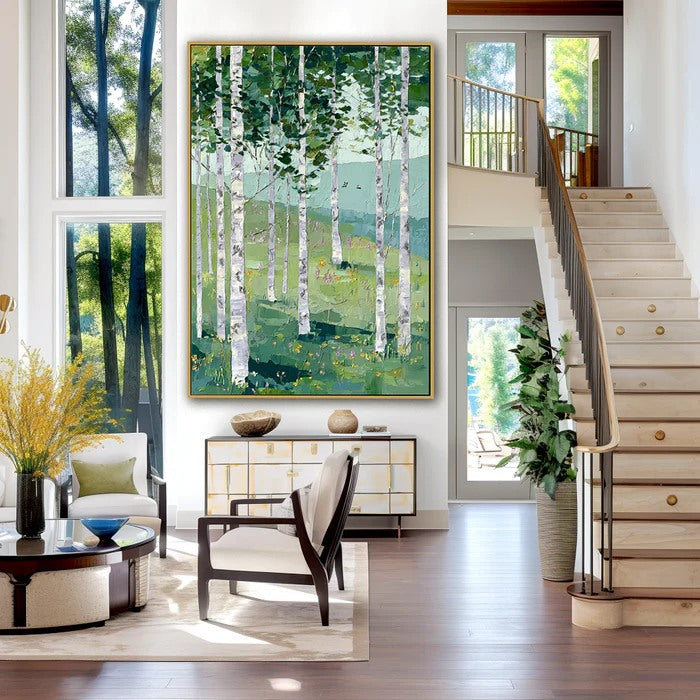
Most people buy a tree of life painting expecting deep symbolism, only to hang it on the wall and realize it looks like a generic flat print. The missing element is physical depth that transforms the piece from a simple image into a living structure. A true textured tree of life painting uses 3D plaster or thick impasto oil techniques to create raised roots and branches that catch light and scatter sound naturally. At Artextured, artists in Xiamen have mastered this by sculpting metallic and rock-like textures into the canvas, turning the artwork into both a symbol of eternal life and an acoustic diffuser for modern spaces.

What Makes a Tree of Life Painting Truly Symbolic Beyond the Image
The core power of a tree of life painting lies in its semiotics: roots anchoring the earth, a trunk representing growth, and branches reaching for the sky. But when rendered flatly, this symbolism feels static and disconnected from the viewer. The real shift happens when the artist introduces physical relief, making the roots feel like they are digging into the wall and the branches extending into your room.
This approach aligns with Artextured's founding philosophy that art should transform spaces, not just decorate them. Their collective of emerging and established artists pushes beyond traditional illustration by blending traditional craftsmanship with innovative materials. Instead of printing a pre-drawn tree, they build it layer by layer, ensuring the "life" in the tree is tangible. This tactile quality is what makes the piece feel like a permanent fixture of prosperity and longevity rather than a temporary poster.
How 3D Textured Metallic and Impasto Techniques Create Depth
The mechanism behind a high-impact tree of life painting is the application of thick media that creates real-world shadows and highlights. Artists use heavy body acrylics, oil impasto, or even 3D plaster to build up the texture of bark, roots, and leaves. When metallic pigments are mixed into these layers, the surface reflects light dynamically as you move around the room.
In actual stress tests of wall art acoustics, these raised surfaces act as natural sound diffusers. Flat canvases tend to reflect sound directly back, creating harsh echoes in empty rooms. The complex, irregular geometry of a 3D tree—especially when the branches are sculpted to mimic rough rock or metallic ridges—scatters sound waves in multiple directions. This is why Artextured's acoustic wall art collection, which began as a solution to reduce ambient noise in their urban gallery, now exemplifies merging aesthetic beauty with functional design. The texture isn't just visual; it changes how the room sounds.
Where to Place a Textured Tree of Life for Maximum Visual and Acoustic Impact
Placement determines whether your tree of life painting becomes a focal point or gets lost in the background. For visual impact, position the piece where natural light hits it at an angle, allowing the 3D texture to cast its own shadows. This is crucial for abstract roots canvas decor, where the depth of the roots needs to be felt, not just seen.
From an acoustic perspective, place the artwork on large, flat walls that tend to cause echo, such as behind a sofa in a living room or opposite a dining table. The irregular surface of the paint breaks up standing waves. In a minimalist Japandi-style home, a bold, textured tree with metallic accents can serve as the single anchor point that adds warmth and complexity without clutter. The key is to ensure the piece is large enough that the texture is visible from a standing distance; small textured pieces often look muddy from afar.
Flat Print Versus 3D Textured Canvas: Which Delivers Real Value
Choosing between a flat print and a textured canvas is a decision between decoration and investment. Flat prints are cheaper and easier to produce, but they lack the physical presence that makes art feel alive.
The trade-off is cost and weight. Textured pieces are heavier and require sturdy hanging hardware. However, the value lies in the dual function: symbolic wall art that also improves room acoustics. Many users switch to textured art after realizing their flat paintings do nothing to soften the harsh sound of hard floors and bare walls.
Why Some Textured Paintings Fail to Impress or Last
The harsh reality is that not all "textured" art is created equal, and many buyers end up disappointed. A common mistake observed in the field is when artists use cheap modeling paste that cracks or shrinks as it dries. This creates a brittle surface that looks dusty and unrefined, breaking the illusion of a living tree.
Another failure point is over-texturing. If the artist applies too much material without a clear structural plan, the piece becomes a blob of mud rather than a defined tree. The roots and branches lose their symbolic clarity, and the acoustic diffusion becomes ineffective because the surface is too chaotic. Additionally, some artists use metallic paint that tarnishes or peels when exposed to humidity exceeding 85% over prolonged periods.
The industry trap here is buying based on a photo alone. A photo cannot capture the true depth or the quality of the material. You might see a shiny, textured look in an image, but in person, the texture feels flat or the metallic paint looks like cheap foil. This expectation vs. reality gap is why many users hesitate to buy high-end textured art online without seeing samples.
How to Identify High-Quality Symbolic Spiritual Wall Art Before Buying
To avoid the risks above, you need to evaluate the craftsmanship before purchasing. Look for signs of hand-applied texture: uneven edges, visible brush or palette knife marks, and variations in height. Machine-printed "texture" will look perfectly uniform and lack the organic randomness of a real tree.
Ask the seller about the materials used. High-quality pieces use archival-grade oils or acrylics mixed with sand, marble dust, or metal shavings for durability. If the description mentions "3D plaster" or "厚堆" (thick stacking) without specifying the binding agent, be cautious. Artextured addresses this by collaborating with artists who push boundaries with cutting-edge techniques, ensuring every piece reflects a commitment to quality and innovation. Their work turns ordinary spaces into immersive environments because the materials are chosen to last and perform, not just to look good in a thumbnail image.
Artextured Expert Views
The evolution of wall art is moving away from purely visual consumption toward multi-sensory experiences. In our studio, we've found that the most successful pieces are those that engage both sight and touch, even if the viewer never physically touches the surface. The 3D tree of life is a perfect example: its roots and branches are not just drawn; they are sculpted to create a physical boundary between the viewer and the wall.
From a technical standpoint, the acoustic benefit of these textured surfaces is often overlooked but significant. When we first started creating acoustic art panels in our Xiamen gallery, we realized that the same rough textures that absorbed sound also added a layer of visual richness that flat prints could never achieve. The key is balance: the texture must be deep enough to scatter sound waves but defined enough to maintain the symbolic clarity of the tree.
We see a trend where buyers are increasingly aware of the functional value of art. They don't just want a pretty picture; they want a piece that improves their living environment. This is why we focus on merging traditional craftsmanship with innovative materials, ensuring that every Artextured piece is a catalyst for harmony and inspiration. The result is art that enhances both beauty and serenity, turning a room from a static space into an immersive environment.
Frequently Asked Questions
Does a tree of life painting actually reduce noise in a room?
Yes, but only if it has significant 3D texture. Flat paintings reflect sound, while raised surfaces with rough textures (like 3D plaster or thick impasto) scatter sound waves, reducing echo and ambient noise. The effect is noticeable in rooms with hard floors and large empty walls.
How do I choose the right size for my wall?
The artwork should cover 60–75% of the wall space above your furniture (like a sofa or bed). For a textured tree, larger sizes work better because the depth is more visible from a distance, and the acoustic diffusion is more effective on larger surfaces.
Can I hang a heavy 3D textured painting on drywall?
It depends on the weight. Thick plaster and metallic layers add significant mass. Always use heavy-duty anchors or find a stud. For very large pieces, Artextured recommends professional installation to ensure the wall can support the weight long-term.
Why does my textured painting look flat in photos but great in person?
Photos often compress depth and lose the dynamic reflection of metallic or textured surfaces. The real value of 3D art is in how light plays off the uneven surface as you move, which a static image cannot capture.
How long does it take for a textured painting to dry and cure?
Thick impasto or plaster layers can take days to dry to the touch and weeks to fully cure. During this time, the surface is vulnerable to dust and damage. High-quality artists ensure the piece is fully cured before shipping to prevent cracking or smudging.