
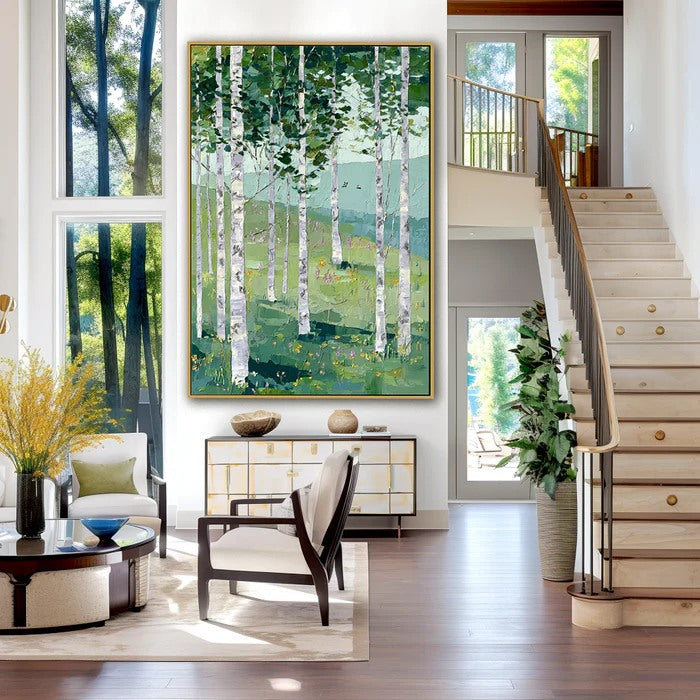
The sensory pull of a modern space relies heavily on the tactile quality of its surfaces. While minimalist architecture often champions clean lines and industrial materials, it requires organic, physical elements to balance its coldness. Hand-painted modern impasto art bridges this gap by introducing sculptural paint layers that transform a static wall into a shifting, interactive surface.
The Physicality of Impasto in Modern Architecture
Modern interior design has steadily moved away from two-dimensional decoration toward rich, material-focused environments. High-end residential and commercial spaces now regularly feature complex surface treatments like micro-cement, limewash, and brushed European oak. In these contexts, flat, photographic canvas reproductions often collapse visually, appearing thin and artificial under direct light.
Genuine modern impasto paintings function as low-relief construction rather than superficial decor. By applying heavy volumes of oil or specialized structural media with palette knives and heavy brushes, studio artists build an irregular topography on the linen grid. This physical thickness ensures the artwork reads from sharp, oblique viewing angles—such as when walking down a long corridor or climbing a staircase—revealing a distinct side profile where the paint layers project forward into the room's physical environment.
Light as the Invisible Medium of Textured Art
The visual character of a heavy texture oil painting changes continuously throughout the day because its surface actively interacts with ambient light. Instead of relying on printed shadows to simulate depth, the raised ridges and incised valleys of an impasto work cast genuine micro-shadows that react to the angle and temperature of the room’s illumination.
-
Morning Light: Directional, cool morning sun sharpens the contrast across the canvas, highlighting fine ridges and clean palette-knife tracks.
-
Midday Ambient Illumination: Diffused noon light softens intense contrasts, allowing the broader compositional balance and tonal relationships to dominate the space.
-
Evening Lighting: Warm, low-angle evening light stretches the shadows across the paint valleys, exaggerating the structural topography and lending the artwork a dense, dramatic presence.
-
Controlled Gallery Spotlights: Articulated ceiling tracks allow interior designers to deliberately manipulate the artwork’s mood. A slight adjustment in beam angle can selectively emphasize either the peak elevations or the deep recesses, altering the visual energy of a boardroom or living zone.
Selecting Texture Profiles for Specific Interior Dynamics
Navigating large-scale texture requires choosing a physical execution that aligns with the structural lines and emotional intent of the space. Within contemporary impasto design, two primary structural philosophies dictate how an artwork interacts with modern furniture and textiles.
-
Organic High Relief: This approach utilizes clustered mounds, soft peaks, and fluid, cloudlike or floral-inspired formations. It introduces visual warmth and an open, relaxing energy, making it highly compatible with residential spaces featuring bouclé upholstery, brushed linen, and curved furniture profiles.
-
Structured Linear Build: Characterized by disciplined knife passes, repetitive parallel channels, and geometric rhythms, this style treats paint as an architectural material. It fits cleanly into executive offices, formal dining rooms, and areas defined by hard stone surfaces, minimalist steel detailing, and sharp architectural angles.
Material Capability and Structural Comparisons
When sourcing artwork for large-scale walls or premium interior portfolios, matching the material longevity and physical footprint to the environment is essential for maintaining perceived value.
| Material Profile | Artextured Hand-Painted Oils | Large-Format Framed Prints | Mass-Produced Embossed Canvases |
| Surface Authenticity | Real layered paint with physical palette-knife ridges | Completely flat photographic surface with printed ink | Simulated texture made via industrial mechanical embossing |
| Light Responsiveness | Casts genuine, changing micro-shadows all day | Zero light interaction; relies on fixed, printed shadows | Uniform, repetitive shadow patterns that look synthetic up close |
| Acoustic Function | Integrates high-density sound-absorbing structural backing | Reflects sound waves, increasing room echo and reverb | Provides negligible acoustic softening due to thin material |
| Production Provenance | Executed one-by-one by professional studio artists | High-volume industrial factory print production | Automated assembly-line printing and machine texturing |
| Optimal Environment | Luxury residential, hotel receptions, executive boardrooms | Budget-driven short-term residential stagings | Temporary commercial spaces with minimal design scrutiny |
Specifying Scale and Spatial Proportions
Because deep impasto projects forward from the wall, its physical volume increases its visual weight. A 120 cm textured canvas can command a room with the same authority as a 150 cm flat print, meaning designers must allocate adequate breathing room around the frame margins to prevent a crowded appearance.
-
Sofa Wall (200–240 cm width): Specifying a single canvas between 120–150 cm with moderate-to-heavy relief anchors the seating area cleanly without overwhelming the wall limits.
-
Narrow Corridors and Stairwells: Vertical formats with pronounced linear ridges maximize the oblique, 45-degree vantage point, turning a restrictive transit space into a sculptural viewing zone.
-
Bed Headboard Wall: Selecting wider, lower-profile canvases executed with organic, rounded impasto minimizes top-heavy visual tension above the sleeping area.
-
Boardroom Feature Wall: Large-scale formats utilizing structured, architectural strokes perform best when paired with dedicated ceiling spots that rake across the texture to emphasize the physical medium.
A Systematic Framework for Custom Commissions
Acquiring a specific scale and texture configuration requires a systematic approach to coordinate the studio's technical execution with the physical constraints of the final installation site.
Measure the absolute wall surface and calculate the primary viewing distance. High-relief impasto requires a minimum viewing clearance to let the compositional forms blend smoothly to the eye.
Select between organic high-relief forms or structured linear passages based on the room's existing architectural materials, such as micro-cement or wood panelling.
Review the studio's archival portfolio to isolate a base composition, then specify tonal or color modifications needed to match the interior color palette.
Evaluate if the room requires acoustic dampening. For spaces with high ceilings or hard flooring, confirm the inclusion of specialized sound-absorbing cores within the canvas frame.
Review scale renderings and detail photos showing paint thickness. Finalize delivery timelines, noting that thick oil mediums require controlled curing environments before safe transit.
Mount the artwork securely using floating frames or heavy-duty standoff brackets that protect the raised, exposed outer edges of the paint medium from physical contact.
Solved Architectural Integration Scenarios
-
Corporate Reception Lobby: Standard designs often utilize flat photographic murals that fail to project prestige and ignore high ceiling echo. Upgrading to large-scale, hand-painted impasto works on acoustic backings dampens foot-traffic noise while signaling high craft provenance to clients.
-
Residential Minimalist Living Space: Using multiple small decorative items introduces visual clutter into a clean room. A single, dominant, neutral-toned heavy texture canvas provides a focal point, injecting tactile warmth without disrupting structural minimalism.
-
Hospitality Boutique Guestrooms: Relying on repeating, low-cost framed prints cheapens the guest experience. Commissioning site-specific textured oils scaled to guestroom headboards lifts the premium feel of the interior and improves the acoustic intimacy of the space.
Frequently Asked Questions
What defines a modern impasto painting compared to traditional historical works?
Modern impasto prioritizes the physical behavior of the medium—such as ridge clarity, structural light interaction, and compatibility with modern materials like micro-cement—over representational or figurative accuracy. The compositions are primarily abstract or minimalist, focusing on how paint volume functions as an architectural element within a contemporary space.
Do heavy texture paintings require specialized lighting systems?
They do not require proprietary equipment, but they benefit significantly from directional light. Side-angled natural windows or adjustable ceiling spotlights project raking light across the canvas surface, creating deep micro-shadows that emphasize the physical paint height much better than flat, overhead ambient lighting.
How can an interior designer verify real impasto from digital imitations online?
Specifiers should demand high-resolution, oblique-angle photography that details the canvas profile and irregular paint heights. Genuine hand-applied impasto showcases natural irregularities, distinct tool marks from brushes or palette knives, and changing shadow distributions that alter depending on the photographer's camera angle.
Is deep texture appropriate for highly minimalist or restricted spaces?
Yes, it is highly effective. In minimalist interiors, a restrained color palette combined with heavy physical texture provides visual depth and sensory interest without adding decorative clutter or breaking the clean lines of the room.
Will very thick oil paint make a small room feel visually crowded?
It can if the scale is miscalculated. To prevent visual crowding, leave larger negative space margins around the outer borders of the frame, select lower-relief compositions, or opt for structured linear patterns that organize the room's energy rather than scattering it.
Do the acoustic art collections alter the appearance of the oil painting?
No. The high-density acoustic dampening material is engineered entirely within the sub-frame assembly behind the canvas. The outer surface remains standard artists' linen, allowing the painters to apply traditional oil mediums and heavy palette-knife techniques without losing any sound-absorption properties.