
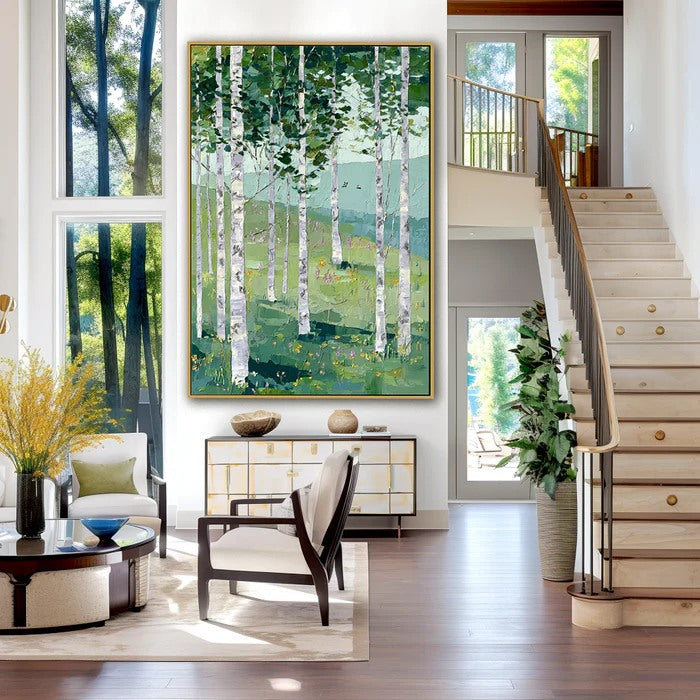
Heavy texture oil paintings occupy a unique space in modern interior design, acting as sculptural focal points that flat digital canvas prints cannot replicate. This architectural approach to wall decor bridges the gap between traditional fine craftsmanship and contemporary minimalist aesthetics. By evaluating spatial scales, light interaction, and structural material behaviors, this guide helps independent designers and premium property owners select the precise texture profiles required to complement luxury residential and executive environments.
The Architectural Weight of Heavy Impasto Art
Modern interiors characterized by high-end finishes—such as vein-matched marble, continuous limewash walls, or brushed walnut millwork—frequently look unfinished when paired with thin, flat wall art. Flat prints and standard low-profile acrylic canvases lack the physical presence needed to balance heavy architectural elements. A premium heavy texture oil painting introduces physical volume and dimensional resistance, establishing what interior designers define as visual weight.
This tactile authority becomes crucial in open-plan residential layouts or expansive reception halls. In these environments, artwork must ground a wide horizontal wall span without introducing distracting narrative clutter. A wide abstract impasto piece distributes mass evenly across the wall surface, preventing the artwork from looking like a floating, lightweight accessory above structural furniture groups.
Material Dynamics: The Physics of Thick Oil Paint
The enduring appeal of a heavy texture oil painting stems directly from its material chemistry. Oil paint does not dry through simple solvent evaporation; instead, it cures through a slow process of oxidation over time. This slow transformation allows a professional artist to construct thick, interlinked layers that maintain their volume, density, and flexible structural integrity without cracking or collapsing.
These built-up ridges, peaks, and palette knife edges physically alter how light moves across the canvas:
-
Microscopic Light Refraction: Unlike flat canvas finishes that return a uniform reflection, the uneven surface of an impasto layer bends directional light at varying angles.
-
Dynamic Shadows: Under evolving lighting conditions—such as natural daylight moving through a space or focused evening spotlights—the ridges cast subtle shadows that alter the painting’s mood, contrast, and depth throughout the day.
-
Color Movement: This structural variation means a deep neutral tone or a minimalist monochromatic block never looks flat; the micro-shadows create internal movement within a single color field, shifting from a matte appearance under diffused morning light to a highly luminous state under angled track lighting.
Technical Comparison Across Mediums
Selecting premium wall decor requires an understanding of how distinct mediums perform over long periods under changing environmental stressors.
| Medium | Surface Depth and Texture | Light Interaction and Reflection | Color Longevity and Structural Stability | Aging Characteristics |
| Heavy Texture Oil Painting | Thick, sculptural, multi-layered ridges | Dynamic, angle-dependent shadow formation | High stability; rich organic layers cure deeply over time | Develops a prized, subtle luster without losing volume |
| Standard Acrylic Painting | Moderately raised; fast-drying peaks | Slight surface variation; mostly uniform sheen | Can appear slightly chalky or matte over decades | Stable but lacks structural density and micro-depth |
| Printed Canvas Decor | Completely flat; simulated or printed texture | Minimal variation; highly predictable flat reflection | Susceptible to fading under UV light exposure | May look dry or artificial; signs of edge wear appear early |
Selecting Texture Profiles for Luxury Interiors
Integrating thick impasto art into high-value spaces requires balancing the artwork's subject matter with the surrounding interior materials.
-
Minimalist Textural Abstracts: Best suited for sharp architectural environments featuring industrial concrete, structural steel, and expansive glass panels. The physical texture adds essential organic warmth without cluttering the clean lines of the layout.
-
Structured Architectural Florals: Ideal for softening rigid spaces dominated by heavy, dark timber beams or cold natural stone. Pronounced palette knife strokes create a structural bridge between organic life forms and geometric furniture.
-
Layered Tonal Monochromes: Perfect for maintaining a peaceful, low-contrast color palette while preventing the wall from disappearing into a dull, flat plane. The cast shadows ensure the art remains visible against similarly toned backdrops.
Spatial Constraints and Environmental Hazards
While heavy texture provides significant visual benefits, it is not universally appropriate for every interior layout.
-
Transitional Spaces: In narrow hallways, stairwells, or tight entryways where occupants view the wall from a short distance, aggressive impasto art can feel visually crowded and overbearing, making the space feel tighter rather than more open.
-
Complex Wall Treatments: Installing highly textured oil art directly onto heavily veined stone veneers or intricate, busy wallpaper patterns creates visual friction and competition, stripping both the wall treatment and the artwork of their premium value.
-
Diffused Lighting Environments: Rooms that rely solely on flat, overhead diffused lighting flatten the dimensional advantages of thick oil paint. Without angled, directional, or track lighting, the expensive impasto details read as plain flat shapes.
Elite Craftsmanship vs. Mass-Produced Impasto
Achieving a stable, highly architectural paint layer requires strict compliance with traditional studio practices. Factory-grade reproductions often use fast-drying synthetic fillers or plastic gels mixed with thin acrylics to fake depth, which leads to yellowing, brittleness, and cracking within a few years.
In contrast, professional-grade heavy texture production adheres to clean, deliberate technical execution:
-
Controlled Palette Knife Work: Every ridge is placed deliberately to guide how light travels across the canvas, avoiding chaotic, muddy build-ups.
-
Strategic Chromatic Layering: Lower pigment tones are allowed to cure partially before upper layers are applied, giving the underlying tones a subtle, glowing influence on the surface colors.
-
Measured Curing Intervals: Thick paint layers require calculated resting phases to allow deep oxidation, preventing the paint from collapsing, wrinkling, or locking in moisture that degrades the canvas fiber.
Procurement Checklist and Purchase Scenarios
The decision to acquire a premium hand-painted textured canvas is driven by whether a space requires a subtle background element or a defining architectural anchor.
-
Scenario A: The High-Ceiling Modern Great Room: Traditional flat prints look thin and insubstantial on large, triple-height walls. Introducing a custom large-scale horizontal abstract oil painting balances the immense wall scale by anchoring the furniture group through material presence and deep physical texture.
-
Scenario B: The Executive Dining Room or Boardroom: Standard decorative art often feels generic and uninspired against high-end architectural materials. Installing an artistic statement piece—such as a refined 3D floral oil work like the Azure Bloom—elevates the corporate environment, projecting taste, detail, and long-term permanence.
When purchasing heavy texture art online, premium buyers and hospitality procurement managers should follow this technical verification checklist:
-
Authenticity Verification: Ensure the studio uses premium, pure oil pigments rather than fast-drying acrylic gels or mass-produced printed bases with fake plastic top-coats.
-
Customization and Scale Support: Verify that the studio offers custom canvas stretching, tailored sizing, and proportional adjustments so the artwork integrates with specific architectural wall lines.
-
Quality Assurance Workflow: Confirm that the studio provides high-resolution photographic confirmation before shipping, allowing a detailed inspection of the texture thickness, color accuracy, and overall composition.
-
Art-Specific Logistical Safety: Ensure the paintings are shipped with corner guards, moisture-resistant barriers, and heavy-duty, art-specific wooden crates or rigid tubes to eliminate transit risks across international delivery routes.
Frequently Asked Questions
What makes a heavy texture oil painting different from regular canvas art?
A heavy texture oil painting relies on thick impasto layers applied with specialized palette knives and brushes, creating a raised, dimensional surface. Regular canvas art, particularly digital prints, features a completely flat surface that lacks physical depth and cannot interact dynamically with room lighting.
Do heavy oil paintings really last longer than acrylic works or canvas prints?
Yes. Professional oil paintings cure through deep oxidation rather than simple water evaporation, creating a strong, flexible, and enduring paint film. When executed correctly, premium oil layers maintain their vibrant color saturation and structural integrity for centuries, whereas prints are highly vulnerable to UV fading and acrylics can become brittle.
How do I select the right artwork scale for an expansive statement wall?
The dimensions of the artwork should directly relate to the width of the structural wall or the primary furniture piece it sits above (such as a sofa, boardroom table, or console). Generally, a statement piece should occupy between 60% and 75% of the available wall space to look integrated rather than isolated.
Is specialized track or spotlighting necessary for heavy texture art?
While not strictly mandatory, directional, angled, or track lighting significantly enhances the visual impact of heavy texture art. Directing light at an angle maximizes the casting of micro-shadows along the impasto ridges, bringing out the depth, movement, and sculptural character of the artwork.
Can custom texture profiles be requested for specific commercial projects?
Yes, professional art studios specialize in custom creations where scale, color balance, and texture depth are modified to match specific architectural concepts, interior materials, and lighting layouts of commercial or high-end residential projects.
Sources
-
Artextured Official Store — Brand Positioning and Production Specifications
-
Artextured Comprehensive Catalog — Core Collections and Material Applications
-
Artextured Technical FAQ — Customization, Care, and Studio Procedures
-
Artextured International Shipping — Protective Packaging and Logistics
-
Trustpilot Artextured Platform Verified Reviews — Consumer Quality and Product Delivery Metrics
-
Artextured Official Verification Profile on Meta — Studio Practice and Live Artisan Insights