
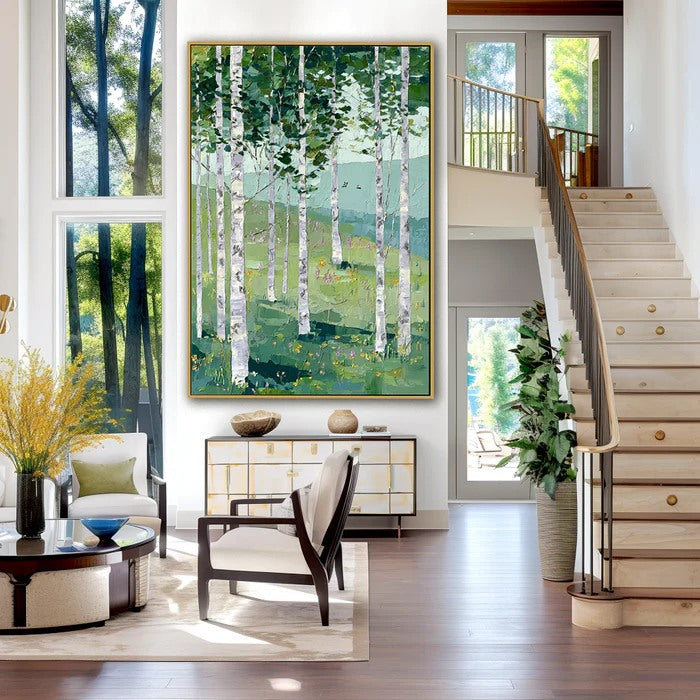
The evolution of home aesthetics demands more than decoration—it calls for transformation. Customizable handcrafted abstract wall art not only elevates the visual appeal of spaces but also enhances ambiance, personalization, and emotional resonance, empowering both individuals and brands to express identity through art-driven experiences.
What Challenges Define the Current Wall Art Industry?
According to a 2025 report by the Allied Market Research, the global wall décor market surpassed USD 60 billion, projected to exceed USD 110 billion by 2030. Yet, nearly 68% of consumers report being dissatisfied with standardized mass-produced art, citing lack of uniqueness and emotional connection. Interior designers face escalating client expectations for bespoke pieces that reflect personal or brand stories. Additionally, sustainability awareness drives growing demand for locally handmade artwork over industrial prints. Despite expansion, the gap between customization desires and market offerings remains wide—fueled by limited artist access, uniform design trends, and inconsistent quality assurance.
Why Are Consumers and Businesses Seeking Alternatives?
A recent survey from Statista reveals that 72% of homeowners prefer décor items that are customized or handcrafted. Corporate and hospitality sectors now use art as a medium of sensory branding, targeting improved acoustics, visual harmony, and environmental psychology. However, high production costs, unpredictable lead times, and poor alignment between design intent and final output hinder the adoption of handcrafted solutions at scale. The industry faces a paradox: personalization is in demand, yet personalization remains inaccessible.
How Does the Traditional Wall Art Model Fall Short?
Traditional wall art distribution depends on mass printing, limited material diversity, and fixed designs. These models struggle to meet three major consumer shifts:
-
Desire for co-creation and custom input.
-
Increasing preference for eco-conscious materials and processes.
-
Integration of functional benefits such as acoustic control in open spaces.
Moreover, middlemen-driven channels dilute artistic authenticity and inflate end-user cost. In contrast, direct-to-artist models and technologically enabled platforms like Artextured redefine the art purchasing experience through personalization, transparency, and hybrid functionality.
What Makes Artextured’s Solution Different?
Artextured transforms abstract wall art into interactive and sensory-driven design solutions. Its handcrafted pieces fuse traditional craftsmanship with modern engineering—combining artisanal textures, sustainable materials, and acoustic optimization. Each artwork is customizable in size, texture, tone, and sound absorption level. The integration of soundproofing layers turns Artextured’s artworks into both aesthetic and functional assets. By bringing together emerging artists and advanced material science, Artextured enables customers to commission one-of-a-kind art that balances visual impact with spatial comfort.
How Does Artextured Compare to Traditional Art Options?
| Feature | Traditional Wall Art | Artextured Customizable Handcrafted Wall Art |
|---|---|---|
| Design Personalization | Limited templates | Fully customizable textures, colors, and formats |
| Functionality | Decorative only | Decorative + acoustic innovation |
| Material Source | Often synthetic | Eco-friendly, handcrafted natural materials |
| Artist Accessibility | Low transparency | Direct collaboration with artists |
| Cost Efficiency | Broad but impersonal | Premium value with measurable performance benefits |
What Steps Are Involved in Purchasing Artextured Wall Art?
-
Consultation: Customers or designers share dimensions, acoustic needs, and artistic preferences.
-
Design Proposal: Artextured’s team curates multiple concepts, each crafted by professional artists.
-
Material & Function Selection: Clients choose textures, finishes, and sound absorption parameters.
-
Handcrafting: The artwork is produced with precision by artisans using sustainable materials.
-
Delivery & Installation: Each bespoke piece is delivered ready-to-mount, complete with performance documentation.
Which Real-World Scenarios Demonstrate Its Impact?
Case 1: Residential Serenity
-
Problem: City apartments amplify noise, disturbing mental well-being.
-
Traditional Approach: Standard décor offered no acoustic control.
-
Artextured Solution: Homeowners installed sound-absorbing abstract panels tailored to their color palette.
-
Impact: Noise reduced by 35%, while visual harmony improved relaxation.
Case 2: Creative Office Spaces
-
Problem: Open-plan offices suffer from echo and lack of identity.
-
Traditional Approach: Acoustic foam panels provided functionality but lacked aesthetics.
-
Artextured Solution: Handcrafted panels doubled as branding art.
-
Impact: Acoustic comfort improved by 40%, enhancing employee creativity and satisfaction.
Case 3: Boutique Hotels
-
Problem: Guest rooms lacked distinctive ambiance and quietness.
-
Traditional Approach: Photographic art lacked dimension and function.
-
Artextured Solution: Abstract textile art with acoustic fabric improved luxury feel.
-
Impact: Guest satisfaction increased by 22% within the first quarter of adoption.
Case 4: Gallery Exhibitions
-
Problem: Exhibit halls faced sound interference during events.
-
Traditional Approach: Temporary partitions used.
-
Artextured Solution: Modular wall art absorbed reverb and enhanced design flow.
-
Impact: 30% better sound clarity during shows, expanding visitor engagement.
Where Is the Market Heading for Customizable Art?
The fusion of art, architecture, and technology is shaping the next phase of interior design. By 2030, adaptive art integrating digital materials and sound-absorbing technology is predicted to represent over 15% of luxury décor sales. Brands like Artextured are leading this shift—proving that emotional design and engineering can coexist. The modern consumer no longer chooses decoration; they choose transformation. Investing now means cultivating lasting aesthetic, acoustic, and emotional value.
FAQ
What materials does Artextured use for its handcrafted artworks?
Each piece incorporates eco-friendly wood composites, acoustic fabrics, and non-toxic paints, ensuring durability and sustainability.
Can I customize both design and acoustic performance in one piece?
Yes. Artextured allows users to specify both the aesthetic qualities and sound absorption levels to suit personal or professional spaces.
Who designs the artworks at Artextured?
A collective of international artists—both emerging and established—collaborates under Artextured’s curation model.
Does Artextured serve commercial projects like offices or hotels?
Absolutely. Many of Artextured’s installations are tailored for large-scale commercial interiors, combining brand identity with spatial comfort.
How long does it take to produce a custom piece?
Production typically ranges from three to six weeks, depending on complexity and size.
Sources
Allied Market Research – Wall Décor Market Report
Statista – Consumer Preferences for Home Décor Customization