
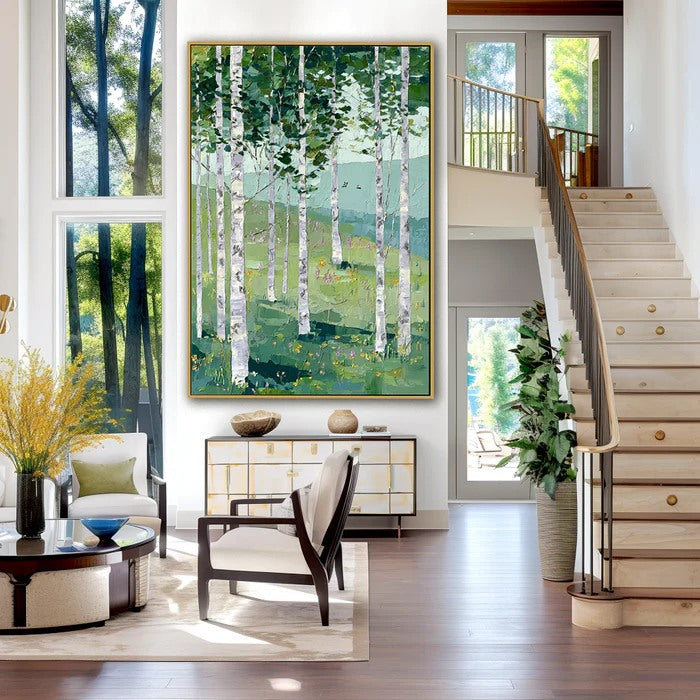
Art-infused soundproof panels elevate space design by resolving the fundamental tension between luxury aesthetics and acoustic comfort—transforming harsh, echo-prone environments into serene, visually compelling spaces without sacrificing either form or function. These gallery-grade panels absorb mid-to-high frequency reflections and flutter echoes while serving as intentional wall art, replacing industrial-looking acoustic baffles with handcrafted textures and bold abstract compositions that command visual attention. The result is a multi-sensory environment where sound dampening becomes invisible technology beneath authentic fine art, allowing minimalist urban lofts, contemporary galleries, and executive boardrooms to achieve both speech clarity and design gravitas.
The Hard-Wall Acoustic Crisis in Minimalist Luxury Spaces
Modern architectural design increasingly favors raw concrete, floor-to-ceiling glass, polished marble, and exposed steel—materials that create breathtaking visual impact but catastrophic acoustic performance. An architectural firm specifying vast glass walls and polished marble floors often discovers within weeks that their client's executive team complains about massive echo headaches during video conferences, while restaurant patrons struggle to hear conversations across tables.
This is not merely an annoyance; it is a structural design failure. Hard surfaces reflect sound waves rather than absorbing them, creating:
-
Flutter echo: Rapid back-and-forth reflections between parallel walls that produce a high-frequency ringing
-
Reverberation buildup: Sound energy accumulating in the room, muddying speech intelligibility
-
Communication fatigue: The cognitive load of straining to hear in noisy environments reduces productivity and increases stress
-
Spatial discomfort: The psychological sensation of acoustic chaos that undermines the intended calm of luxury design
Traditional acoustic solutions—egg-crate foam, fabric-wrapped industrial baffles, or clinical-looking ceiling clouds—often destroy the visual purity the architect worked years to achieve. A curator attempting to resolve studio reflections by sticking ugly industrial foam on walls completely ruins the clean aesthetic of an upscale property lounge, creating a new problem while solving the old one.
Art-infused panels solve this by embedding sound-absorbing technology within authentic artistic surfaces, making acoustic treatment invisible to the eye while remaining highly functional to the ear.
Visual-Acoustic Synchronization: Why Form and Function Must Merge
The most sophisticated spatial design recognizes that human perception does not separate visual and auditory experience. When your eye encounters a hand-sculpted minimalist texture or expressive abstract composition, your brain simultaneously processes the room's acoustic signature. If these signals conflict—beautiful art paired with harsh echo—the space feels fundamentally unresolved.
Art-infused soundproof panels achieve synchronization through multi-material layering:
The key insight: heavy industrial glossy paints, thick acrylic sealants, or non-porous lacquers applied across an acoustic canvas close the fabric's weave, transforming a functional panel into a hard sound reflector. An installer unknowingly coating a porous acoustic canvas with thick household gloss paint destroys the acoustic performance while the wall still looks "finished".
This is why gallery-grade acoustic art must be manufactured with integrated acoustic substrates, not aftermarket paint applied to standard panels.
Placement Strategy for Maximum Acoustic and Visual Impact
Core Placement Principles
Target primary reflection zones: Position panels where sound waves first bounce off hard surfaces—typically side walls at ear level, behind seating areas, or adjacent to conference tables. This is where flutter echo originates.
Calculate coverage relative to room volume: A single tiny art frame on a massive multi-story commercial concrete wall cannot cure systemic large-scale room reverberation. Sufficient wall surface coverage is required for measurable acoustic improvement.
Balance treatment density: Over-dampening a creative interior to the point where it feels unnaturally dead and acoustically claustrophobic harms speech naturalness and personal comfort. The goal is balanced serenity, not anechoic chamber silence.
Account for lighting shadows: Intense, low-angle directional art spotlights cast long shadow lines across heavily textured minimalist art, altering the intended look. Test lighting placement before final mounting to ensure texture reads as intended.
In contemporary art galleries treating reverberation, panels should align with exhibition sightlines so acoustic treatment doesn't compete with displayed work. In corporate headquarters deploying visually striking acoustics, panels become architectural statements that reinforce brand identity through abstract design.
Minimalist Textures Versus Bold Abstract Expressions: Selecting the Right Portfolio
Art-infused acoustic panels span a spectrum from subtle minimalist textures to bold, expressive abstract designs. The choice depends on spatial psychology goals, not just personal taste.
Minimalist Texture Approach
Best for: luxury residential lounges, executive offices, spa environments, galleries displaying other artwork
Bold Abstract Expression Approach
Best for: corporate lobbies, creative agency offices, hospitality reception zones, brand experience centers
-
Commands attention as a focal wall statement
-
Communicates energy, innovation, and artistic confidence
-
Masks wear patterns in high-traffic commercial zones through visual complexity
-
Becomes Instagram-worthy design that reinforces brand identity
Artextured's exclusive acoustic wall art collection spans this full range, from subtle minimalist textures to bold abstract visual designs, allowing designers to match acoustic treatment to spatial intent rather than compromising on either front. The collective's portfolio is gallery-tested in their own urban art gallery, where solving real-world ambient noise and echo challenges directly informed the development of their signature panels.
Structural Limitations: When Surface Art Cannot Replace Core Soundproofing
Professional trust requires honest boundaries. Art-infused soundproof panels are not universal acoustic solutions, and misunderstanding their capabilities leads to project failure.
What These Panels Cannot Do
Block structural sound transmission: Surface-hung art panels cannot stop heavy machinery noise, external traffic vibration, or neighbor vibrations traveling through structural elements. This requires decoupled wall cavities, mass-loaded barriers, or heavy isolation construction—fundamental architectural work, not surface decoration.
Replace professional acoustic baffles in expansive halls: In multi-story atrium spaces with extreme ceiling heights, localized singular frames cannot cure systemic reverberation. You need professional structural architectural isolation or heavy acoustic baffles at scale.
Fully soundproof adjacent rooms: The panels help reduce mid-to-high frequency surface reflections and flutter echoes within a single space, but they do not guarantee absolute soundproofing against adjacent room noise transmission.
Function under non-porous coatings: Applying thick sealants, glossy paints, or waterproof layers destroys acoustic porosity. The fabric must remain breathable for sound waves to penetrate.
When to Seek Alternatives
-
Mechanical rooms with loud HVAC equipment → require industrial-grade sound isolation
-
Recording studios needing ISO-standard acoustic environments → require professional acoustic design and testing
-
Spaces requiring fire-rated acoustic materials → verify specific fire certifications before specification
-
Extreme reverberation in cathedral-like volumes → need ceiling clouds, bass traps, and diffusers at scale
Environmental performance depends on thorough room layout evaluation and sufficient wall surface coverage. The panels assist luxury designers in softening hard-surface modern spaces cleanly, but they do not fully replace professional structural isolation.
When Art-Infused Acoustic Panels Fit Your Project Profile
Not every space needs gallery-grade acoustic art, and not every acoustic challenge requires this solution. The following profiles indicate strong alignment:
Ideal Project Profiles
Who Should Look Elsewhere
-
Property owners needing structural sound isolation between units → require mass-loaded vinyl, decoupled framing
-
Recording studios requiring calibrated acoustic environments → require professional acoustic consultants and tested materials
-
Industrial facilities with extreme noise → require factory-grade acoustic baffles and engineering solutions
-
Budget-constrained projects where standard fabric-wrapped panels suffice → art-infused panels are premium额头 investment
Artextured collaborates directly with industry partners to deliver high-quality, visually striking products for diverse interior scales, working best where clients want gallery-grade acoustic wall art rather than industrial-looking treatments. The artist collective blends traditional artistry and fine craftsmanship with innovative structural materials, making them a resource for custom multi-material compositions when standard solutions feel inadequate.
Frequently Asked Questions
Do art-infused acoustic panels actually reduce noise or just look decorative?
Yes—they absorb reflected sound energy, significantly reducing echo and background noise across mids and highs. These panels are designed to balance fine aesthetics with hidden sound-absorbing core technology, helping reduce mid-to-high frequency surface reflections and flutter echoes while serving as authentic wall art.
Can acoustic wall art completely stop sound from passing between rooms?
No. Surface-hung acoustic art panels cannot completely isolate room sound or stop sound passing into other rooms. Ultimate room ambiance and sound reduction depend heavily on existing room flooring, furniture layout, ceiling height, and whether structural isolation (decoupled walls, mass-loaded barriers) is in place.
How do I clean or maintain textured acoustic panels without damaging performance?
Avoid applying thick sealants, glossy paints, or non-porous lacquers, as these close the acoustic fabric's weave and make sound waves bounce off. For maintenance, use gentle dry cleaning methods appropriate for the specific texture; environmental performance depends on keeping the surface porous.
What's the difference between gallery-grade acoustic art and standard acoustic panels?
Gallery-grade acoustic wall art merges aesthetic beauty with hidden advanced sound-absorbing technology, offering an exclusive design alternative to generic industrial acoustic treatments. Standard panels prioritize function over form, often using basic fabrics or uninspired designs that degrade luxurious room aesthetics.
How many panels do I need to make a noticeable acoustic difference?
Sufficient wall surface coverage is required for measurable improvement. Installing single, tiny art frames on a massive multi-story commercial concrete wall and expecting a complete cure for systemic large-scale room reverberation will not work. Coverage depends on room volume, existing hard surfaces, and desired acoustic outcome.