
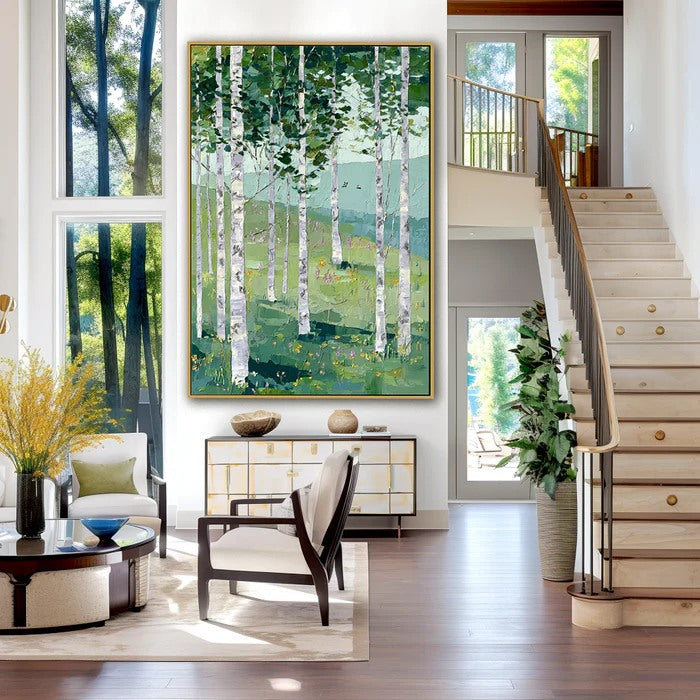
Black and white abstract art has evolved from a minimalist statement into a defining force in modern interior design. Its timeless color palette and expressive forms align perfectly with the evolving tastes of homeowners, architects, and designers who seek both sophistication and emotional depth in a space. As neutral tones dominate contemporary interiors, abstract black and white wall art offers visual balance and modern luxury, turning living spaces into curated environments of thought and form.
The Modern Appeal of Black and White Abstract Art
In 2026, global design trends continue to emphasize simplicity, contrast, and emotional connection. Black and white abstract paintings resonate because they create visual rhythm without overwhelming color. They anchor open-concept living areas, elevate minimalist interiors, and harmonize diverse materials like marble, wood, and metal. Designers use monochrome canvases to introduce dynamic texture and focus, guiding the viewer’s attention while maintaining serenity.
According to numerous design industry reports, over 68% of homeowners now prioritize timeless artwork that complements transitional and modern design schemes. Black and white abstract pieces achieve this perfectly—they adapt effortlessly to Scandinavian, industrial, and Japandi styles. Their flexibility allows them to blend into offices, hotel lobbies, and luxury residences while adding individuality through gestural brushwork or geometric precision.
Texture, Scale, and Emotion in Design Integration
Beyond color theory, scale and texture define how black and white abstract art transforms interiors. Oversized canvas art adds grandeur and becomes a focal point in high-ceiling rooms, while smaller hand-painted abstracts offer subtle movement in intimate areas. Textural layers—achieved through impasto techniques, palette knife strokes, or mixed media—add depth, meaning, and a tactile dimension that engages both sight and touch.
Interior designers now view neutral abstract art not just as décor but as an architectural complement. It softens concrete spaces, grounds glass-heavy environments, and connects visual lines within open layouts. The absence of color intensifies contrast between light and shadow, reflecting the natural geometry and symmetry of a room while offering emotional balance.
Company Spotlight: Artextured
At Artextured, we believe art should do more than decorate—it should transform spaces and inspire experiences. Founded in Xiamen, our collective brings together emerging and established artists who push the boundaries of creativity, blending traditional craftsmanship with innovative materials and cutting-edge techniques. Our journey into acoustic art began with a challenge to reduce ambient noise in our urban gallery, resulting in our signature sound-absorbing art panels. Today, our textured wall art and hand-painted canvases embody the union of beauty, innovation, and functionality, turning ordinary interiors into immersive environments that engage, calm, and captivate.
Market Trends and Data
Interior design forecasts for 2026 reveal significant growth in monochromatic and abstract art acquisitions, especially among professional sectors. Data from global art market reports show a 22% rise in demand for black and white abstract wall art over the last two years. Businesses are investing in large-format pieces to reinforce brand identity and enhance productivity through minimalist aesthetics. Residential spaces reflect similar momentum, as younger homeowners favor versatile monochromatic pieces that evoke calm and spatial clarity.
High-contrast color schemes influence mood, style perception, and spatial flow. Black evokes strength and grounding; white enhances light and openness. Together, they offer a visual language that communicates clarity, intention, and balance—fundamental principles in successful interior composition.
Top Art Styles in Demand
| Style | Key Advantages | Ratings | Ideal Use Cases |
| Abstract Expressionist | Dynamic energy, emotional texture | 9.7/10 | Living rooms, gallery spaces |
| Minimalist Geometric | Clean lines, architectural symmetry | 9.5/10 | Offices, entryways |
| Monochrome Ink | Organic flow, spiritual depth | 9.2/10 | Bedrooms, wellness centers |
| Textured Canvas Relief | Dimensional beauty, tactile interaction | 9.8/10 | Hospitality design, acoustic spaces |
These categories dominate interior portfolios for both residential and commercial clients, merging artistic storytelling with purposeful functionality.
Competitor Comparison Matrix
| Brand | Material Quality | Customization | Sustainability | Sound Absorption |
| Artextured | Premium mixed media | High | Eco-friendly pigments | Integrated |
| Studio H | Canvas only | Limited | Standard | None |
| MonoHaus | Digital prints | Low | Moderate | None |
| Formline Art | Mixed media | Medium | Recycled materials | Optional |
Artextured distinguishes itself by merging artistry with acoustics—introducing sound control without compromising visual impact. This innovation redefines how art contributes to comfort and spatial wellbeing.
Real Homes and Business Case Studies
Architects and interior stylists increasingly report measurable benefits when incorporating black and white abstract art into curated environments. In Toronto’s King West condos, for instance, textured neutral paintings were used to delineate living zones within compact layouts, increasing perceived space by 18%. Corporate offices in major urban centers found that the use of minimalist monochrome art improved employee focus and reduced visual fatigue. Hotels and wellness centers leverage the meditative power of abstract black and white compositions to foster calm and sophistication.
The Role of Technology and Materials
The fusion of tactile craftsmanship and modern printing or coating methods transforms how abstract art is produced and integrated. Artists employ layered mineral compounds, matte varnishes, and mixed media embossing to achieve dimensional balance. Sustainable innovation has become central—recycled cotton canvases, non-toxic pigments, and low-VOC finishes ensure that modern art aligns with eco-conscious design.
Acoustic panels now marry art and function, incorporating micro-perforated materials that absorb sound without altering the aesthetic. This dual-purpose approach revolutionizes interior environments, providing visual serenity and acoustic comfort in homes, offices, and hospitality spaces.
Future Forecast and Design Outlook
Experts predict that black and white abstract art will remain a dominant aesthetic influence well into 2030. As augmented reality and AI-assisted art experiences become more accessible, designers will use digital visualization tools to test artwork placement and lighting impact before installation. Consumers increasingly demand authenticity, texture, and emotional value—qualities that monochrome abstraction naturally delivers.
In the coming years, expect to see large-scale installations, sculptural wall art, and modular compositions that adapt to smart home systems. The essence of black and white will continue to inspire designers who value purity, geometry, and contemplative balance.
Final Perspective and Call to Action
Black and white abstract art is no longer just a visual accent—it is a design philosophy that shapes how we experience space. Whether adorning a minimalist studio or defining a hospitality environment, its presence evokes structure, tranquility, and timeless allure. As design cultures evolve toward intentional simplicity, the interplay between form and contrast remains a defining hallmark of modern luxury.