
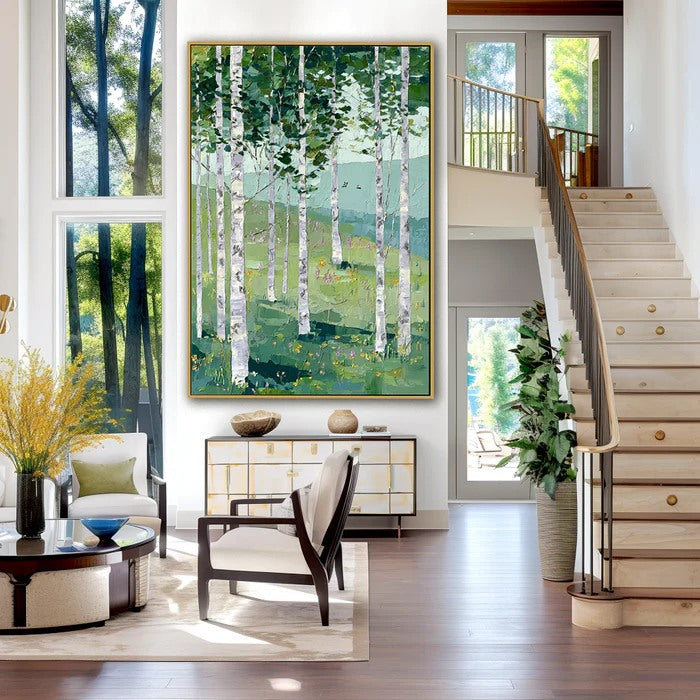
Renaissance art was never only about subject matter; it was about convincing the eye that a flat surface could hold weight, gravity, and space. Today, that same ambition shows up in a different form. Instead of painting illusions of depth through shadow, contemporary textured art builds it physically. For homeowners drawn to classical interiors but wary of overly traditional imagery, this shift offers a precise solution: keep the architectural drama of Renaissance composition while stripping away narrative detail into sculptural, modern form. The result feels quieter, but no less powerful—especially in rooms where scale, light, and material already carry visual authority.
What Renaissance painters actually built on a flat canvas
Renaissance masters approached painting almost like architecture. Figures were not scattered randomly; they were arranged within invisible frameworks of balance, proportion, and directional movement. Drapery played a crucial role here. Heavy folds of fabric were used to guide the eye, create tension, and establish depth across the composition.
Chiaroscuro—the contrast between light and dark—was their primary tool. Instead of outlining forms, they allowed shadows to carve them out. A shoulder emerges because darkness recedes behind it. A fold deepens because light catches its ridge. Even without physical thickness, these works feel structured and dimensional.
At the same time, techniques like sfumato softened transitions, allowing edges to dissolve gradually. This created atmospheric depth rather than sharp graphic contrast. The result is a layered illusion: foreground, midground, and background all implied through tonal shifts alone.
From illusion to actual relief on the surface
Modern textured wall art takes that illusion and replaces it with material reality. Instead of simulating folds and depth with paint gradients, artists use impasto—thick, sculpted layers of paint or gesso—to physically build the surface.
This changes how light behaves. In Renaissance painting, light is imagined. In textured art, light is real and constantly shifting. Morning daylight grazes raised ridges differently than evening ambient light, creating subtle variations throughout the day.
The difference becomes especially noticeable in larger rooms. A double-height foyer or formal dining space benefits from artwork that does not rely on printed contrast alone. Physical relief introduces shadow lines that extend beyond the painted image into the room itself, reinforcing the architectural scale of the space.
Why heavy drapery still matters in a minimalist era
Even in contemporary interiors, the visual language of drapery has not disappeared—it has been abstracted. Those sweeping folds once used to depict robes or curtains now appear as ridges, valleys, and directional textures.
This abstraction works particularly well in transitional homes. Crown molding, wall paneling, and classical proportions already suggest structure and rhythm. A flat, printed artwork can feel visually underweight against these elements. In contrast, textured compositions echo the same sense of gravity without introducing literal historical imagery.
A common mistake in formal interiors is choosing art that is stylistically modern but physically too flat. The room carries depth through materials like wood, plaster, and stone, while the artwork remains visually thin. This disconnect is subtle but noticeable, especially under angled lighting.
By retaining the movement of classical drapery while removing figurative detail, modern textured pieces maintain continuity with traditional architecture while aligning with contemporary taste.
How modern sculptural art translates classical mechanics
The relationship between Renaissance composition and modern textured art can be understood clearly when broken down into core principles:
-
Renaissance depth through tonal contrast becomes physical depth through layered paint.
-
Drapery folds become abstract ridges that guide the eye across the canvas.
-
Architectural balance remains, but without narrative figures or religious scenes.
-
Light shifts from painted illusion to real interaction with surface relief.
-
Color palettes simplify into monochrome or earth tones, emphasizing form over story.
This translation is why sculptural oil canvases feel appropriate in high-end interiors that blend classical and modern elements. They respect proportion and structure without introducing visual clutter.
For readers interested in how historical art principles continue to influence interiors, these fine art history and interior design guides provide additional context on how styles evolve without losing their foundational logic.
Scale is where Renaissance influence becomes most visible
Renaissance art was rarely timid in scale. Large frescoes, altarpieces, and ceiling works were designed to interact with architecture, not sit passively within it. That same thinking applies to modern textured wall art.
In a grand foyer or a wide dining wall, smaller pieces can feel fragmented. A single oversized canvas with strong directional texture acts more like a structural element than decoration. It anchors the wall, much like a Renaissance composition anchored a chapel or hall.
Proportion matters more than style here. A large wall with high ceilings demands artwork that carries visual weight. Texture contributes to that weight just as much as size. A 120 cm canvas with heavy impasto can feel more substantial than a larger but completely flat print.
Where flat prints fall short in classical settings
Digital canvas prints often attempt to replicate classical imagery or painterly texture, but they lack the physical depth that made the originals compelling. When placed in interiors with rich materials—marble tables, carved wood, layered textiles—the difference becomes obvious.
Printed shadows remain static. They do not respond to changing light conditions, and they cannot create real edge definition. This is why even high-resolution prints can appear slightly artificial in well-designed spaces.
Textured art, by contrast, integrates with the environment. Its shadows extend and shift, aligning with the room’s lighting and reinforcing a sense of cohesion.
When contemporary textured art fits and when it does not
This approach works best in interiors that already have a sense of order and proportion. Homes with classical moldings, symmetrical layouts, or architectural detailing benefit from artwork that echoes those qualities.
However, in highly compact spaces or rooms with minimal natural light, extremely heavy texture can feel visually dense. In such cases, a lighter relief or more restrained composition may be more appropriate. The goal is not to overwhelm the room, but to match its existing rhythm.
For those exploring this direction, collections such as dramatic heavy-impasto abstract canvas art demonstrate how sculptural depth can be expressed without relying on traditional imagery, allowing the piece to sit comfortably within both classical and modern interiors.
Frequently Asked Questions
How do you blend classical Renaissance design principles with modern minimalist wall art?
Focus on structure rather than subject. Keep the balanced composition, directional movement, and sense of weight, but remove figurative detail and reduce the color palette. This preserves the architectural feel while aligning with modern aesthetics.
What makes hand-painted impasto art look more luxurious than a digital canvas print?
Physical thickness creates real shadows that change with light, giving the artwork a dynamic presence. Prints can mimic texture visually, but they cannot replicate how light interacts with an uneven surface.
Does textured wall art work in formal dining rooms or traditional homes?
Yes, especially when the piece reflects the room’s scale and symmetry. Neutral or monochrome textured works often integrate more seamlessly than colorful or highly abstract prints.
Is large textured art too heavy for a bedroom setting?
Not necessarily. In master suites with generous wall space and soft lighting, a well-balanced textured piece can create calm rather than intensity. The key is choosing a composition with controlled movement and a restrained palette.
How does lighting affect sculptural canvas art compared to flat paintings?
Lighting plays a much bigger role. Side lighting enhances ridges and valleys, creating deeper shadows and more contrast. This makes the artwork feel different throughout the day, unlike flat paintings where the image remains visually constant.