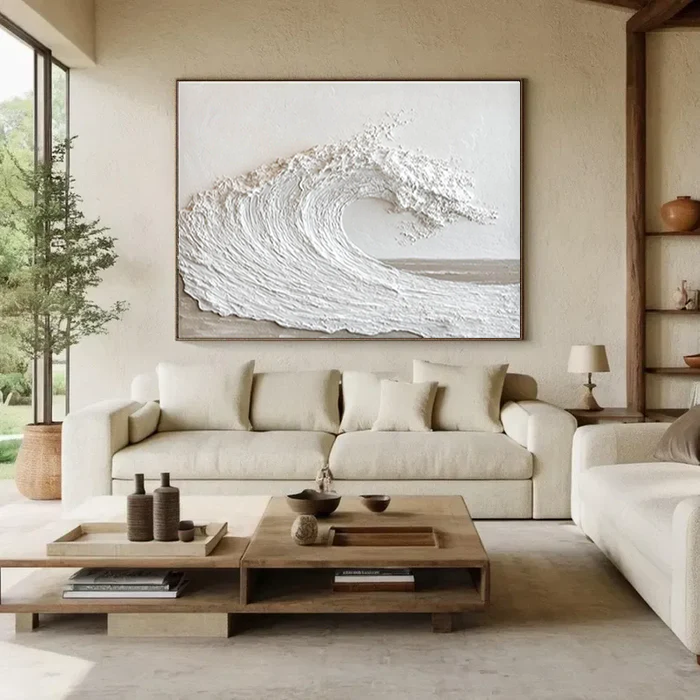
Minimalist bird soundproof art combines sculptural wall relief with acoustic softening, making it especially suitable for echo-prone bedrooms, wellness spaces, and refined reading areas. It works best in hard-surface interiors where visual restraint is valued, but it cannot block external noise like traffic or neighbors; instead, it helps reduce reflected sound and improve perceived calm when used at sufficient scale and placement.
Creating a true sensory sanctuary requires a delicate balance of visual restraint and auditory quietude, a niche perfectly filled by minimalist bird soundproof art concepts. Unlike decorative canvases or industrial panels, these works integrate dense, tactile surfaces with intentional negative space—allowing them to function as both spatial art and subtle acoustic moderators.
Why minimalist bird forms work in acoustic design
Minimalist avian silhouettes—particularly wings in motion or abstract arcs—naturally lend themselves to acoustic performance. Their sculptural ridges, grooves, and carved recesses disrupt flat reflective surfaces, which are often responsible for flutter echo in modern interiors.
In a typical Japandi-style bedroom with plaster walls, timber flooring, and limited textiles, sound tends to bounce between parallel surfaces. A deeply textured bird relief introduces irregular geometry that helps scatter mid-to-high frequency reflections. The result is not silence, but a softer, less sharp auditory experience.
The absence of visual clutter also matters. Unlike detailed bird illustrations, simplified forms emphasize depth and shadow, allowing the material itself—not the imagery—to do the acoustic work.
Material logic behind sculptural acoustic art
Not all wall art contributes to acoustic comfort. The effectiveness of minimalist sound dampening panels depends on material composition and surface structure rather than motif alone.
Key material characteristics include:
-
Dense mineral or plaster-based bodies that provide mass and micro-texture.
-
Layered or carved surfaces that increase surface area and diffusion.
-
Breathable finishes that avoid sealing the texture with glossy coatings.
-
Structural rigidity that maintains sharp ridges rather than soft fabric folds.
White plaster bird relief decor, in particular, performs well in echo-prone spaces because it balances hardness with micro-porosity. While it does not absorb low-frequency noise, it can help reduce the harshness of reflected speech and ambient sound.
An avian abstract structural canvas differs from fabric-wrapped panels in that it behaves more like an architectural surface than a soft absorber—subtler in effect, but visually integrated.
Integrating into Japandi and wellness interiors
Minimalist bird soundproof art aligns naturally with Japandi and eco-minimalist interiors, where materials are honest, palettes are restrained, and objects serve more than one purpose.
In a Japandi bedroom:
-
Position the artwork behind the bed or on the primary reflection wall opposite large glazing.
-
Pair with linen bedding, wood tones, and matte finishes to avoid competing reflections.
-
Use warm directional lighting to emphasize relief depth without creating glare.
In a spa reception or wellness lounge:
-
Install larger-format panels across seating zones where conversation occurs.
-
Avoid placing only decorative pieces behind reception desks while leaving side walls untreated.
-
Combine with soft furnishings like rugs or curtains to create layered acoustic control.
The goal is not to eliminate sound, but to remove its sharp edges.
Placement strategy that actually affects sound
A common mistake is treating acoustic art as purely visual. Placement determines whether it has any meaningful effect.
Focus on:
-
First reflection zones, such as walls directly opposite seating or beds.
-
Large uninterrupted surfaces, especially plaster, glass, or concrete.
-
Symmetry in paired walls to avoid uneven acoustic perception.
-
Adequate coverage; one small piece rarely changes room behavior.
For example, in a narrow reading nook with parallel walls, placing two medium-scale relief panels facing each other can noticeably soften flutter echo. Hanging a single piece on a side wall will likely have minimal impact.
Where design decisions go wrong
Minimalist bird soundproof art is often misunderstood, leading to unrealistic expectations or ineffective installations.
Common pitfalls include:
-
Expecting soundproofing: These artworks do not block external noise or structural vibration; they are not substitutes for insulated walls or double glazing.
-
Underscaling the installation: A single small artwork in a large marble bedroom will not meaningfully affect reverberation.
-
Incorrect wall selection: Ignoring the main reflective surfaces, such as glass partitions or long corridor walls.
-
Sealing the surface: Applying heavy varnish or non-breathable coatings reduces the micro-texture that contributes to acoustic diffusion.
-
Over-dampening: In smaller rooms with heavy textiles already present, adding too many panels can make the space feel acoustically flat.
Understanding these limits helps position the artwork as a refinement tool rather than a structural fix.
The role of negative space in acoustic perception
Negative space is not just an aesthetic device; it shapes how sound interacts with a surface. In minimalist bird compositions, the absence of material—open curves, carved voids, and shallow recesses—creates subtle pathways for sound diffusion.
Instead of reflecting sound in a single მიმართულ, the surface breaks it into multiple directions. This reduces the intensity of direct վերադարձ reflections, especially in speech frequencies.
In practical terms, this is why a deeply sculpted wing form often performs better than a flat painted canvas of the same size. The geometry matters more than the image.
From gallery problem to residential solution
The concept of art as acoustic moderation did not originate in residential décor. It emerged from spaces where visual clarity and sound control had to coexist—such as galleries with hard walls and minimal furnishings.
Artextured, an artist collective founded in Xiamen, developed its approach after addressing echo issues within its own exhibition space. Instead of introducing visible acoustic panels, the collective explored how sculptural surfaces and material depth could soften sound while preserving visual purity.
This gallery-tested mindset translates well into high-end homes, where clients often resist traditional acoustic panels but still seek quieter, more comfortable environments.
Choosing the right piece for your space
Selection should be driven by both spatial conditions and visual intent.
Consider:
-
Room size and ceiling height; larger volumes require larger or multiple pieces.
-
Surface materials already present; harder rooms benefit more.
-
Viewing distance; deeper relief works best when light and shadow can be appreciated.
-
Maintenance; textured plaster surfaces should be placed away from high-contact zones unless protected.
A minimalist bird motif works best when it feels architectural rather than decorative—something that belongs to the wall, not just hangs on it.
Frequently Asked Questions
How does minimalist bird soundproof art integrate into a Japandi style bedroom?
It integrates naturally because both prioritize simplicity, natural materials, and calm visual rhythm. The artwork acts as a sculptural focal point while subtly reducing reflected sound, especially when placed on major wall planes and paired with soft textiles.
Can dense plaster relief artwork block or dampen room echo effectively?
It can help dampen echo by reducing mid-to-high frequency reflections, but it does not block sound transmission. Its effectiveness depends on scale, placement, and how reflective the surrounding materials are.
What materials are used to create elegant 3D organic bird wall art?
They are typically made from mineral-based plasters, composite substrates, or layered structural materials that allow deep carving and textural variation. Breathable, matte finishes are preferred to preserve acoustic behavior.
How does negative space in a painting contribute to spatial acoustic tuning?
Negative space breaks up sound reflection paths, causing sound waves to scatter rather than bounce directly back. This reduces sharp echo and improves perceived clarity in conversation areas.
Is one piece of acoustic art enough for a quiet bedroom?
Usually not; one piece may improve a localized area but will not transform the entire room. A combination of proper placement, multiple surfaces, and complementary soft materials is typically required.