
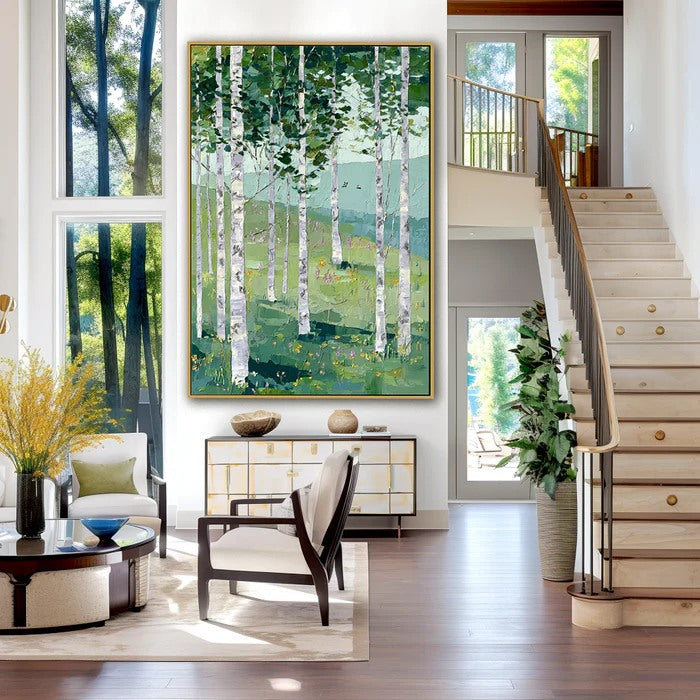
Neutral artwork is often chosen to keep a space calm—but in minimalist rooms, it can quietly vanish into the wall. The difference between art that fades and art that anchors a room is not color, but texture. In neutral interiors, surface depth, shadow, and material variation replace color contrast, allowing artwork to feel present without disrupting the palette.
This is why flat beige or white prints often look like blank panels from a distance, while textured neutral artwork holds attention. When done well, it becomes part of the room’s architecture—responding to light, echoing materials, and adding visual weight without noise.
Why Flat Neutral Art Fails in Minimalist Spaces
The issue is not that neutral palettes are boring—it’s that flat surfaces lack structure.
In a room dominated by whites, creams, or soft greys, the eye searches for contrast. If the artwork offers only slight tonal variation on a smooth surface, it blends into the wall and loses presence. This is especially noticeable:
-
Above large sofas or beds where scale demands visual weight
-
In open-plan spaces where art must hold its own across distance
-
In rooms with soft, diffused lighting that reduces contrast even further
Printed beige minimalist abstract paintings often rely on subtle gradients. Without physical depth, those gradients flatten under real lighting conditions.
By contrast, neutral textured canvas art introduces micro-shadows. Raised areas catch light differently throughout the day, creating a shifting surface that remains visible even within a tight tonal range.
Texture as the Real Language of Neutral Artwork
In neutral interiors, texture replaces color as the primary design tool.
Heavy palette knife strokes, plaster-like layering, and raw canvas exposure create variation that the eye reads as depth. This is what allows a nearly monochrome piece to feel intentional rather than invisible.
Three elements matter most:
-
Surface relief: Raised ridges and carved lines create shadow even in low contrast palettes
-
Light interaction: Side lighting emphasizes texture, while overhead lighting softens it
-
Material feel: Thick paint, matte finishes, and exposed canvas create a tactile visual rhythm
This is why textured pieces in Wabi-Sabi or organic modern spaces feel grounded. They don’t rely on bold color—they rely on physical presence.
For example, a heavily layered beige abstract painting will subtly shift from warm cream to shadowed taupe depending on the time of day. That movement keeps the artwork alive within a restrained palette.
Matching Artwork Texture to Interior Materials
One of the most overlooked decisions is how artwork texture relates to the rest of the room.
Neutral interiors are rarely flat—they are built from layered materials like bouclé, linen, stone, and wood. Artwork should echo that language.
Here is how to align them:
-
Bouclé sofas and soft upholstery: Pair with rounded, sculptural strokes and thicker paint buildup to mirror softness
-
Linen curtains and bedding: Choose lighter, more irregular textures with visible brush drag or raw edges
-
Wood and stone elements: Look for carved or scraped textures that feel slightly rugged rather than polished
-
Polished modern interiors: Use controlled, directional textures with cleaner edges
When artwork reflects these material cues, it stops feeling like decoration and starts feeling integrated.
This is where collections focused on Wabi-Sabi principles—such as those found in Artextured’s Wabi-Sabi textured wall art selection—become relevant. The emphasis is not on imagery, but on surface, imperfection, and quiet structure.
Warm Neutrals vs High-Contrast Neutrals
Not all neutral artwork creates the same atmosphere. The palette direction significantly changes how a room feels.
Warm Neutral Approach (Beige, Cream, Soft Brown)
Best for:
-
Bedrooms
-
Relaxed living rooms
-
Organic modern interiors
Effect:
-
Feels soft, enveloping, and calm
-
Works well with natural materials and warm lighting
Texture guidance:
-
Thicker, more blended layers
-
Gentle transitions rather than sharp edges
High-Contrast Neutral Approach (Black, White, Grey)
Best for:
-
Executive offices
-
Contemporary living areas
-
Minimalist spaces with sharp architecture
Effect:
-
Feels structured, crisp, and intentional
-
Creates visual clarity in open layouts
Texture guidance:
-
More defined strokes
-
Stronger light-shadow interaction
A black and white abstract painting with raised texture can feel almost sculptural, especially under directional lighting.
Choosing between these is less about preference and more about how the room is used and how much visual structure it needs.
Where Neutral Textured Artwork Works Best
Neutral textured pieces are particularly effective in spaces where color is intentionally restrained.
Common scenarios include:
-
Above a bed in a minimalist master bedroom, where softness matters but blank walls feel unfinished
-
Behind a sofa in an open-plan living room, where scale and presence are required
-
In entryways, where the artwork sets tone without overwhelming first impressions
-
In offices, where visual calm supports focus but the space still needs identity
In each case, the artwork acts as a stabilizing element. It doesn’t compete—it anchors.
What Can Go Wrong (and Why It Often Does)
Neutral artwork is easy to get wrong because the mistakes are subtle.
Common issues include:
-
Choosing pieces that are too small, making the wall feel empty rather than intentional
-
Selecting texture that is too shallow, causing the artwork to disappear under normal lighting
-
Overusing heavy texture in tight spaces, where it can feel visually dense or crowded
-
Ignoring lighting direction, which can flatten even well-textured surfaces
-
Matching color perfectly but ignoring contrast, resulting in no visual separation
Another frequent mismatch is expectation: buyers assume a printed “textured look” will behave like real texture. In reality, it lacks shadow depth and feels flat in person.
Neutral artwork works when texture, scale, and placement are considered together—not independently.
Using Neutral Artwork in a Modern Bedroom
Bedrooms reveal the strengths of neutral textured art most clearly.
A large beige minimalist abstract painting above the bed can replace the need for color entirely—if it has enough depth. The goal is not to decorate, but to create a quiet focal point that supports rest.
Effective setups often include:
-
Artwork width at roughly two-thirds to three-quarters of the bed width
-
Soft, warm lighting that grazes the surface from the side
-
Bedding and textiles that echo the tones in the painting
In this setting, a textured piece doesn’t stand out—it settles in. That is exactly what makes it work.
When a Textured Neutral Piece Makes Sense
Not every room needs textured artwork, but certain conditions make it especially effective:
-
The palette is limited to neutrals and lacks contrast
-
The space feels visually flat despite high-quality materials
-
Large wall areas need structure without introducing bold color
-
The design goal is calm, not statement
For buyers in this position, hand-painted pieces with real surface depth—like those explored through Artextured’s neutral collections—offer something printed alternatives cannot: a consistent presence that shifts with the room.
If you are considering a piece that leans warm and sculptural, this beige minimalist abstract painting reflects how layered neutrals can carry a wall without relying on color contrast.
Frequently Asked Questions
Why does flat neutral artwork look dull on white or beige walls?
Because it lacks physical depth. Without texture or strong contrast, the artwork blends into the wall, especially under soft lighting. Real surface variation creates shadow, which is what gives neutral art visibility.
How do I choose abstract artwork for a Wabi-Sabi interior?
Focus on imperfection, irregular texture, and natural tones. The piece should feel slightly raw or unfinished rather than polished, with visible material variation that reflects organic surfaces in the room.
What size neutral artwork works best above a sofa or bed?
A good rule is 60–75% of the furniture width. Smaller pieces tend to feel disconnected, especially in minimalist spaces where the artwork must carry more visual responsibility.
Is beige artwork too subtle for modern interiors?
Not if it has enough texture. Beige can feel rich and dimensional when layered with depth and shadow, but flat beige surfaces often appear lifeless.
Can textured artwork work in small rooms?
Yes, but restraint matters. Choose lighter textures with softer relief and avoid overly heavy buildup, which can feel crowded in tight spaces.