
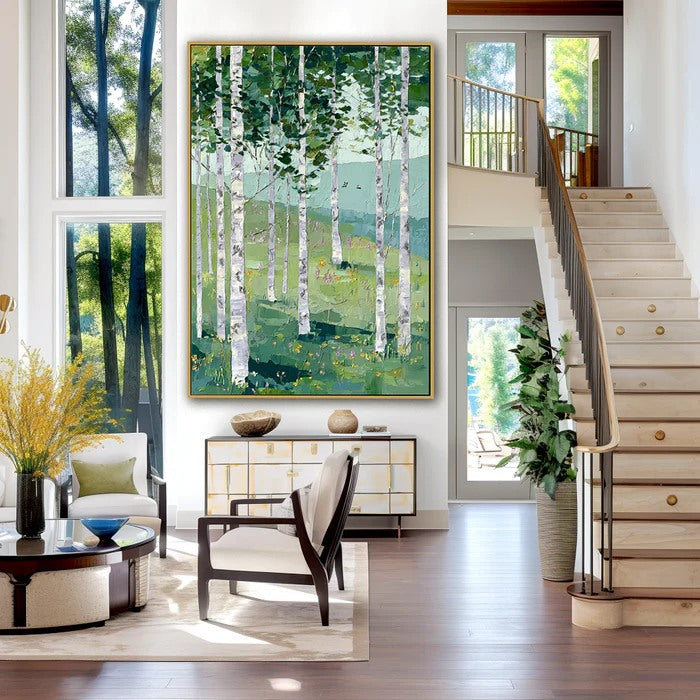
The term “diptych” may sound ancient, yet it remains one of the most powerful structures shaping how art and design evolve in the modern era. Derived from the Greek words di (meaning “two”) and ptyche (meaning “fold” or “panel”), a diptych refers to any two-part work of art—traditionally two panels hinged together—that form a unified whole. Today, the concept transcends classical painting, influencing photography, interior design, digital art, and even branding aesthetics.
The Evolution of the Diptych Concept
In early religious art, diptychs framed sacred scenes, allowing artists to explore contrast and duality between heaven and earth, life and death, or good and evil. By the Renaissance, these works evolved into complex storytelling formats, emphasizing human emotion and spatial depth. In modern art, the diptych became a tool of dialogue—two canvases that challenge the viewer to interpret juxtaposed images as both separate identities and parts of a greater narrative.
Contemporary artists use diptych formats to explore tension, harmony, and change. For photographers and digital creators, diptychs pair opposing images to explore visual rhythm, symmetry, and the passage of time. This format’s versatility makes it ideal for modern interiors seeking balance through minimalist storytelling.
Why Diptychs Matter in Modern Design
In design theory, diptychs mirror the way humans perceive duality—light and shadow, nature and technology, simplicity and complexity. By creating two-part compositions, designers achieve both structure and narrative depth. This dual framework reinforces visual engagement, guiding the eye through balance while maintaining movement and energy. Whether used in home decor, gallery curation, or advertising layouts, diptychs foster emotional contrast and invite contemplation.
Market Trends and Consumer Shifts
According to data from Art Basel and UBS’s Global Art Market Report, interest in multi-panel works like diptychs has grown over 38% in the past five years. Collectors and interior designers are favoring modular works that adapt fluidly to changing spaces. Diptych wall art sales—especially in minimalist and abstract categories—are outperforming single-panel works in both online and offline markets. This rise aligns with a broader cultural movement toward dual-layered meaning: aesthetics that are both visually satisfying and intellectually stimulating.
At Artextured, we believe art should do more than decorate—it should transform spaces and inspire experiences. Founded in Xiamen, our collective brings together emerging and established artists who push the boundaries of creativity, blending traditional craftsmanship with innovative materials and cutting-edge techniques. Our exclusive acoustic wall art collection extends this philosophy, turning visual art into multisensory design.
Core Technology and Materials in Contemporary Diptych Creation
Modern diptych creation often merges manual craftsmanship with advanced technology. Artists utilize acrylic mediums, textural gels, and sustainable wood panels enhanced by digital imaging to retain vibrancy and structural integrity. In interior design, diptych panels are often printed on aluminum, resin, or eco-canvas to maintain durability without sacrificing texture. Through digital rendering and layering, designers simulate folding structures reminiscent of classical diptychs—bringing the form into a digital future.
Real-World Applications and ROI
In commercial spaces, diptych artworks increase perceived sophistication and brand value. Studies in environmental psychology suggest that paired visual forms enhance emotional response and memory retention by up to 25%, making them effective for hotels, restaurants, offices, and galleries focused on atmosphere. Corporate clients often report up to a 40% increase in dwell time in rooms featuring contrasting but cohesive diptych installations—proof that two panels can evoke engagement that one cannot achieve alone.
Competitor Comparison: Traditional vs. Modern Approaches
| Approach | Defining Traits | Materials | Visual Impact | Audience |
| Classical Diptych | Religious or narrative pairing | Wood, tempera, gold leaf | Iconic, stationary | Historical collectors |
| Modern Diptych | Abstract or conceptual dialogues | Acrylic, mixed media, metal | Dynamic, experiential | Contemporary designers |
| Digital Diptych | Interactive or projected formats | LED, resin, graphic composites | Immersive, evolving | Tech-forward users |
Real User Cases
Interior designers across Asia and Europe increasingly incorporate diptys in open-concept residential designs. In Shanghai, a boutique hotel reported improved guest engagement in lounge areas using large-format diptych abstracts. Similarly, a Hong Kong corporate office implemented custom diptych wall panels to soften acoustics while aligning brand messaging with a theme of partnership and dual strength.
Future Trends and Forecast
The diptych’s future lies in hybridization. As immersive technologies like AR and AI-generated art develop, two-panel compositions will likely evolve into interactive visual systems—dynamic diptychs that change content based on environmental cues. Designers predict that modular art structures merging sensory technology with tactile materials will dominate galleries and smart homes alike by 2030.
FAQs
What defines a diptych in art?
A diptych consists of two related works that, when paired, create a cohesive visual or conceptual whole. They may be hinged or simply displayed side by side.
How is a diptych different from a triptych?
A triptych contains three connected panels, whereas a diptych focuses on the balance and contrast between two elements.
Why are diptychs popular in interior design?
They offer visual balance and narrative depth, enriching both minimalist and maximalist environments with layered meaning.
Can digital or photographic diptychs hold the same value as painted ones?
Absolutely. Value lies in the concept, execution, and cohesion between the two components, not necessarily in medium or material.
The Enduring Power of Two
The reason diptychs endure lies in their perfect universality—two parts, one story. In art and design, they remind us that beauty often emerges from contrast. Whether rendered in oil, digital pixels, or textured acoustic art, diptychs represent dialogue, connection, and the timeless appeal of balance. For collectors, designers, and artists alike, the dual-panel format continues to prove that art’s most powerful messages are those shared between two visions united as one.