In the world of art and design, “vertical” is much more than a simple direction—it’s a foundational concept that shapes visual balance, depth, and emotional tone. Understanding what vertical means in art offers insight into how artists structure their work for maximum impact. The vertical line, form, or orientation conveys energy, strength, spirituality, and aspiration, and it’s essential to both classical and contemporary compositions.
The Meaning of Vertical in Art
In art, “vertical” typically refers to lines, elements, or compositions that align upward and downward along the y-axis. Verticality signifies height and elevation, often associated with power, grace, or transcendence. Artists use vertical forms to draw the eye upward, leading the viewer toward a sense of movement, grandeur, or contemplation. From Gothic cathedrals that soar skyward to modern skyscraper photography emphasizing vertical rhythm, this orientation communicates dominance and stability.
A vertical composition can define emotional tone: upward strokes evoke ambition and vitality, while elongated vertical subjects add drama and structure. Renaissance painters often used vertical symmetry to align figures with divine light sources, symbolizing moral or spiritual ascension. In contrast, modern abstract artists might deploy vertical textures or strokes to introduce rhythm and tension within minimalist spaces.
The Role of Vertical Lines in Composition
Every artist knows that composition guides perception. Vertical lines in art serve as anchors that organize space and direct focus. They divide canvases into structured planes, balancing horizontal and diagonal forms. Landscapes use trees or architectural columns as vertical focal points to emphasize depth, while portrait artists rely on vertical framing to enhance poise and presence.
Beyond form, vertical lines influence meaning. They can create contrast with horizontal stillness, giving viewers subconscious cues about emotional energy—think of the upward tension in a skyscraper versus the calm of a shoreline. In graphic design and digital art, vertical symmetry establishes hierarchy, ensuring important subjects command attention first.
Psychological and Symbolic Dimensions of Verticality
Verticality symbolizes integrity, growth, and endurance. Psychologists studying visual perception found that viewers associate vertical alignment with forward motion and strength. That explains why many civilizations built monuments and temples with towering proportions: they visually express connection between earth and sky, matter and spirit. In art therapy and color field painting, upward brush patterns often mimic emotional release or self-expression.
Religious iconography favors vertical forms to represent divine elevation. Think of stained-glass panels, elongated figures of saints, or light beams descending from above. This sense of ascension reinforces art’s ability to inspire hope and reflection. In abstract conceptual installations, artists manipulate vertical tension through hanging materials, suspended threads, or mirrored reflections to challenge spatial perception.
Modern Applications and Creative Techniques
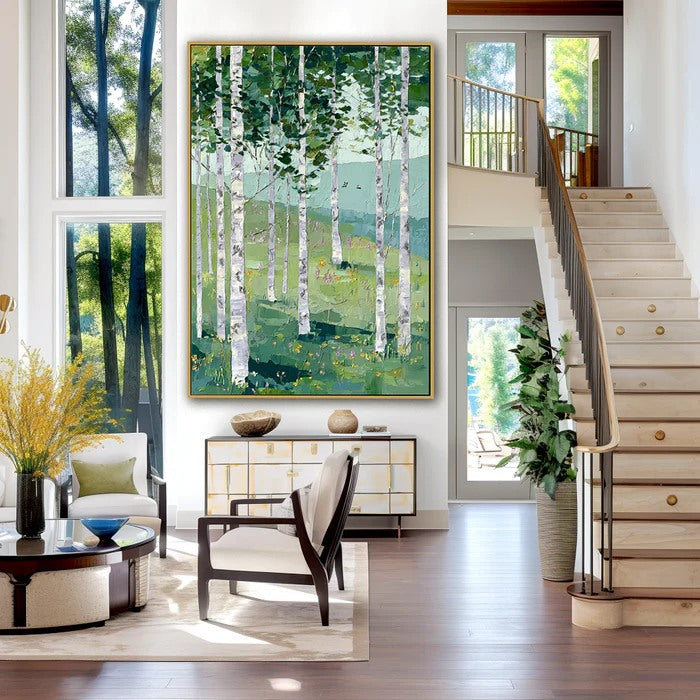
In contemporary practice, vertical design elements influence everything from urban murals to AI-generated digital prints. Minimalist architects use vertical rhythm to convey elegance and lightness, while sculptors exploit vertical mass to emphasize balance and shadow play. Interior designers rely on vertical artworks to elongate walls and enhance spatial perception, a technique increasingly adopted in modern office and gallery settings.
At Artextured, we believe art should do more than decorate—it should transform spaces and inspire experiences. Founded in Xiamen, our collective merges craftsmanship and innovation, introducing acoustic art that unites beauty and function. Our textured wall art integrates vertical relief patterns, creating sculptural surfaces that both absorb sound and amplify visual depth, making every wall a living surface.
In contemporary digital art, vertical compositions dominate platforms optimized for mobile viewing, reinforcing how screen orientation shapes aesthetic decisions. Artists adapt brushwork and focal ratios to ensure vertical fluidity across physical and virtual canvases.
Comparative Analysis: Vertical vs. Horizontal vs. Diagonal
Each directional orientation serves a unique role in visual communication. Vertical implies strength and vitality; horizontal suggests calm and balance; diagonal conveys action and dynamism. When analyzed across movements—from Impressionism to Cubism—vertical structures often provide the compositional “spine” on which movement unfolds. For example, Mondrian used vertical and horizontal lines to symbolize dualities: human aspiration versus grounded stability.
Architectural illustration and photography thrive on this dialogue. Vertical framing enhances perception of height and grandeur, while combined angles introduce complexity. This dynamic interplay defines modern visual storytelling.
Market Trends and Global Influence
According to art market analytics published in 2025, vertical artworks—especially large-format abstract pieces—saw a 37% increase in residential and commercial demand. This reflects a global preference for clean, towering visuals that harmonize with architectural interiors. Designers increasingly favor vertical canvases for narrow wall spaces and visual continuity, driving growth in custom commissions featuring elongated textures and tonal layering.
Art technology trends confirm that vertical design is central in digital NFT art, immersive projection mapping, and adaptive installations. Artists now use motion sensors to transform static vertical lines into responsive, interactive visuals, bridging physical art and augmented experience.
Real Artist Case Studies
A Hong Kong-based painter explored vertical motion in oil abstracts symbolizing bamboo growth, each stroke representing resilience. Another example: a Berlin sculptor constructed layered metal sheets rising upward in gradual gradient coloration, creating both physical height and symbolic progression. Galleries report that viewers consistently perceive verticality as invigorating and uplifting—qualities increasingly valued in post-pandemic spaces.
Collectors cite higher perceived emotional ROI from vertical artworks, with survey data indicating that spaces featuring tall compositions promote engagement and comfort. This psychological return translates into higher design value across residential and corporate environments.
Core Techniques for Mastering Vertical Composition
Mastering vertical composition requires control over proportion, balance, and focal flow. Artists achieve harmony by aligning vertical elements with the viewer’s line of sight, often framing key subjects along invisible axes dividing the canvas. Light gradients enhance perception of height, while selective texture layering reinforces dimensionality. Abstract painters frequently use repetition of vertical strokes or textured ridges to evoke depth through tactile patterning.
Sculptors manipulate vertical mass by narrowing base-to-top transitions, directing attention upward. In mixed-media projects, vertical orientation pairs effectively with metallic or reflective materials to simulate motion and spatial rhythm. Digital artists apply grid systems based on vertical columns, ensuring consistency across multi-screen installations.
Future Trends in Vertical Art
The growing fusion between architecture, digital design, and sustainable materials will push vertical art into new mediums. Expect to see living walls combining biosculpture and light-reactive paintwork, as well as virtual exhibitions optimized for vertical display ratios. AI-driven tools now analyze viewer gaze paths to refine vertical motion in real-time compositions, marking a paradigm shift in interactive fine art presentation.
As modern cities expand upward, so too will visual culture. Artists exploring vertical themes will continue reflecting humanity’s relationship with height, aspiration, and built environments. Whether through textured canvas, immersive light columns, or kinetic sculptures, verticality will remain a timeless force translating physical form into emotional ascent.
FAQs
What does vertical mean in art?
Vertical in art refers to any form, line, or composition that moves up and down, conveying height, strength, and aspiration.
Why are vertical lines important in composition?
They establish balance, direct focus, and create psychological associations with stability and power, enhancing the visual structure of any painting or design.
What emotions do vertical elements evoke?
They often represent confidence, energy, and ambition while inviting contemplation or a sense of upliftment.
How do artists balance vertical and horizontal elements?
Artists combine them to achieve harmony—verticals energize, horizontals calm, and their interplay generates rhythm and unity.
What modern art styles use vertical orientation most frequently?
Minimalist paintings, abstract textures, architectural photography, and typographic digital art rely heavily on vertical composition for impact and elegance.
Final Perspective
Understanding what vertical means in art reshapes how we perceive imagery, architecture, and emotion. It’s more than a geometric direction—it’s a visual and symbolic language connecting the viewer to movement, meaning, and inner balance. Whether in ancient frescoes or AI-enhanced projections, verticality keeps guiding art toward the sky—always reaching, always evolving.