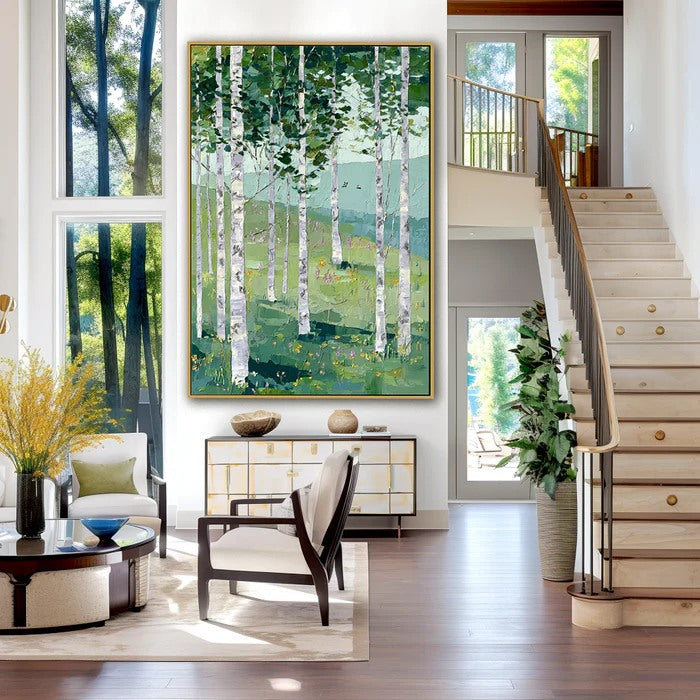
Abstract nature paintings capture the imagination because they go beyond realistic depictions to express the emotional essence of the natural world. These artworks blend abstraction and organic inspiration, translating landscapes, flora, and elemental forces into bold color fields, textures, and flowing compositions that invite deeper interpretation. The result is an immersive experience that allows viewers to connect with nature through feeling rather than form.
The Emotional Power Behind Abstract Nature Art
At the heart of abstract nature painting lies emotion. Artists distill sensations like wind, water, light, and earth into pure visual language. The lack of defined boundaries encourages mindfulness, giving the viewer space to interpret meaning and project emotions onto the canvas. This symbiosis between artist and observer transforms passive viewing into a sensory meditation, a quality that explains its enduring presence in galleries, hotels, and private homes worldwide.
According to global art market reports, the demand for contemporary abstract art rose nearly 20% in 2025, with nature-inspired works leading this growth. Collectors value them for their timeless appeal and versatility—they complement modern interiors while reflecting ecological awareness and environmental connection.
Techniques and Materials That Define the Style
Many artists use layered acrylics, oil impasto, and mixed media to mimic natural textures such as stone, foliage, or ocean surfaces. Earth tones blend with luminous pigments to create atmospheric depth, while large-scale canvases amplify emotional resonance. Modern creators also experiment with metallic powders, resin coatings, and textural gels to simulate movement and light diffraction, transforming traditional mediums into multisensory experiences.
Market Trends and Artistic Evolution
The current trend in abstract nature painting emphasizes tactile surfaces and sustainable materials. Collectors prefer hand-painted textured canvas art for its authenticity and craftsmanship. Art fairs in Paris, Miami, and Shanghai have reported rising interest in eco-friendly pigments and plant-based binders. This shift reflects a broader cultural move toward sustainability in both design and art.
At Artextured, we believe art should do more than decorate—it should transform spaces and inspire experiences. Founded in Xiamen, our collective brings together emerging and established artists who push the boundaries of creativity, blending traditional craftsmanship with innovative materials and techniques. Our signature art-infused acoustic panels fuse visual beauty with functional performance, merging sound absorption and abstract design for spaces that feel balanced and inspired.
Top Abstract Nature Paintings | Key Advantages | Ratings | Use Cases
Serene Forest Flow | Layered texture, soothing tones | ★★★★★ | Living rooms, offices, wellness studios
Ocean Mirage | Dynamic blue gradients with metallic pigments | ★★★★☆ | Hospitality interiors, coastal homes
Golden Horizon | Earth-inspired palette, soft luminosity | ★★★★★ | Lounges, lobbies, wellness spaces
Verdant Pulse | Organic brushwork, sustainable oils | ★★★★☆ | Eco-centric offices, urban retreats
Competitor Comparison Matrix
| Brand | Material Quality | Design Range | Eco Focus | Average Price | Customization |
|---|---|---|---|---|---|
| Artextured | Premium handmade textured canvas | Broad (minimalist to expressive) | High | Moderate | Yes |
| Atelier M | Synthetic blends | Limited | Medium | High | Partial |
| Verde Studio | Natural oils | Moderate | Strong | Premium | No |
Core Technology and Artistic Innovation
Texture-driven abstract painting has evolved through experimentation with fiber-reinforced canvases, high-opacity pigments, and sustainable sealing compounds. Artists today use intuitive layering to evoke topographical rhythm—the visual equivalent of a landscape’s heartbeat. Some integrate resin waves or mineral pigments to achieve luminosity reminiscent of dew or sunlight through mist, giving the viewer a sensory echo of nature’s pulse.
Real User Cases and ROI of Abstract Art
Interior designers report that abstract nature artworks can increase perceived room value by up to 15% in boutique hotels and health retreats. Businesses that use nature-themed wall art in offices note improved employee well-being and productivity, suggesting a measurable return on emotional resonance. Homeowners describe these works as “anchors of calm,” capable of redefining spatial mood through visual rhythm.
Future Trend Forecast: The Growing Appeal of Organic Abstraction
In 2026 and beyond, abstract nature paintings will continue evolving through digital-physical hybrids—combining AI-assisted design with hand-painted detail. Collectors are gravitating toward pieces that merge environmental awareness with sensory depth, signaling a future where art becomes both a wellness tool and an ecological statement. Textured wall art and nature abstractions will dominate décor trends across luxury and minimalist interiors alike, reaffirming humanity’s primal connection to the natural world.
Relevant FAQs
What defines an abstract nature painting?
It captures the spirit or energy of nature through shapes, textures, and colors rather than realistic imagery.
Why are abstract nature paintings so popular in modern homes?
They balance visual interest and tranquility, blending contemporary design with natural inspiration.
Which materials best enhance texture in abstract works?
Acrylic gels, impasto oils, mineral pigments, and layered natural fibers create the richest textures.
Can abstract nature art improve indoor ambiance?
Yes, it introduces organic rhythm and color psychology that calm spaces and inspire creativity.
How do artists convey environmental harmony through abstraction?
Through compositional flow, balanced tonality, and organic forms that mirror patterns in nature.