Asymmetrical abstract art has long fascinated artists, collectors, and interior designers alike, redefining how we perceive balance, movement, and emotion within visual composition. Unlike symmetrical works that rely on predictable harmony, asymmetrical abstract paintings invite curiosity through contrast and tension. They feel alive—dynamic, unpredictable, and deeply human—mirroring the chaotic beauty of existence itself. This tension between order and disorder is precisely what gives asymmetrical abstract art its magnetic power.
The Psychology of Visual Imbalance
Humans are naturally drawn to patterns, yet our brains also crave stimulation through novelty. Asymmetrical abstract compositions challenge our visual expectations, forcing the eye to move across the canvas in search of equilibrium. Neurological studies in cognitive aesthetics show that such visual exploration can trigger heightened engagement, curiosity, and even meditative reflection. The incomplete balance in these paintings activates imagination, allowing viewers to project their emotions and interpretations freely.
When artists intentionally disrupt symmetry through uneven color placement, varying texture depths, or fragmented geometry, they generate movement and rhythm that evoke an emotional response. A bold color block on one side might balance a faint brush texture on the other—not through sameness, but through conversation. This subtle exchange of visual weight creates a dynamic harmony that feels more organic than perfect symmetry ever could.
Market Trends and Global Demand
According to art market analyses from Statista and Artprice, interest in asymmetrical abstract art has grown steadily in both private collections and commercial design spaces. Designers increasingly favor asymmetrical wall art for modern interiors because it introduces a sense of freedom and individuality. On social media platforms like Instagram and Pinterest, search trends show a 40% rise in posts tagged with terms such as “asymmetrical canvas,” “abstract balance,” and “modern wall expression.”
Collectors are also investing in large-format asymmetrical abstract pieces for corporate offices and hospitality venues. These works amplify spatial flow, making rooms feel both grounded and alive. Market demand is expanding across sectors—from minimalist architecture to high-end boutique interiors—reflecting the broader appeal of unconstrained creativity.
At Artextured, we believe art should do more than decorate—it should transform spaces and inspire experiences. Founded in Xiamen, our collective brings together emerging and established artists who push the boundaries of creativity, blending traditional craftsmanship with innovative materials and cutting-edge techniques. Our journey into acoustic art began with a simple challenge: how to reduce ambient noise in our urban gallery. This led to the creation of our signature art-infused soundproof panels, merging aesthetic beauty with functional design.
Top Contemporary Artists Embracing Asymmetry
Contemporary painters like Julie Mehretu, Mark Bradford, and Joan Mitchell have advanced the language of asymmetrical abstraction. Their layered techniques—mixing expressive brushwork with visual fragmentation—illustrate how imbalance can lead to cohesion. Galleries across London, New York, and Berlin continue to showcase a growing number of such pieces where spatial irregularity becomes the defining aesthetic.
Emerging artists are also exploring digital forms of asymmetry within virtual and augmented environments. These works often use algorithmic randomness to simulate spontaneous composition, proving that technology can enhance, not replace, human intuition.
Why Asymmetrical Abstract Art Works in Modern Interiors
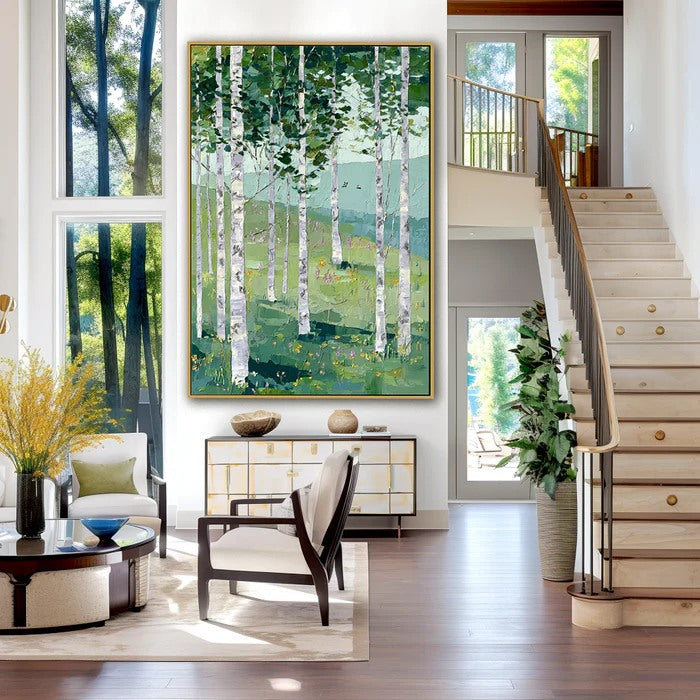
Interior designers love asymmetrical abstract art because it adapts to diverse environments. A single large asymmetrical canvas can anchor an open-plan living space or create contrast in a minimalist bedroom. Its flowing, uneven design encourages movement and emotional connection, while textured layering introduces depth and acoustic softness. Unlike strictly centered pieces, asymmetrical abstracts balance dynamic zones within a room—an ideal complement to furniture layouts and lighting direction.
Furthermore, asymmetrical art invites personalization. No two viewers interpret the same piece identically, and this plurality of meaning makes it perfect for clients seeking distinctive, one-of-a-kind expressions. When paired with materials like brushed metal, linen, or wood, these paintings elevate tactile harmony while enhancing visual rhythm.
Core Techniques Behind the Appeal
Artists achieve powerful asymmetry using diverse methods. Layering different viscosities of paint enhances spatial energy, while carefully weighted color contrasts create depth without symmetry. Techniques like dripping, scraping, and knife-texturing introduce tension through irregular motion. Geometric abstractions might disrupt linear balance through shape distortion, while organic abstracts employ unpredictable color field dispersion to evoke emotional dynamism. The result is visual poetry without confinement—a sense that the artwork continues beyond its borders.
Real User Cases and Measurable Impact
Design firms integrating asymmetrical abstract wall art report measurable benefits in spatial ambiance and client satisfaction. In hospitality settings, studies reveal that guests exposed to asymmetrical designs experience increased perception of openness and artistic sophistication. Corporate offices incorporating large abstract focal points have noted improvements in employee creativity and stress reduction. Residential clients often describe these works as mood-enhancing, citing their ability to evoke calm through kinetic balance.
Competitor Comparison Matrix
| Aspect | Asymmetrical Abstract Art | Symmetrical Abstract Art | Minimalist Art | Geometric Modernism |
|---|---|---|---|---|
| Visual Energy | High, kinetic, expressive | Moderate, balanced, static | Low, serene | Structured, controlled |
| Emotional Response | Stimulating and reflective | Predictable tranquility | Calm and understated | Rational and ordered |
| Interior Adaptability | Highly flexible | Limited to formal layouts | Suited for simplicity | Ideal for structured environments |
| Engagement Level | Dynamic visual movement | Static observation | Minimal distraction | Concept-driven focus |
This comparative view highlights why asymmetrical abstraction resonates so strongly with today’s audiences—it speaks to emotional authenticity over compositional perfection.
Future Trends in Asymmetrical Abstract Design
Looking ahead, asymmetrical abstract art will likely incorporate even more tactile and sustainable elements. Artists are experimenting with biodegradable textures, palette variations inspired by natural topographies, and light-reactive pigments that shift throughout the day. Advances in digital fabrication will enable collectors to commission personalized asymmetrical designs scaled precisely for specific architectural contexts.
Meanwhile, AI-generated asymmetrical art will gain traction as a collaborative tool rather than a replacement for human creativity. The central appeal of asymmetry—its humanity—ensures that organic imperfection will always remain vital. Viewers will continue to find meaning in imbalance, where every brushstroke hints at vulnerability and transformation.
Relevant FAQs
Why do people find asymmetrical abstract art more engaging?
Because it challenges our sense of balance, stimulating curiosity and emotional exploration without predictable patterns.
Can asymmetrical abstract art complement minimalist spaces?
Yes. Its uneven composition introduces contrast and visual depth, preventing sterile uniformity in minimalist interiors.
How do artists achieve harmony without symmetry?
Through thoughtful use of color weight, spatial rhythm, and texture interplay that creates balance through contrast rather than mirror-like alignment.
Is asymmetrical abstract art suitable for commercial environments?
Absolutely. It enhances brand atmosphere, energizes visitors, and can subtly guide movement within designed spaces.
The Transformative Power of Artistic Imbalance
Ultimately, asymmetrical abstract art captivates because it mirrors the rhythm of real life—unpredictable, imperfect, yet profoundly beautiful. It reminds us that harmony need not mean duplication, and that true balance emerges from contrast. Each brushstroke speaks of risk, discovery, and emotion without boundaries. For those seeking art that resonates beyond symmetry, asymmetrical abstraction remains a timeless expression of freedom—an art form that keeps speaking long after the viewer has looked away.