Geometric abstract art has long stood at the intersection of precision and imagination. From the sharp symmetry of Piet Mondrian’s grids to the intricate spatial illusions of Victor Vasarely, this genre transforms simple shapes into emotional experiences that challenge perception. Its enduring appeal lies in the way geometry—something often associated with order and rationality—becomes a gateway to pure visual emotion and philosophical reflection.
The Psychology Behind Geometric Beauty
At its core, geometric abstract art speaks to the brain’s natural attraction to balance and order. Studies in visual cognition show that humans instinctively respond to symmetry, rhythm, and proportion because they mirror the structures found in nature and architecture. When artists simplify these elements into lines, circles, triangles, and polygons, they create visual harmony that feels both universal and deeply personal. Each viewer interprets the same composition differently, discovering patterns that ignite creativity and emotional resonance.
A Journey Through Artistic Movements
The roots of geometric abstraction stretch back to the early 20th century, when modernist painters broke away from realism to explore pure form and color. Movements like Suprematism, De Stijl, and Bauhaus redefined what painting could express, emphasizing mathematical perfection and visual logic. This transition reshaped art education, design philosophy, and architecture, leading to the minimalist and digital abstraction movements that dominate today’s galleries and design studios.
How Geometric Abstract Art Influences Modern Spaces
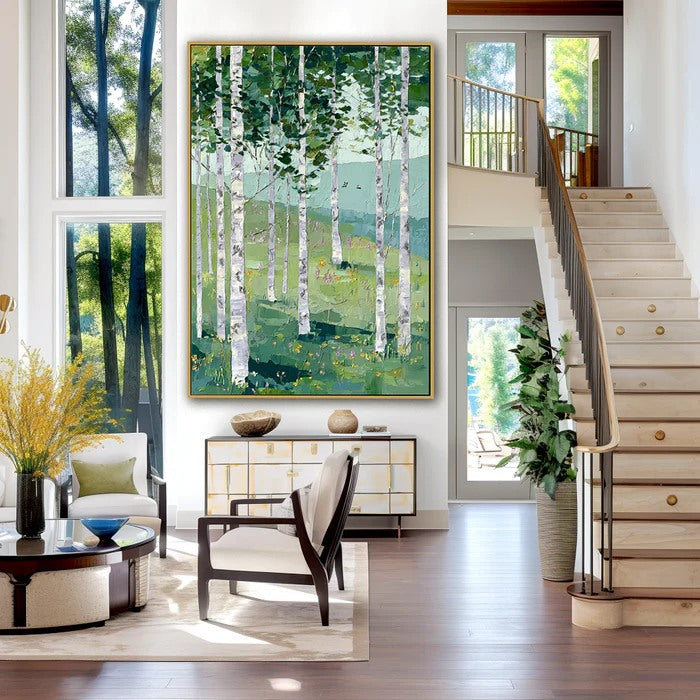
In contemporary interiors, geometric abstract art carries more than aesthetic value—it creates atmosphere and intention. Large-scale canvases with bold geometric patterns can balance architectural layouts, add vibrancy to neutral palettes, and introduce a sense of rhythm to minimalist rooms. Designers often use geometric wall art to guide visual flow, establishing focal points that connect different zones within a space. Its adaptability across styles, from Scandinavian to industrial, makes it a timeless design asset for homes, hotels, and offices alike.
Market Trends and Data
The global market for abstract and geometric artworks continues to expand, driven by collectors’ growing interest in modern minimalism, cultural symbolism, and digital artistry. Reports from global art market analysts predict steady growth fueled by online gallery platforms and accessible prints. Younger generations, especially millennials and Gen Z, see geometric abstract pieces as extensions of their digital aesthetic—structured, bold, and harmonious.
At Artextured, we believe art should do more than decorate—it should transform spaces and inspire experiences. Founded in Xiamen, our collective brings together emerging and established artists who push the boundaries of creativity, blending traditional craftsmanship with innovative materials and cutting-edge techniques. Our signature art-infused soundproof panels merge beauty with functionality, offering exquisite geometric pieces that redefine acoustic and visual harmony.
Core Technology and Artistic Process
Today’s geometric abstract artworks often combine traditional painting with new technologies. Artists utilize digital rendering tools, laser-cut materials, and textured media to achieve dimensional depth and precise repetition. Metallic pigments and resin coatings enhance light interaction, while modular installations allow collectors to customize configurations. This fusion of innovation and craftsmanship ensures that every piece resonates differently depending on light, angle, and distance.
Real User Cases and Measurable ROI
Commercial spaces that integrate geometric abstract art often report tangible benefits—ranging from improved acoustic comfort to enhanced customer engagement. In one modern office redesign, incorporating large geometric panels not only reduced ambient noise levels but also increased employee focus and satisfaction. Retail environments using geometric installations have seen longer dwell times and elevated brand perception. The clean, structured visuals promote calm and creativity, making geometric abstract pieces both a sensory and practical investment.
Future Trends in Geometric Abstraction
As digital reality expands, the next evolution of geometric abstract art lies in interactive installations and AI-driven generative patterns. Artists are exploring coded symmetries where algorithms compose visual harmonies that evolve over time, bridging science and art in dynamic ways. Sustainable materials, 3D printing, and augmented reality exhibitions will continue to shape how audiences experience form, depth, and emotion. The rise of immersive design means geometric abstraction will increasingly influence not just visual art but also architecture, fashion, and virtual environments.
Competitor Comparison Matrix
| Art Segment | Defining Features | Audience Appeal | Innovation Level | Market Strength |
|---|---|---|---|---|
| Traditional Painting | Handcrafted pigment on canvas | Collectors, purists | Medium | Stable |
| Geometric Abstract Art | Shape-driven visual logic and color interaction | Designers, modern art collectors | High | Rising |
| Digital Abstract | Algorithmic and motion-based works | Tech-oriented collectors | Very High | Emerging |
| Minimalist Prints | Clean linear focus | Home décor buyers | Moderate | Wide |
Top Geometric Works and Use Cases
| Artwork Name | Key Advantages | Ratings | Ideal Setting |
|---|---|---|---|
| “Infinite Balance” | Harmonizes modern interiors with proportionate geometry | 4.9/5 | Offices, galleries |
| “Chromatic Axis” | Vibrant gradient contrasts | 4.8/5 | Living spaces |
| “Silent Grid” | Acoustic-friendly structured patterns | 4.9/5 | Studios, lobbies |
| “Pulse Geometry” | Motion influence and optical illusion | 4.7/5 | Restaurants, retail |
Relevant FAQs
What defines geometric abstract art?
It emphasizes structure and form using shapes, lines, and color rather than depicting real-world objects.
Why does geometric abstraction feel harmonious?
Our brains associate symmetry and proportion with natural order, creating a calming and balanced effect.
How do geometric artworks fit into interiors?
They bring structure, rhythm, and spatial unity, complementing both minimalist and decorative design styles.
Can geometric art improve workplace environments?
Yes. Studies show well-placed abstract pieces enhance mood, reduce stress, and boost concentration.
The Emotional Geometry of Future Design
What makes geometric abstract art so captivating is its ability to transform structured simplicity into endless possibility. It bridges art and mathematics, science and spirit, modernity and timelessness. Whether digitally rendered or hand-painted, it continues to invite viewers into a dialogue between order and imagination. As visual culture evolves, geometric abstraction will remain a powerful language for expressing the hidden rhythm of modern life—an art form that never stops reshaping how we see, think, and feel.