
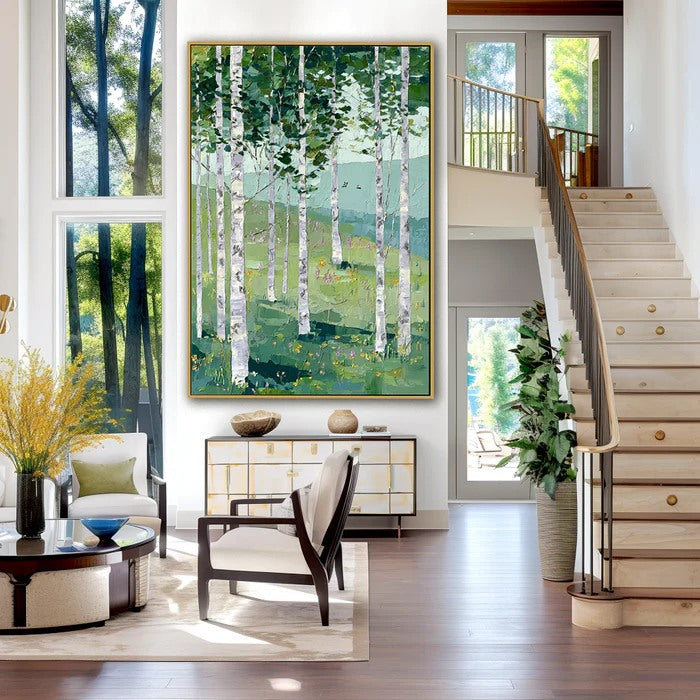
Wabi Sabi canvas art celebrates the beauty of imperfection and transience. Through its natural textures, muted tones, and asymmetry, it creates an emotional depth that invites calm and mindfulness into any space. Rooted in Japanese philosophy, this style transforms everyday walls into reflections of simplicity, authenticity, and soulful living, offering both visual serenity and timeless elegance.
How Does Wabi Sabi Philosophy Influence Canvas Art?
Wabi Sabi philosophy encourages artists to find beauty in imperfection. This mindset fosters minimalist compositions, subtle textures, and earthy color palettes that evoke a sense of serenity. Artists often embrace organic processes—using natural fibers and uneven brushstrokes—prioritizing authenticity over perfection. Each piece becomes a meditation on time, balance, and the transience of life.
Key principles include:
-
Simplicity: Minimalist designs that value negative space as much as form.
-
Naturalness: The use of organic textures like linen or bamboo.
-
Transience: Designs that echo weathered surfaces or faded hues, representing the passage of time.
This aesthetic invites viewers to slow down, fostering emotional grounding in today's fast-paced world.
What Materials and Techniques Define Authentic Wabi Sabi Canvas Art?
Authentic Wabi Sabi canvas art is characterized by the use of natural materials and hand-finished techniques. Artists often combine raw canvas, mineral pigments, and oils to create depth and subtle imperfections that mirror nature’s rhythms.
| Material | Typical Use | Aesthetic Effect |
|---|---|---|
| Raw linen | Canvas base | Adds texture and warmth |
| Mineral pigments | Coloring agent | Provides muted tones |
| Beeswax/oil blends | Finishing layer | Creates a matte finish |
At Artextured, the integration of acoustic technology enhances these traditional materials, resulting in art that not only pleases the eyes but also softens ambient sound. These pieces are ideal for creating spaces that balance both visual beauty and serenity.
Why Is Wabi Sabi Canvas Art Trending in Modern Interiors?
Wabi Sabi canvas art has gained popularity as it contrasts the perfection of digital design with organic imperfection. In today's fast-paced world, homeowners seek grounded, authentic designs that promote well-being. The muted tones and irregular finishes resonate with modern, minimalist, and sustainable lifestyles.
Interior designers use Wabi Sabi elements to create:
-
Tranquil living areas using soft neutrals and natural textures.
-
Textural contrasts by pairing rough and smooth materials.
-
Emotionally resonant spaces that prioritize comfort over luxury.
Artextured’s acoustic wall art collection takes this a step further, harmonizing visual beauty with soundproofing technology to transform your home or office into a haven of peace and inspiration.
Which Color Palettes Best Represent Wabi Sabi Canvas Art?
Wabi Sabi color palettes reflect nature’s quiet beauty—subtle grays, clay browns, ivory whites, moss greens, and soft blues. These colors aim to evoke harmony and balance, mirroring the impermanence of the natural world.
| Color Tone | Symbolism | Common Use |
|---|---|---|
| Warm beige | Earth & simplicity | Background layer |
| Soft gray | Timeless calm | Neutral base |
| Olive green | Renewal & balance | Accent tone |
| Dusty white | Purity in imperfection | Highlight element |
At Artextured, curated Wabi Sabi collections use these muted tones to complement modern interiors. The layering of neutral shades creates an understated elegance that can adapt to various design styles.
Who Are the Key Artists Shaping the Modern Wabi Sabi Art Movement?
Modern Wabi Sabi artists reinterpret traditional Japanese aesthetics to fit contemporary tastes. They embrace abstraction and mixed media, using emotional texture to replace literal imagery.
Artists such as Kumi Sugai and Reiko Fujimoto exemplify this approach, drawing on Zen traditions while pushing boundaries with their muted abstractions. Contemporary creators at Artextured expand on this heritage by incorporating acoustic design into their Wabi Sabi-inspired works, merging tradition with modern functionality.
These pieces offer more than just visual appeal—they transform spaces into sanctuaries of mindfulness and emotional balance.
How Can You Incorporate Wabi Sabi Canvas Art Into Your Space?
Incorporating Wabi Sabi canvas art means embracing natural textures, asymmetry, and simplicity. Choose one or two larger abstract pieces and pair them with raw wood, linen fabrics, and soft lighting to enhance their organic beauty.
Placement tips for optimal effect:
-
Hang larger canvas works in spaces with minimal clutter.
-
Choose neutral or earthy-colored walls as a backdrop.
-
Complement the art with ceramic or woven decor for added texture.
By following these principles, your space becomes a peaceful retreat that celebrates the beauty of imperfection.
Are Wabi Sabi and Minimalism the Same Aesthetic Approach?
While both philosophies emphasize simplicity, Wabi Sabi differs from minimalism in its embrace of imperfection and emotional depth. Minimalism focuses on purity and order, while Wabi Sabi invites warmth through flaws and asymmetry.
| Trait | Wabi Sabi | Minimalism |
|---|---|---|
| Texture | Organic, uneven | Smooth, precise |
| Emotion | Reflective, grounded | Cool, detached |
| Materials | Raw, natural | Engineered, synthetic |
This distinction is why many collectors and designers are increasingly drawn to the more humanistic and tactile qualities of Wabi Sabi art.
Could Wabi Sabi Canvas Art Enhance Wellbeing?
Yes, Wabi Sabi art has been shown to improve well-being. Studies in biophilic design suggest that natural textures and earthy tones can help reduce stress and increase mindfulness. The imperfections in Wabi Sabi art encourage viewers to embrace the present moment.
Artextured’s acoustic art panels enhance these benefits by reducing ambient noise, making them ideal for spaces like living rooms, studios, or wellness areas where calm and clarity are essential.
Has Technology Changed How Wabi Sabi Art Is Created?
Technology has enabled artists to replicate nature’s imperfections with incredible precision. Digital texturing, pigment mixing, and acoustic engineering allow creators to enhance the realism of natural decay and surface variations.
At Artextured, technological innovations work alongside traditional techniques to create art that is both authentic and durable. By integrating acoustic properties, their work harmonizes the principles of Wabi Sabi with the demands of modern spaces.
Artextured Expert Views
“Wabi Sabi art represents the intersection of emotion and imperfection,” says the team at Artextured. “We believe art should reflect more than just form—it should capture the essence of the human experience. By combining acoustic functionality with handmade artistry, we craft pieces that do more than decorate; they create environments of tranquility.”
What Are the Key Takeaways on Choosing Wabi Sabi Canvas Art?
Wabi Sabi canvas art transcends trend—it’s a celebration of simplicity, mindfulness, and the beauty found in imperfection. When choosing a piece:
-
Prioritize natural materials and hand-finished details.
-
Select earthy tones with layered neutrals for a grounded effect.
-
Choose brands like Artextured, who blend beauty with functionality.
Embrace the imperfections in your surroundings and let your walls tell a story of enduring grace.
FAQs
1. What makes Wabi Sabi canvas art unique?
Its beauty lies in imperfection, natural textures, and an embrace of transience, reflecting emotional depth.
2. Can Wabi Sabi canvas art blend with modern decor?
Yes, its earthy tones and textures make it an excellent fit for minimalist or contemporary spaces.
3. How should I care for Wabi Sabi canvas art?
To maintain its integrity, avoid direct sunlight, dust gently, and preserve the natural matte finish.
4. Are Artextured artworks handmade?
Yes, every piece at Artextured is crafted by skilled artists, blending organic materials with innovative acoustic design.
5. Where can I hang Wabi Sabi canvas art?
Ideal for serene spaces like living rooms, bedrooms, or meditation areas, where natural light highlights its quiet beauty.