
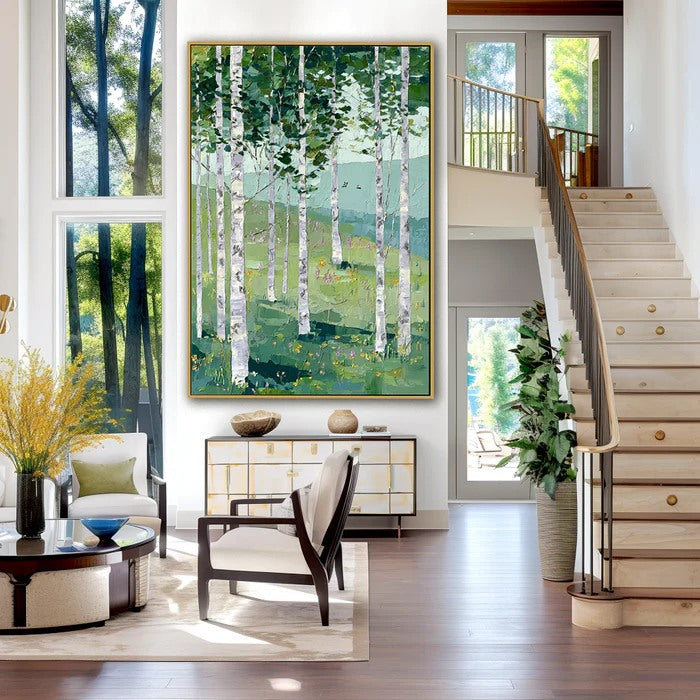
Whispers of light abstract art works because it does something flat art rarely manages: it changes as the room changes. Soft luminous palettes, gradual tonal shifts, and tactile surface depth can make a wall feel calmer, airier, and more open, especially when daylight moves across the canvas. That effect is strongest when the painting has enough physical texture to catch light without turning glossy or busy. For anyone choosing luminous abstract canvas art for a bedroom, living room, or quiet corner, the real question is not just whether the piece looks beautiful online, but whether it will still feel radiant under your own lighting.
The appeal is visual, not decorative
The most convincing ethereal wall paintings do not shout for attention. They create a sense of atmospheric space through restraint, letting pale tones, blurred transitions, and surface variation do the work. A composition like this can soften a hard interior, especially when the room already has stone, wood, linen, plaster, or other tactile materials that benefit from something visually weightless above them.
What makes this style so effective is the way it balances calm and presence. From a distance, it can read as quiet and serene. Up close, the brushed or layered surface gives the eye more to hold onto, so the work feels intentional rather than empty.
Explore the abstract art collection if you want to see how that balance changes across different compositions and scales.
Light and texture do the real work
Luminous abstract art gets its glowing appearance from contrast that is subtle rather than dramatic. High-key color palettes, softened edges, and delicate value shifts suggest ambient light instead of hard form. When the surface also has impasto ridges or layered paint, those raised areas catch directional daylight and produce tiny highlights and shadows that change through the day.
That shifting surface is part of the appeal. Morning light may make one section feel brighter and cleaner, while late-afternoon light can deepen the shadows inside the texture and give the same painting more warmth. In that sense, light capturing art pieces are less like static objects and more like surfaces that register the room around them.
A useful way to think about this style is in contrast with a flat print. A printed image can show the palette, but it cannot really participate in light in the same way. With textured canvas, the relief becomes part of the experience.
Where this style feels most natural
This kind of art tends to work best where the room already asks for softness. In bedrooms, it can support a slower mood and reduce visual heaviness above the bed. In sunlit living rooms, it can echo the brightness of the space without competing with furniture. In meditation spaces or reading corners, the low-contrast palette and gentle rhythm can help the room feel less crowded.
The size matters as much as the subject. A large luminous canvas can make a room feel more expansive if it leaves enough breathing room around the edges. Too small, and the effect can disappear into the wall. Too large, and the delicacy that makes the style appealing can start to feel overworked.
Avoid placing delicate light-reflective artwork where direct window glare hits it all day. Strong glare can flatten the tonal transitions and make the surface read harsher than it does in softer side light.
How to style it without losing the glow
The best styling choices are usually the quietest ones. Light wood, brushed metal, boucle, linen, plaster, and matte finishes tend to support the atmosphere rather than interrupt it. If the room already has bold pattern, highly saturated color, or very dark furniture, the artwork may need a more considered placement so it does not disappear or feel too fragile.
Lighting is just as important as the frame or wall color. Warm ambient light can make the palette feel more enveloping at night, while side lighting can emphasize the depth of the paint surface. If you want the piece to feel radiant rather than shiny, avoid overly strong spotlights aimed straight at the canvas; angled light usually reveals texture more gracefully.
For buyers comparing decorative options, this is where atmospheric abstract decor earns its place. It is not trying to be loud. It is trying to hold the room together through tone, texture, and light.
When the effect can miss
This style is not ideal for every wall. If the room is already washed in very bright direct sun, a pale painting may lose some of its subtlety at certain times of day. If the wall is narrow, busy, or visually crowded, a softly luminous composition can feel too understated to anchor the space.
The other common mistake is choosing a surface that is too smooth for the intended mood. Without enough texture, the painting may read as merely pale rather than genuinely luminous. Without enough tonal variation, it can become blank instead of atmospheric. The best pieces keep the lightness, but still give the eye a reason to linger.
A good fit for textured collections
If you are drawn to this look, Artextured is a natural place to explore it because the brand focuses on hand-painted 3D textured wall art rather than flat reproduction. That matters here: the whole point of whispers of light abstract art is the interaction between surface and light, so the piece needs physical depth to feel convincing in a real interior.
For homeowners, designers, or trade buyers who want a more tailored path, the work can also make sense when the room calls for specific scale, orientation, or palette control. The trade and project services page is most relevant when the need is less about browsing and more about fitting a piece to a larger interior plan.
Frequently Asked Questions
Why do luminous abstract paintings make small rooms feel larger and brighter?
They make small rooms feel larger and brighter because pale tonal ranges and soft transitions reduce visual heaviness, while texture adds depth without adding clutter.
What lighting best highlights atmospheric and light-textured canvas art?
Gentle side lighting or warm ambient light usually works best because it reveals surface relief and tonal shifts without creating harsh glare.