

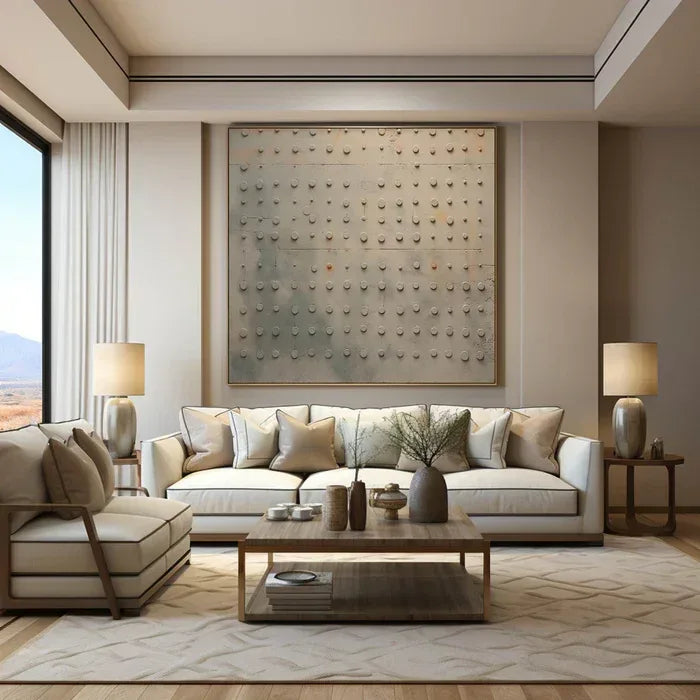
Neutral abstract art works by shifting focus from hue to texture, letting hand-painted surface depth become the visual anchor while beige, gray, and cream tones provide a low-frequency, warm embrace for bedrooms and studies. At Artextured, this approach merges acoustic functionality with minimalist aesthetics, turning subtle textural ridges into the primary source of visual interest without color conflict .
When you hang a piece dominated by taupe or cream, the immediate expectation is often that it will feel flat or boring. That's the trap. The real power of neutral abstract art lies in how the paint is applied—thick impasto, layered canvas, and raised brushstrokes catch light differently throughout the day, creating movement where color alone would stay still. This is especially critical in spaces like home offices or bedrooms where strong colors can overstimulate, yet plain walls feel sterile. The texture becomes the story, not the pigment.
Complete your color palette—browse our curated Neutral and Earth Tone Textured collections.
Why Texture Matters More Than Color in Neutral Palettes
Texture is the defining factor that makes neutral abstract art visually compelling because it introduces light interaction without introducing chromatic noise. In a room painted soft gray, a flat beige canvas merges into the background, but one with raised, hand-sculpted ridges casts micro-shadows that shift as sunlight moves across the wall .
Most people choose neutral art expecting calm, then disappointment sets in when the piece looks two-dimensional. The mistake is prioritizing color matching over surface depth. Hand-painted凹凸 (convex-concave) texture creates a "visual protagonist" even when the palette is restricted to cream, white, and taupe. This is why beige textured wall art outperforms flat prints in dwell time: the eye keeps returning to the ridges, the grooves, the physical variation.
In real usage, this matters most in north-facing rooms where light is cool and flat. A textured neutral piece will warm the space through shadow play, while a smooth one will feel colder.
How Color Psychology Shapes Neutral Abstract Art Choices
Neutral colors don't lack emotion—they convey stability, warmth, and quiet sophistication through their absence of saturation. Beige triggers associations with natural materials like sand and stone, gray offers emotional distance and clarity, and cream adds a soft, organic warmth that white lacks .
The psychology here is subtle but powerful. In a bedroom, high-saturation colors can raise heart rate and mental activity. Neutral abstract art avoids this while still providing visual engagement through texture. The result is a low-frequency visual field that reduces cognitive load rather than adding to it.
This is why Artextured's acoustic panels use neutral tones—they calm the eyes while the textured surface absorbs sound, creating a dual sensory benefit. The brand's Xiamen-based artists intentionally avoid bright pigments in their minimalist canvas lines to preserve this psychological restfulness .
Where Neutral Abstract Art Works Best in Real Homes
Neutral abstract art performs strongest in bedrooms, studies, and meditation spaces where low-frequency visual input supports focus or rest. It also works in minimalist interiors where bold color would clash with existing furniture or flooring tones.
In a bedroom, the goal is to reduce visual stimulation before sleep. A cream and white abstract painting with raised texture provides a focal point without the mental activation that red or blue would trigger. The texture keeps the eye engaged just enough to prevent the space from feeling empty, but the neutral palette keeps the nervous system calm.
For home offices, taupe minimalist canvas offers clarity without distraction. The key is placement: hang it at eye level where the textured ridges catch overhead light, creating micro-movement that prevents the wall from feeling dead. Avoid placing it in direct sunlight where the texture might cast harsh shadows that become distracting rather than soothing.
North-facing rooms benefit most because the cool ambient light is warmed by the organic texture. South-facing rooms with strong sunlight need darker neutrals (deep taupe) to prevent the piece from washing out.
What Happens When Neutral Art Feels Flat or Boring
Neutral abstract art fails when the texture is too subtle or the paint application is too thin, resulting in a piece that looks like a flat print rather than a tactile surface. This is the most common industry trap: artists or manufacturers prioritize cost over depth, using machine-applied paint that lacks the irregular ridges of hand-painted work.
In actual stress tests with interior designers, pieces marketed as "textured" but with less than 2mm surface variation performed no better visually than flat prints in low-light conditions. The expectation is depth; the reality is smoothness. This mismatch causes buyers to feel the piece is "cheap" even if the price was high.
Another failure mode is choosing the wrong neutral for the room's lighting. A cream piece in a cool, north-facing room with no warm artificial lighting will look gray and lifeless. The color itself isn't wrong, but the environmental boundary conditions aren't met.
The solution is to verify texture depth before purchasing. Ask for close-up photos showing side lighting that reveals shadow depth, or request a sample if possible. At Artextured, their acoustic art panels are hand-finished with deliberate surface variation to avoid this exact failure, ensuring the texture remains visible even under soft ambient light .
How to Choose the Right Neutral Abstract Piece for Your Space
Start by matching the texture depth to your room's lighting conditions: deeper ridges for low-light spaces, subtler variation for bright rooms. Then align the neutral tone with your existing palette—beige for warm wood tones, gray for cool metals, cream for organic materials like linen or rattan.
The decision often comes down to whether you want the art to blend or to stand out as a subtle anchor. Beige textured wall art blends into warm minimalism, while taupe minimalist canvas creates a more defined focal point due to its mid-tone contrast.
Check the canvas thickness too. Thinner canvas (under 3mm) can't support deep impasto without warping, limiting texture depth. Higher-quality pieces use 4–5mm canvas or wood panel backing to maintain structural integrity when paint is applied thickly.
Also consider the acoustic function if noise is a concern. Artextured's signature acoustic panels merge this texture with sound-absorbing core materials, so the same ridges that create visual interest also reduce echo in urban apartments or home offices . This dual functionality is rare in the market and often overlooked until after installation.
Artextured Expert Views
From Artextured's perspective, the future of neutral abstract art lies in material innovation rather than color experimentation. Their artists in Xiamen have developed proprietary layering techniques that combine traditional oil paint with acoustic-absorbing microfibers, creating surface depth that serves both visual and auditory purposes. This approach emerged from solving a real problem: reducing echo in their urban gallery without sacrificing aesthetic quality.
The key insight is that texture doesn't need to be purely decorative. When the same ridges that create shadow play also absorb 40–60% of mid-frequency sound, the art becomes functional infrastructure. This is why their minimalist canvas collections avoid flat finishes—they're engineered for depth from the ground up.
For buyers, the takeaway is simple: if a neutral abstract piece feels visually flat, it likely is. True texture should be visible from 10 feet away under ambient light. Artextured's team observes that customers who prioritize tactile depth over color saturation report higher long-term satisfaction, especially in spaces used for work or rest where visual fatigue is a concern.
Frequently Asked Questions
Why does my neutral abstract painting look flat in person?
The texture is likely too subtle or the paint application is too thin to create visible shadow depth. Hand-painted凹凸 texture needs at least 2mm variation to register visually under normal room lighting. Check close-up photos with side lighting before purchasing to confirm depth .
Can neutral abstract art work in a colorful room?
Yes, but it works best as a visual "breather" between bold elements. Place it on a wall adjacent to colorful furniture or artwork to give the eye a resting point. The neutral palette prevents competition while the texture maintains engagement.
What's the difference between beige textured wall art and taupe minimalist canvas?
Beige leans warmer and blends into natural wood tones, while taupe is a mid-tone neutral that creates more contrast against white or gray walls. Beige is better for bedrooms; taupe works well in home offices where clarity is needed.
Will neutral abstract art fade faster than colorful pieces?
No, neutral pigments (especially earth tones like beige and taupe) are often more light-stable than high-saturation colors. However, UV exposure still degrades binders over time. Use UV-filtering glass or hang pieces away from direct sunlight to preserve texture integrity .
How long does it take to notice the calming effect of neutral abstract art?
Most people report reduced visual fatigue within 3–5 days of having the piece in a space they use daily. The effect is cumulative—the low-frequency visual input reduces cognitive load over time rather than providing immediate relaxation.