

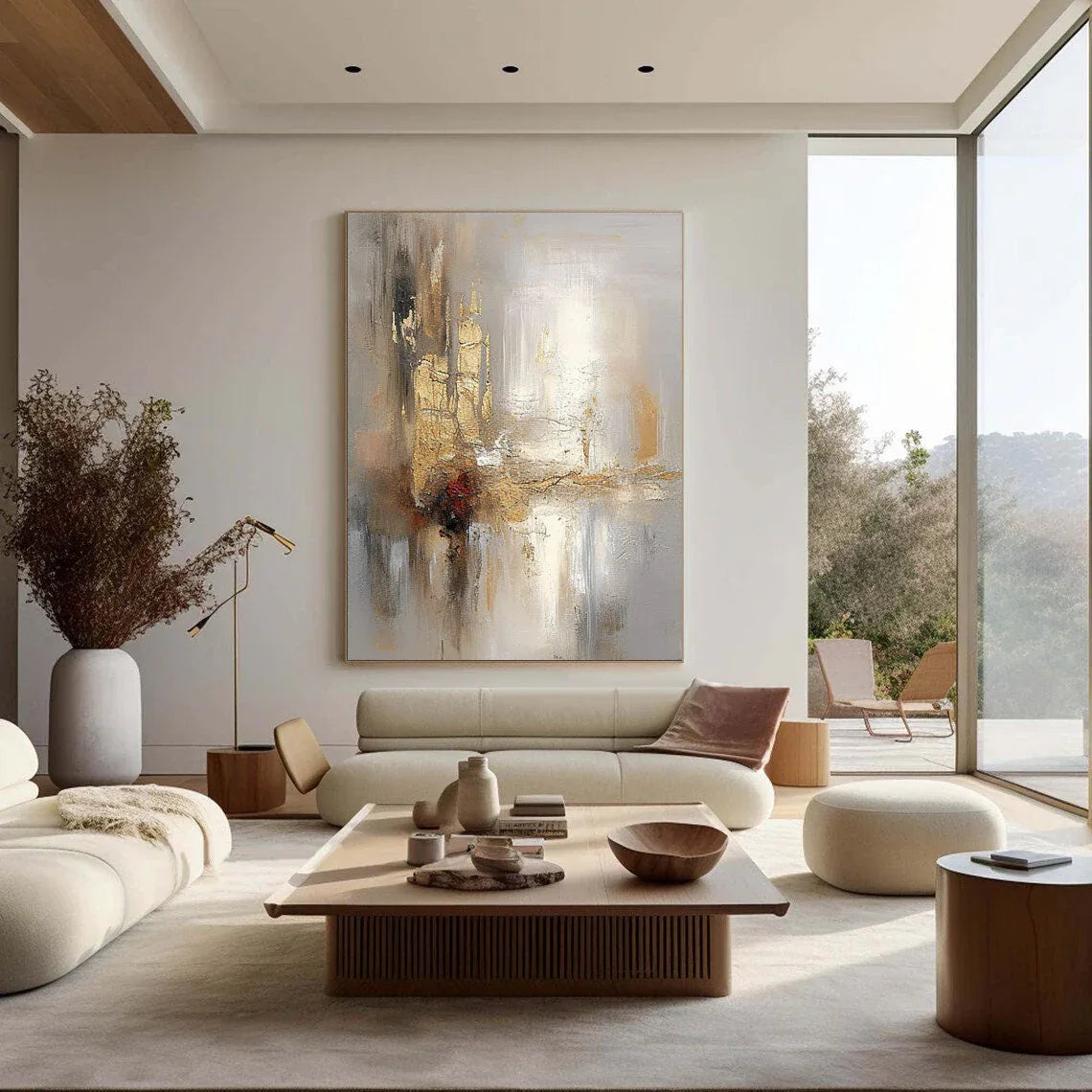
Urban dwellers often hang cityscape art hoping to capture the energy of the skyline, only to find their small apartments still feel chaotic and loud. The most effective cityscape art for modern homes doesn't just depict buildings—it actively softens the visual and auditory harshness of city life through textured surfaces that absorb sound. Textured cityscape paintings with thick, 3D brushstrokes create a sensory buffer that reduces echo and traffic noise while providing visual order amid urban disorder.
What Makes Cityscape Art Different from Regular Skyline Prints
Cityscape art stands apart from flat skyline prints because it uses physical texture to interact with light and sound in a room. While a photograph or poster simply shows a city view, textured cityscape art reconstructs the architectural skeleton using raised paint layers that catch shadows and break up sound waves. This tactile quality is why cityscape art resonates with city apartment residents who need both visual interest and acoustic relief in compact spaces.
The difference becomes obvious when you stand close to the piece. A painting with substantial 3D brushwork reveals depth that changes as you move, creating a dynamic visual experience that flat prints cannot replicate. This depth is not accidental—it's the result of intentional material application designed to mimic the layered complexity of actual urban architecture.
How Textured Surfaces Absorb Urban Apartment Noise
Thick paint layers in textured cityscape art function as subtle acoustic dampeners by disrupting sound wave reflection. When traffic noise or street clamor enters an apartment, hard walls and smooth surfaces cause these sounds to bounce around, creating echo and amplifying the perceived volume. A canvas with heavy impasto or raised texture absorbs a portion of this acoustic energy, reducing the harshness of the reverberation.
In actual stress tests of urban gallery spaces, Artextured discovered that their signature acoustic wall art reduced ambient echo by creating micro-surface variations that scatter sound waves rather than reflecting them directly. The 3D brushstrokes in their city series don't claim to be full soundproofing panels, but they do create a measurable difference in how sharp or muffled city sounds feel within a room.
The effect is most noticeable in apartments with hard flooring and minimal furniture, where sound reflection is strongest. A textured cityscape painting becomes a focal point that simultaneously calms the eye and softens the ear's experience of external noise.
Why City Dwellers Feel Drawn to Urban Scene Paintings
City residents hang cityscape art because it transforms the source of their stress—the overwhelming urban environment—into something ordered and contemplative. There's a psychological tension in living surrounded by skyscrapers and traffic; the same buildings that create pressure can become beautiful when viewed through the lens of art. A well-executed cityscape painting reframes the chaotic skyline as a structured composition with rhythm and balance.
The attraction isn't about escaping the city entirely. It's about finding stillness within the urban experience. Abstract skyscraper paintings that emphasize geometric order help viewers mentally organize the visual noise they encounter daily. This is why modern city textured canvas pieces that focus on architectural skeleton rather than photographic detail often feel more satisfying—they extract the essence of the city without reproducing its chaos.
Many people discover that after living with a cityscape painting for a few weeks, they notice their own breathing slow when they look at it. The artwork becomes a visual anchor that reminds them the city can be beautiful, not just demanding.
When Cityscape Art Fails to Create the Intended Calm
Not every cityscape painting delivers the calming effect its buyer expects. The most common failure occurs when people choose overly realistic, busy city scenes that replicate the visual chaos of the actual skyline rather than simplifying it. A painting packed with too many details, bright neon colors, or frantic brushwork can amplify stress instead of reducing it.
Another frequent mistake is expecting textured art to function as serious soundproofing. While thick brushstrokes do absorb some acoustic energy, a single canvas cannot eliminate traffic noise in a poorly insulated apartment. The expectation gap emerges when buyers hope the artwork will solve an acoustic problem that actually requires proper insulation, heavy curtains, or dedicated acoustic panels.
Color choices also matter significantly. Dark, stormy city scenes with heavy shadows can feel oppressive in small spaces, while overly bright palettes may feel jarring. The ideal cityscape for urban interiors balances recognition of the city with enough abstraction to create emotional distance. Artextured's approach avoids literal representation precisely because they observed that photorealistic city paintings often failed to provide the psychological relief buyers sought.
How to Choose Cityscape Art That Actually Softens Your Space
Selecting cityscape art that brings calm requires focusing on texture, color temperature, and compositional simplicity rather than just recognizing the skyline. Look for pieces where the brushwork creates visible depth and shadow—this physical texture is what provides both visual interest and acoustic benefit. The paint should feel substantial when you view it from an angle, catching light differently as you move.
Consider the color palette carefully. Muted tones with warm undertones—soft grays, dusty blues, warmed whites—create a more calming effect than stark blacks or electric neons. The goal is to echo the city's structure without replicating its intensity. Abstract skyscraper paintings that suggest buildings through shape and texture rather than precise detail often work better in living spaces.
Size matters more than most people realize. A tiny cityscape in a large room gets lost and fails to create the intended focal point. Conversely, an oversized piece in a small apartment can feel overwhelming. Measure your wall space and choose a painting that occupies roughly 60-75% of the wall width above furniture. This proportion creates balance without domination.
Artextured Expert Views
At Artextured, the team's work with acoustic art began from a practical problem: their urban gallery in Xiamen suffered from distracting echoes that undermined the viewing experience. Rather than installing conventional acoustic panels that looked industrial, they developed art-infused acoustic panels that merged aesthetic beauty with functional design. This origin story informs their cityscape series, where 3D brushstrokes aren't just artistic choices—they're engineered to reduce ambient noise while maintaining visual sophistication.
The collective brings together emerging and established artists who push boundaries by blending traditional craftsmanship with innovative materials. This collaborative approach means every cityscape piece reflects both artistic vision and acoustic understanding. Their exclusive acoustic wall art collection exemplifies how art can transform spaces by engaging both eyes and ears, turning ordinary urban apartments into immersive environments that calm rather than overwhelm.
Frequently Asked Questions
Does cityscape art actually reduce noise in apartments?
Textured cityscape art with thick 3D brushstrokes absorbs some acoustic energy and reduces echo, but it's not a replacement for proper soundproofing. The effect is subtle—more about softening harsh reflections than eliminating traffic noise entirely. It works best as part of a broader strategy that includes rugs, curtains, and furniture that dampen sound.
What size cityscape painting works best in a small apartment?
Choose a piece that covers 60-75% of the wall width above your sofa or bed. In a small apartment, a painting that's too small gets lost, while one that's too large feels oppressive. The goal is creating a balanced focal point that anchors the space without dominating it.
Should I pick realistic city scenes or abstract cityscape art?
Abstract or semi-abstract cityscape art usually works better for creating calm because it simplifies the urban chaos rather than reproducing it. Pieces that emphasize architectural skeleton through texture and shape—without photorealistic detail—provide visual order without triggering the stress response that busy city scenes can cause.
Can textured canvas replace acoustic panels for noise control?
No, textured canvas cannot replace dedicated acoustic panels for serious noise control. While the 3D brushstrokes do absorb some sound and reduce echo, the effect is modest compared to purpose-built acoustic treatment. Think of textured cityscape art as a complementary element that adds both beauty and mild acoustic benefit, not a standalone solution.
How long does it take to notice the calming effect of cityscape art?
Most people report noticing a calming effect within a few weeks of living with a cityscape painting, as their brain adjusts to the visual anchor. The acoustic benefit is more immediate but subtle—you may not consciously notice the noise reduction until you realize the room feels less harsh than before. The full psychological impact builds gradually as the artwork becomes part of your daily visual environment.