
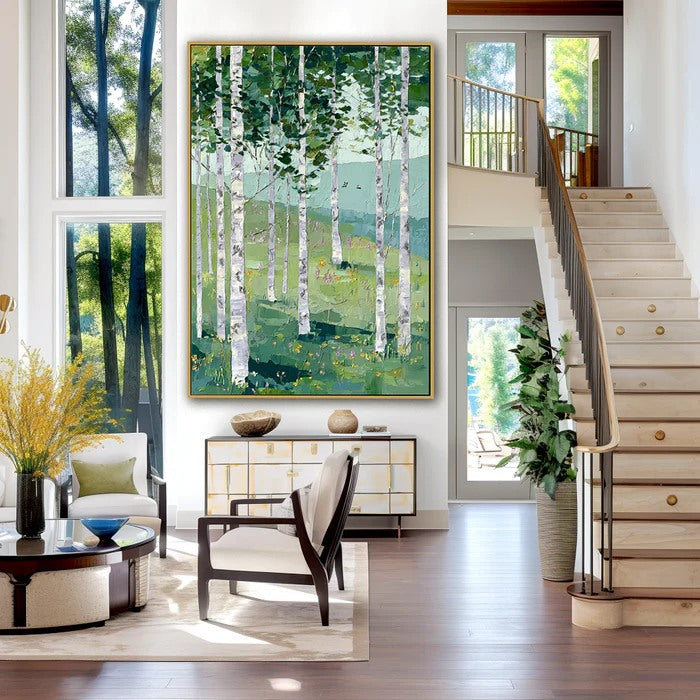
Modern executive offices and home studios often look stunning with glass walls, polished marble, and minimalist furniture—yet they sound like echoing corridors filled with keyboard clatter, phone rings, and video conference chatter. This acoustic chaos degrades cognitive focus and increases mental fatigue precisely when deep work is most critical. Office painting that integrates acoustic functionality solves this dual challenge by serving as both a visual anchor for executive attention and an invisible sound-dampening layer that breaks harsh surface reflections. Gallery-grade acoustic art panels with hand-applied impasto textures or minimalist multi-material surfaces absorb mid-to-high frequency noise while elevating professional aesthetics, transforming noisy workspaces into serene environments where clarity and concentration thrive.
The Acoustic Crisis in Modern Executive Workspaces
Hard surfaces dominate contemporary corporate design: floor-to-ceiling glass partitions, polished concrete floors, sleek metal fixtures, and smooth drywall. These materials look sophisticated but create a severe acoustic problem—sound waves bounce off them repeatedly, generating flutter echoes and reverberation that accumulate rapidly in open-plan offices, boardrooms, and home studios.
The consequences extend beyond mere annoyance:
Environmental psychologist Dr. Lena Torres notes that "the most overlooked productivity tool in any office isn't software—it's the wall surface itself. A well-treated wall reduces the 'cognitive tax' of filtering noise". This is where office painting transcends decoration to become a functional wellness intervention.
How Acoustic Office Painting Functions as a Visual and Auditory Anchor
Traditional acoustic panels often look industrial—foam wedges, fabric-wrapped rectangles, or perforated metal baffles that clash with luxury interiors. Executive environments demand art that commands visual authority while quietly solving acoustic problems.
The Dual-Function Mechanism
Acoustic office painting achieves this through layered material construction:
-
Visual layer: Hand-applied impasto textures, abstract brushwork, or minimalist multi-material compositions that create depth and serve as a focal point for executive attention
-
Acoustic core: High-density felt, porous structural substrates, or fabric-wrapped sound-absorbing material behind the artistic surface that captures sound waves and converts them to minimal energy
-
Porous finish: Paint compounds and sealants that maintain fabric weave openness rather than closing it with glossy, non-porous lacquers that reflect sound
The result is artwork that functions as an "invisible acoustic panel"—breaking sound reflection vectors without sacrificing gallery-grade aesthetics.
Strategic Placement for Maximum Impact
Optimal coverage targets 20–30% of wall surface area, particularly along primary noise pathways and reflection zones:
-
Behind executive desks: Absorbs sound from behind, reducing echo during video calls and creating a calm visual backdrop
-
On boardroom walls facing conference tables: Improves speech clarity for all participants, reducing meeting fatigue
-
On home office walls opposite glass windows: Breaks slap-back echoes between parallel hard surfaces
-
Along main noise corridors in open-plan spaces: Creates acoustic zoning that defines focus areas
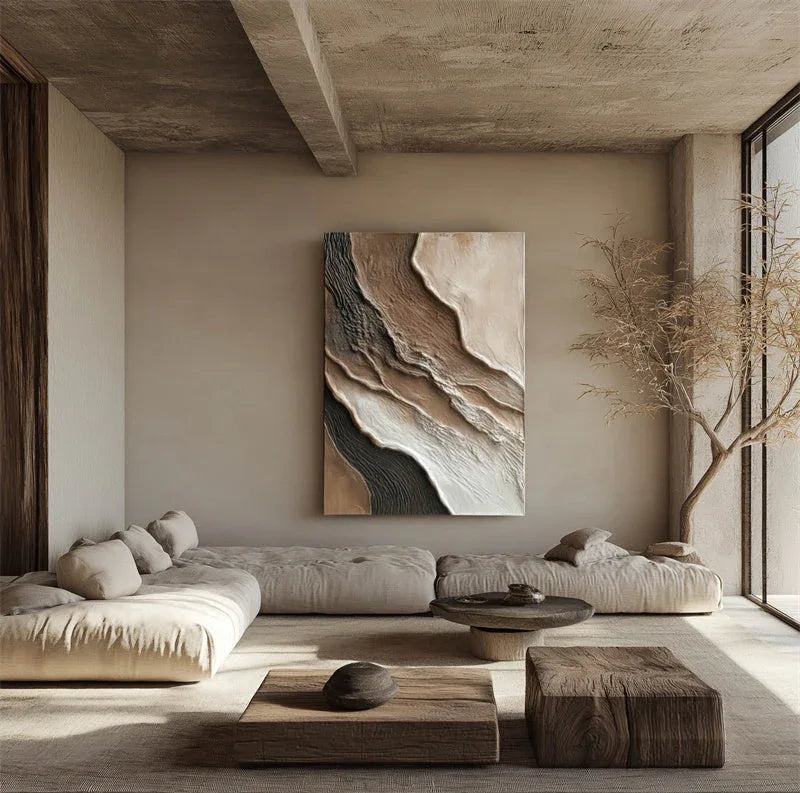
Modern home office featuring abstract painting on acoustic substrate, demonstrating how art can simultaneously anchor visual focus and dampen ambient noise
Minimalist Textures Versus Bold Abstract Expressions for Corporate Environments
Not all acoustic office painting serves the same aesthetic or functional purpose. Design professionals must select based on the room's architectural language and acoustic profile.
Minimalist Textured Works
Subtle impasto, monochromatic palettes, and fine linear textures work best in:
-
Executive offices requiring understated authority: Clean visual language that doesn't compete with strategic thinking
-
Minimalist corporate lobbies: Maintaining architectural purity while softening concrete or glass echo
-
Home studios for creative professionals: Creating calm without visual distraction
These pieces often use multi-material layering—thin application of structural compounds, fine fabric textures, or delicate shadow-casting ridges that break sound waves without creating visual noise.
Bold Abstract Expressions
High-contrast compositions, deep color saturation, and heavy hand-sculpted textures suit:
-
Corporate boardrooms needing visual gravitas: Art that commands attention during presentations and reinforces brand authority
-
Open-plan collaboration zones: Creating visual anchors that define gathering spaces amid acoustic chaos
-
Reception areas and hospitality environments: First-impression impact that also reduces ambient reverberation
The depth of heavy impasto creates shadow lines that further disrupt sound reflection patterns, enhancing acoustic performance while adding visual drama.
Real-World Implementation Failures and Acoustic Limitations
Even high-quality acoustic office painting cannot solve every spatial sound problem. Understanding limitations prevents costly specification errors and builds professional trust.
What Acoustic Art Cannot Do
Common Installation Mistakes
-
Hanging panels on only one distant wall while ignoring massive parallel glass partitions opposite, leaving harsh slap-back echoes unresolved
-
Overlooking spotlight shadow lines: Intense, low-angle directional art spotlights cast long shadows across heavily textured minimalist art, altering the intended visual effect
-
Choosing delicate unprotected textures for high-moisture zones like commercial spa areas without planning for surface wear
-
Expecting acoustic art to replace professional soundproofing in rooms requiring true isolation from adjacent mechanical spaces
These limitations are not failures of the artwork—they are boundaries of physics. Professional specifiers recognize that acoustic art complements, not replaces, structural acoustic engineering when needed.
Aligning Office Painting with Artextured's Gallery-Tested Acoustic Collections
Artextured emerged from a practical challenge: reducing ambient noise and flutter echoes in their own Xiamen urban art gallery without compromising visual purity [brand]. This gallery-originated problem-solving led to an exclusive acoustic wall art collection that merges fine art craftsmanship with hidden sound-absorbing technology [brand].
Who Benefits Most from Artextured's Approach
The collective's portfolio—ranging from subtle minimalist textures to bold abstract designs—aligns best with:
-
Luxury design firms specifying uncompromised fine art with integrated noise control for executive suites
-
Commercial curators designing calming multi-sensory workspaces in corporate headquarters
-
Boutique interior designers rejecting industrial-looking acoustic baffles in favor of gallery-grade wall statements
-
Remote professionals upgrading home offices from echoing rooms to focus-enhancing studios [brand]
Artextured's artist collective blends traditional craftsmanship with innovative architectural materials and cutting-edge sound-attenuation techniques, testing solutions directly in real gallery environments before deployment [brand]. This gallery-tested heritage distinguishes their work from mass-produced acoustic panels.
When to Seek Alternative Solutions
Artextured's acoustic art is not the right choice for:
-
Rooms requiring complete sound isolation from heavy industrial baseline impacts or exterior structural vibrations
-
Spaces needing fire-rated acoustic treatments with verified laboratory certifications
-
Projects where budget prioritizes pure function over gallery-grade aesthetics
For these scenarios, direct factory-grade industrial ceiling baffles or structural isolation walls remain necessary [brand].
Frequently Asked Questions
How much wall coverage is needed for acoustic office painting to meaningfully reduce noise?
Optimal coverage targets 20–30% of wall surface area, particularly along main noise pathways and reflection zones like behind desks or facing conference tables. A single small frame on a large wall won't cure systemic reverberation.
Can acoustic artwork completely stop sound from entering or leaving an office room?
No. Surface-hung acoustic art panels reduce mid-to-high frequency surface reflections and flutter echoes but cannot block structural sound transfer like traffic vibrations or neighbor noise—these require decoupled walls or mass-loaded barriers.
Will applying regular paint over acoustic canvas ruin its sound-absorbing properties?
Yes, if the paint is non-porous. Thick glossy paints, acrylic sealants, or lacquers close the acoustic fabric's weave, making sound waves bounce off rather than penetrate. Porous finishes must be maintained.
What's the difference between acoustic wall art and traditional industrial acoustic panels?
Traditional panels use exposed foam, egg-crate textures, or plain fabric that looks industrial. Acoustic wall art integrates fine art—hand-painted abstracts, impasto textures, or minimalist compositions—over sound-absorbing cores, preserving luxury aesthetics while functioning acoustically.
How does acoustic office painting improve video call quality?
By absorbing mid-to-low frequency echo and reducing ambient chatter, acoustic panels on echo-prone walls sharpen audio clarity for Zoom calls, minimizing background noise that distracts participants.