
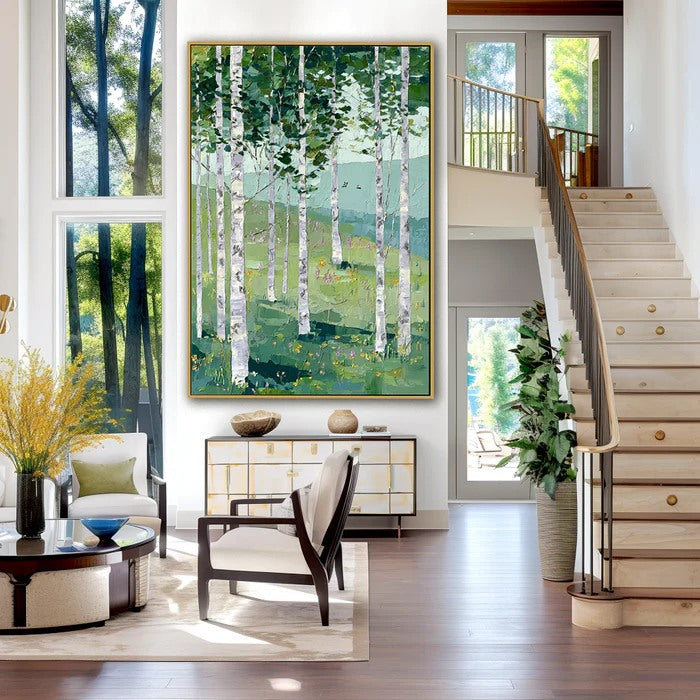
The choice between modern textured wall art and floral paintings usually shows up when a room feels almost finished but not quite grounded. You have the furniture, the palette, maybe even layered materials like wood or linen—but the wall still lacks presence. The answer isn’t about which style is better. It’s about how each one carries visual weight. Floral wall decor draws attention through subject, color, and detail, while modern textured wall art builds impact through depth, shadow, and surface movement. The right choice depends less on trend and more on how your room already behaves—its lighting, materials, and how much visual complexity it can hold.
What actually separates floral imagery from sculptural texture
Floral paintings communicate through representation. You see petals, stems, and composition first, then color relationships and brushwork. Even in looser styles, the subject remains the anchor. This makes floral work naturally expressive and often more narrative. It brings a sense of familiarity and can soften structured interiors.
Modern textured wall art works differently. It often removes subject entirely and replaces it with surface. Thick paint, raised strokes, and layered finishes create subtle shadows that shift throughout the day. Instead of asking you to “read” the image, it asks you to notice how light moves across it.
This difference matters in real rooms. A floral piece tends to add visual information. A textured piece adds physical presence without necessarily increasing color complexity.
When floral wall decor feels right at home
Rooms that already lean decorative tend to welcome floral art easily. Think spaces with patterned upholstery, mixed materials, or a warmer, layered palette. In these environments, floral paintings don’t compete—they participate.
They also work well when you want the wall art to feel personal or emotive. A bedroom with soft textiles, a reading corner, or a dining space with vintage elements often benefits from the familiarity of organic forms.
However, floral work can become visually busy if the room already has strong color contrasts or multiple focal points. In those cases, the art doesn’t anchor the space—it blends into the noise.
Where modern textured wall art quietly takes over
Minimal or contemporary interiors often struggle with a different problem: they look clean but slightly underwhelming. Flat prints can feel too thin against materials like stone, boucle, or matte-painted walls.
This is where modern textured wall art becomes useful. It introduces depth without forcing a new color story. A neutral impasto piece, for example, can sit comfortably in a beige or grey room while still catching light and creating movement.
If you’re exploring options, you can browse our abstract collection to see how different levels of texture and relief behave across neutral palettes.
The key advantage here is restraint. Texture adds presence without demanding attention in the same way a detailed subject does.
A practical comparison you can apply to your own room
Instead of thinking in terms of style preference, it helps to evaluate how each option interacts with your space:
This kind of comparison often reveals that the decision is less about taste and more about balance.
Using texture without overwhelming the room
One concern with textured art is that it might feel heavy or dominant. That usually comes down to scale and contrast rather than the texture itself.
A large textured piece in a low-contrast palette can act as a calm focal point rather than a loud one. The raised surface creates interest, but the restrained color keeps it from overpowering furniture or architectural lines.
A common mistake is pairing highly textured art with equally busy surroundings—like strong veining marble, bold rugs, and patterned sofas. Instead of adding depth, the wall becomes visually crowded, and the texture loses its effect entirely.
The goal is to let texture replace excess detail, not compete with it.
Can you mix floral and modern textured styles
Combining both styles can work, but only when there’s a clear hierarchy. One should lead, the other should support.
For example, a large textured canvas can anchor a living room, while smaller floral pieces appear in secondary areas like hallways or side walls. Alternatively, a floral painting can remain the focal point, with textured pieces elsewhere echoing its palette in a quieter way.
What tends to fail is placing them side by side at equal scale. The eye doesn’t know where to settle, and the room feels unresolved.
Choosing abstract texture when you are unsure
If you’re stuck between styles, uncertainty often points toward abstraction. Not because it is “safer,” but because it adapts more easily to changing interiors.
Modern textured wall art—especially in neutral tones—doesn’t lock you into a specific theme. It works across seasonal decor changes, furniture updates, and even different lighting conditions.
For homeowners who want flexibility without sacrificing presence, this is where brands like Artextured come into focus. Their hand-painted textured canvases emphasize surface and scale rather than imagery, making them easier to integrate into evolving spaces. You can explore broader options through their view full catalog when you have a clearer sense of your room’s direction.
The decision most people actually make
In practice, the choice often comes down to what your room is missing.
If the space lacks warmth, personality, or narrative, floral art introduces it quickly. If the space feels flat, slightly unfinished, or overly clean, modern textured wall art adds the dimension that prints and color alone cannot achieve.
Neither style replaces the other. They solve different problems.
The most successful rooms aren’t built around what is trending—they are built around what the space quietly needs.