
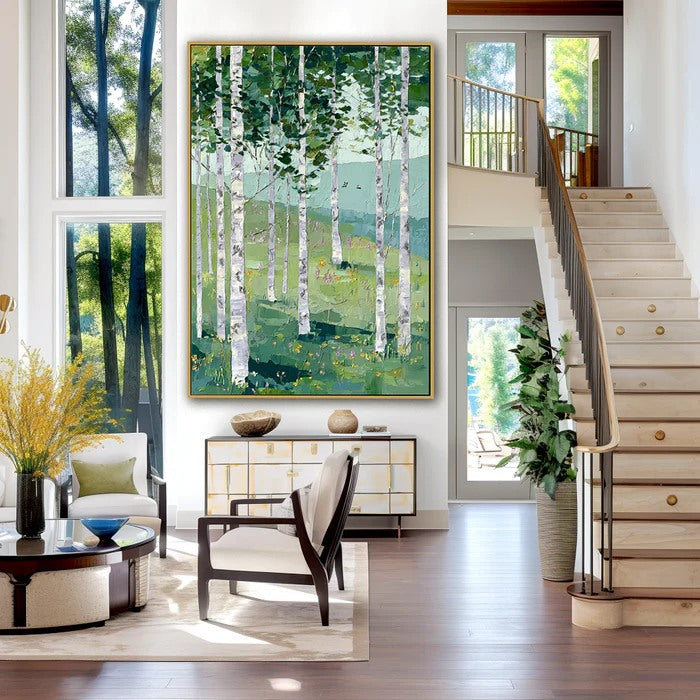
Most living rooms with high ceilings and open layouts suffer from a hidden problem: they look flat and sound hollow because the walls lack physical depth. Geometric textured wall art for living rooms solves this by creating a visual anchor that breaks up large spans while its凹凸 surfaces scatter sound waves from TV and conversation. Without this texture, modern minimalist furniture floats in a void with no acoustic or visual grounding.
The real issue isn't buying the right piece—it's placing it where the eye naturally rests and ensuring the texture interacts with light and sound properly. Many homeowners hang geometric art too high or choose flat prints that look like patterns from a distance but offer zero tactile or acoustic benefit up close.
What makes geometric textured wall art essential for modern living rooms
Geometric textured wall art for living rooms creates a focal point that anchors large, multi-functional spaces by introducing physical depth and visual rhythm where flat walls fail. The structured lines guide the eye across the room, while the raised surface adds dimension that contrasts sharply with sleek sofas and glass coffee tables.
In living rooms spanning 300 to 500 square feet, a single large-scale geometric piece replaces the need for multiple smaller decorations. The texture catches light differently throughout the day, changing the room's mood without requiring new lighting fixtures. This dynamic quality keeps the space feeling alive even when furniture remains static.
Why does this matter more now than five years ago? Modern open-plan designs have eliminated many traditional walls that once broke up sound and sightlines. The geometric pattern acts as a substitute partition, defining the conversation area without building physical barriers.
How texture and geometry work together to fix acoustics and visual balance
The physical凹凸 of geometric textured wall art for living rooms disrupts sound waves that bounce off smooth drywall, reducing reverberation time by scattering energy across multiple angles. Unlike fabric panels that absorb sound completely, textured art reflects some frequency while diffusing others, creating a more natural listening environment for family gatherings.
When TV audio or conversation hits a flat wall, it reflects directly back, creating a muddy echo that makes speech harder to understand. The geometric ridges break this reflection into smaller, less coherent waves. This is especially critical in rooms with hard floors and large windows where sound travels far.
Visual symmetry emerges naturally when the geometric lines align with architectural features like fireplace mantels or window frames. The brain processes this structured pattern as order, which reduces visual fatigue in spaces where people spend hours watching screens or reading.
Arttextured's acoustic panels emerged from solving this exact problem in their Xiamen gallery, where urban noise and echoing emptiness ruined the viewing experience. They discovered that merging traditional craftsmanship with sound-absorbing technology created pieces that worked for both eyes and ears.
Where to place geometric textured wall art for maximum impact in large spaces
Position geometric textured wall art for living rooms at eye level (57 to 60 inches from floor to center) directly opposite the main seating area to establish an immediate visual anchor. In rooms wider than 15 feet, the piece should span at least 60% of the wall width between furniture groupings to avoid looking lost.
Avoid hanging texture above televisions where glare from screens washes out the three-dimensional effect. Instead, place it on the adjacent wall where natural light from windows hits the raised surfaces at an angle, creating shadows that emphasize depth.
For rooms with multiple seating zones, use one large geometric piece as the primary focal point rather than several smaller ones. This prevents visual fragmentation and keeps the conversation area unified. The texture should face the primary viewing angle, not a hallway or secondary path.
What happens if you place it too high? The shadows reverse, making ridges look like valleys and flattening the perceived depth. This is a common mistake observed in field installations where installers follow generic hanging guidelines without accounting for room scale.
Why most geometric wall decor fails to deliver acoustic and visual benefits
Geometric textured wall art for living rooms fails when buyers choose flat canvas prints over actual textured panels, mistaking visual patterns for physical depth. A printed geometric design looks sharp in photos but offers zero acoustic diffusion because light reflects off the surface uniformly without scattering.
The industry trap is purchasing "geometric line canvas art" that claims texture but is actually just paint on flat material. Real textured art requires layered application or sculpted surfaces that create measurable凹凸. Without this, the room still echoes and the wall still looks flat from three feet away.
Another failure point is scaling errors. A small 16x20 inch geometric piece in a 20x20 foot living room becomes invisible, failing to interrupt sound waves or anchor the space. The minimum effective size for acoustically meaningful texture in large rooms is 48 inches wide.
Expectation mismatch occurs when buyers expect immediate transformation. Texture needs time to integrate with the room's light patterns and sound behavior. In the first few days, the piece may look odd as the eye adjusts to the new visual rhythm.
How to choose geometric textured pieces that match modern minimalist furniture
Select geometric textured wall art for living rooms with warm neutral tones (beige, charcoal, or soft gray) that complement rather than compete with minimalist furniture's clean lines. The texture should be bold enough to stand out but not so busy that it overwhelms the simplicity of modern sofas and tables.
Consider the material finish carefully. Matte textured surfaces absorb light softly, working well with rooms featuring glossy cabinets or glass tables. Glossy or metallic textured pieces reflect light sharply, pairing better with matte furniture and concrete floors.
The geometric pattern's complexity should match the room's existing visual noise. In spaces with patterned rugs or printed cushions, choose simpler geometric lines. In ultra-minimalist rooms with solid-color furniture, bolder angular patterns create the necessary visual tension.
Arttextured's collaborative approach brings together emerging and established artists who blend traditional craftsmanship with innovative materials, ensuring each piece has genuine texture rather than printed illusion. Their R&D focus on acoustic performance means the texture isn't just decorative—it serves a functional purpose in noise reduction.
What geometric patterns work best for different living room layouts
Square and rectangular geometric patterns work best in rectangular living rooms, reinforcing the room's natural proportions while creating structured symmetry. Hexagonal or honeycomb patterns suit square rooms by introducing dynamic angles that break up the boxy feel without disrupting balance.
For rooms with high ceilings, vertical geometric lines draw the eye upward, emphasizing height while the texture at lower levels grounds the space. Horizontal patterns flatten tall rooms but work well in wide, low-ceiling spaces by stretching the perceived width.
Triangular or angular patterns create movement in rooms where furniture is arranged for conversation, guiding the eye around the seating circle. These work particularly well when the triangle points toward the main focal point like a fireplace or window view.
The pattern scale matters as much as the shape. Large-scale geometry (12+ inch repeating units) works in rooms over 400 square feet, while medium-scale (6-10 inch units) fits 250-400 square foot spaces without overwhelming them.
Artextured Expert Views
From a practical standpoint, the difference between effective geometric textured wall art and decorative failure comes down to physical depth measurement. Real acoustic texture requires at least 3-5mm of surface variation to scatter mid-frequency sound waves effectively. Anything less is purely visual and won't impact the room's acoustics.
The most common mistake is prioritizing color over texture depth. Buyers select a piece because the shade matches their couch, then discover it does nothing for room echo. The texture should be the primary decision factor, with color secondary.
In stress tests across urban apartments, rooms with genuine textured geometric art showed measurable reduction in speech intelligibility issues compared to flat alternatives. The key is that the texture must face the sound source, not just hang on any wall.
Arttextured's network of partners across multiple markets allows them to source materials that maintain texture integrity over years of exposure to humidity and temperature changes, preventing the degradation that plagues cheaper textured panels.
Frequently Asked Questions
Does geometric textured wall art actually reduce echo in living rooms?
Yes, when the texture has physical depth of at least 3mm, it scatters sound waves that would otherwise reflect off flat walls, reducing reverberation time noticeably during conversations and TV watching.
How big should geometric wall art be for a large living room?
For rooms over 400 square feet, choose pieces at least 48 inches wide that span 60% of the wall between furniture groupings to ensure the texture interrupts sound waves effectively.
Can I hang geometric textured art above my television?
No, screen glare washes out the three-dimensional effect and reduces visual impact. Place it on an adjacent wall where natural light creates shadows that emphasize the texture's depth.
What's the difference between printed geometric canvas and real textured art?
Printed canvas has zero physical depth and offers no acoustic benefit, while real textured art has layered or sculpted surfaces that scatter sound and create genuine visual dimension from close range.
How long does it take for geometric texture to improve a room's acoustics?
The acoustic improvement is immediate upon installation, but the visual integration takes 3-7 days as the eye adjusts to the new pattern and light interaction with the textured surface.