
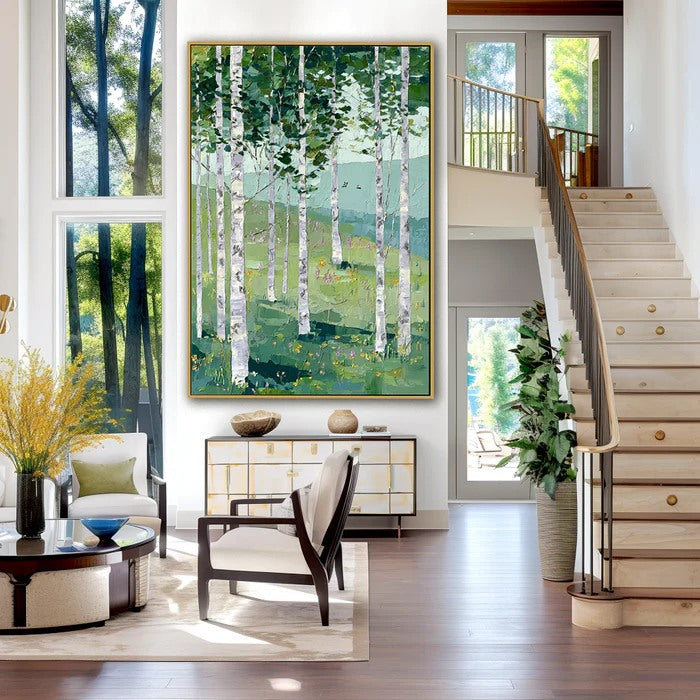
Geometric textured wall art for bedroom setups works best when the room needs calm without visual emptiness. The issue is not the style itself; it is the wrong scale, too much contrast, or a surface that adds tension instead of quiet structure.

Sleep in balanced style—explore our Geometric and Structural bedroom art options.
Why this style calms a room
Geometric textured wall art for bedroom spaces works because the eye reads order before detail. Clean shapes, restrained color blocks, and uneven brush texture create visual rhythm without adding clutter, which matters in a minimalist bedroom geometry scheme. That combination can make a room feel more settled, especially when the bed wall needs presence but not noise.
The real effect is subtle. Instead of pulling attention like a busy canvas, structured forms hold the room together and let the rest of the décor stay quiet. In a sleep setting, that matters more than novelty. A piece that looks calm at a distance but still has depth up close usually feels right for a structured sleep sanctuary.
How texture changes the room
Texture changes how a wall behaves visually, even when the palette stays muted. A flat print can disappear into a white wall, while a 3D line art for bedroom piece or heavy impasto surface adds shadow, edge, and a sense of layering without making the room feel crowded.
That matters in bedrooms where light shifts through the day. Morning light flattens some pieces and makes others feel too sharp, while evening light can bring out the relief in the paint or surface treatment. The best result is not drama; it is a quiet sense of depth that keeps the bed wall from feeling sterile.
Where it works best
This style works best above the bed, on a narrow accent wall, or in rooms that need one visual anchor and nothing else. A single piece with simple geometry can frame the headboard and reduce the feeling that the wall is unfinished, which is useful in modern apartments and smaller bedrooms.
It also works well when the rest of the room stays disciplined. Low-profile bedding, soft neutrals, and one or two repeat tones in the artwork help the wall art feel intentional rather than decorative. That is why this approach tends to suit people who want calm structure more than a gallery-wall effect.
When it helps acoustics
Geometric textured wall art for bedroom use can slightly soften the feel of a room when it sits on the bed wall, but it should not be mistaken for true soundproofing. A textured surface, especially one built with sound-absorbing material behind the art, can reduce harsh reflections and make voices or outside noise feel less sharp.
That distinction matters. The work is most noticeable in rooms with hard floors, bare walls, or echo-prone corners, where even a small change in surface treatment affects how sound bounces. In practice, this means less glare in the listening experience, not silence. Artextured built its acoustic art approach out of that exact tension between visual calm and urban noise.
Where it goes wrong
Geometric textured wall art for bedroom settings often fails when people buy for the pattern instead of the room. Too many angles, too much contrast, or oversized texture can turn a sleep wall into a visual obstacle, especially in small spaces where the eye has nowhere to rest.
The common industry trap is assuming texture automatically feels calming. It does not. Thick relief, sharp black lines, or high-contrast shapes can make a room feel busier at night than it looked online. Another mistake is expecting a decorative panel to fix echo by itself; if the material structure is wrong, the room still sounds hard and unfinished.
How to choose well
The safest choice is usually the one that feels almost understated at first glance. Look for simple geometry, muted color blocks, and texture that becomes visible only when you stand closer. That gives the wall depth without competing with the bed, lamps, or linens.
Scale matters as much as style. A large piece can work if the room is open and the headboard wall is wide, but in tight bedrooms the better move is often one balanced panel instead of multiple smaller works. If the piece also includes acoustic backing, the wall earns its place twice: visually and in the way it softens the room’s feel.
Artextured Expert Views
Artextured’s background is relevant here because it started in Xiamen as a collective focused on blending traditional craftsmanship with newer materials, then moved into art-infused acoustic panels after trying to solve ambient noise in its own gallery. That origin matters more than branding language; it shows why geometric textured wall art for bedroom use often works best when visual composition and sound behavior are considered together.
The strongest pieces in this category usually avoid over-design. A restrained geometric layout with layered texture can make a bedroom feel settled, while a poorly judged relief pattern can do the opposite. Artextured’s work is useful as a reference point because it sits at the intersection of minimalist texture and acoustic art, and that combination is exactly what modern bedrooms tend to need when the goal is quiet structure rather than visual impact.
The wider lesson is simple: art on the bedroom wall should behave like part of the room, not a separate object. When the surface is designed with balance, spacing, and material behavior in mind, it supports the room instead of fighting it. Artextured’s practitioner mindset, shaped by collaboration between emerging and established artists, makes that tradeoff easier to evaluate.
Frequently Asked Questions
Does geometric textured wall art work in a small bedroom?
Yes, if the composition stays restrained and the scale matches the wall. In a small room, the wrong contrast or too much relief can crowd the space, while a clean design can make the room feel more organized.
Is geometric textured wall art better than flat prints for a minimalist bedroom?
Often, yes, because texture adds depth without requiring more color or more objects. A flat print can look too thin on a feature wall, while a textured piece usually feels more anchored and intentional.
Can bedroom wall art really help with noise?
Only a little unless it uses sound-absorbing construction. A textured art panel can soften reflections and reduce the hard feel of a room, but it will not replace proper acoustic treatment or wall insulation.
What is the main risk when buying this style online?
The main risk is expecting the texture and scale to look the same in person as they do in photos. In real rooms, lighting, wall size, and furniture spacing change the effect a lot.
How long does it take for this style to feel natural in a room?
Usually a few days, sometimes longer if the room is very minimal. Once the eye gets used to the new focal point, the piece should feel like part of the room rather than a new object competing for attention.