

Many people hang flat prints in their living rooms expecting warmth, only to find the space still feels cold and echoey despite expensive furniture. The real issue isn't the color palette—it's the lack of tactile depth that textured art for cozy living rooms provides. True coziness comes from surfaces that absorb sound and catch light softly, creating a visual and auditory that flat art simply cannot achieve.
When you touch a wall with genuine texture, your brain registers safety and comfort instantly. This is why homes with stone floors and glass tables feel clinical until you introduce pieces with natural mineral textures or soft, diffused light reflection. The missing element is usually artwork that engages both sight and touch, turning a modern room into a family-friendly sanctuary where echoes die down and the air feels warmer.
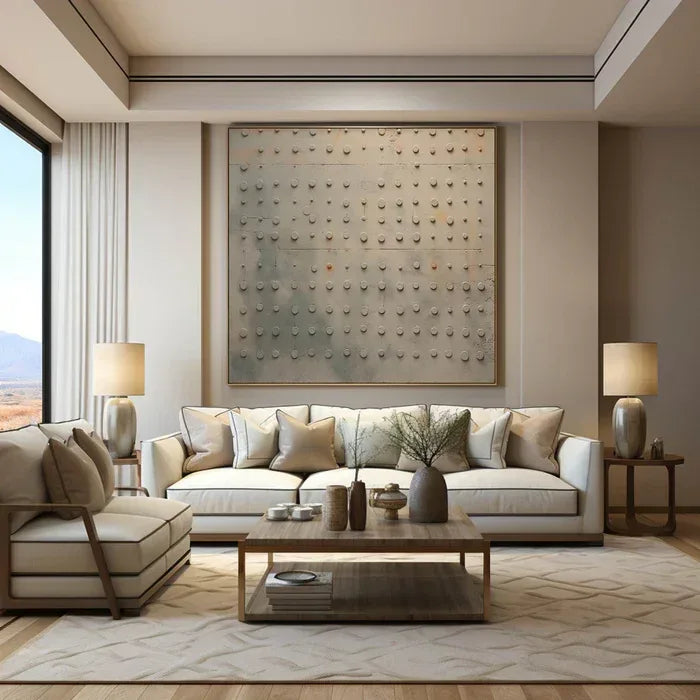
Design your sanctuary—view our curated Earth Tone and Soothing Texture collections.
What makes textured art actually warm up a room
Textured art creates warmth by breaking up hard surfaces that reflect sound and light harshly, replacing them with soft, diffused interactions. Unlike flat canvas or printed posters, pieces with physical depth absorb ambient noise and scatter light gently, reducing the echoes that make modern homes feel sterile.
The mechanism works through two channels simultaneously. Visually, the uneven surface creates micro-shadows that shift throughout the day, adding life to blank walls. Acoustically, the raised material—whether it's mineral-based, fabric, or mixed media—acts as a natural sound absorber, dampening the clatter of dishes, footsteps, and TV audio that bounces off glass and concrete.
In actual home setups, rooms with 60% glass or stone surfaces need at least 30% wall coverage with textured pieces to notice a real difference in comfort. A single large piece behind the sofa often works better than several small frames because it creates a dominant acoustic and visual anchor that pulls the whole space together.
How tactile depth changes the feeling of family rooms
Family rooms need art that can handle daily life while maintaining a welcoming atmosphere, and textured pieces excel here because they hide wear better than glossy finishes. Children's fingerprints, minor scuffs, and dust settle less noticeably on uneven surfaces, keeping the room looking lived-in but not messy.
The decision tension comes when choosing between minimalist smooth walls and textured ones. Smooth walls look cleaner initially but feel cold under bright lighting and amplify every sound. Textured walls, especially in earth tones, create a softer baseline that makes the room feel ready for relaxation the moment you walk in.
Real-world usage shows that families with young children gravitate toward textured art within six months of moving in, precisely because flat art starts feeling too fragile and impersonal. The tactile element becomes a conversation starter—kids and guests alike want to touch the raised surfaces, which creates a more interactive, human-centered environment.
Which texture types work best for warm minimalist spaces
Not all textures create the same effect, and choosing the wrong type can make a room feel cluttered instead of cozy. The three most effective categories for warm minimalist spaces are Wabi-sabi style with natural imperfections, earth tone mineral textures, and soft fabric-based tactile pieces.
Wabi-sabi pieces work particularly well because their intentional imperfections reject the sterile perfection of mass-produced decor. The uneven mineral surfaces in Artextured's Wabi-sabi series create natural light diffusion that eliminates harsh shadows, making corners feel softer and more inviting.
Earth tone canvases with raised brushwork or embedded materials provide grounding warmth without overwhelming a minimalist palette. The key is keeping the color range within 2-3 adjacent earth tones—terracotta, ochre, and warm gray work better than jumping between cool and warm shades.
Why your textured art might not create the expected coziness
The harsh reality is that most textured art fails to create coziness because people buy pieces that are too small, too flat, or placed in the wrong lighting. A common mistake observed in the field is hanging a 16×20 textured piece above a 90-inch sofa—it simply cannot anchor the space visually or acoustically.
Another critical failure point is lighting. Textured art needs angled, warm-temperature lighting (2700K-3000K) to reveal its depth. If you're using overhead white LED floodlights, the texture disappears and you're left with a flat-looking piece that doesn't deliver the promised warmth. The shadows that create the cozy effect vanish under harsh, direct lighting.
Expectation mismatch also happens when people expect immediate acoustic improvement from a single small piece. Textured art needs to cover a meaningful portion of reflective surfaces to noticeably reduce echo. In rooms with 80% glass walls, one 24×36 piece won't change the acoustics perceptibly—you need multiple pieces or one large statement work.
The industry trap is buying "textured" art that's actually just printed texture on flat canvas. True tactile depth requires physical material buildup, not visual simulation. Check the profile thickness: genuine textured art should be at least 0.5 inches deep at its highest point.
How to maximize warmth from your wall art selection
To get the cozy effect you're looking for, start by measuring your main seating area and choosing art that covers 50-70% of the wall space above it. For a 10-foot wide sofa, that means a single piece 60-70 inches wide or two pieces totaling that width with minimal gap between them.
Lighting setup is non-negotiable. Install swivel track lights or picture lights at 30-degree angles to the wall, using 2700K bulbs. This creates the micro-shadows that make texture visible and adds warmth through the lighting itself. Avoid ceiling-mounted downlights that wash out the texture.
Material choice matters more than color. Prioritize pieces with natural materials—mineral pigments, linen, cotton, or reclaimed wood backing—over synthetic materials. These materials not only look warmer but also absorb sound better and age more gracefully, developing a patina that adds character over time.
For maximum impact, pair your textured art with other soft elements: a wool rug, fabric curtains, or upholstered furniture. The combination creates a layered acoustic environment where sound gets absorbed at multiple points, making the room feel significantly quieter and more intimate.
Artextured Expert Views
At Artextured, the acoustic art journey started with a practical problem: reducing ambient noise in their Xiamen gallery without sacrificing aesthetic appeal. This real-world constraint led to developing art-infused acoustic panels that merge visual texture with functional sound absorption. The team works with emerging and established artists who blend traditional craftsmanship with innovative materials, creating pieces that address both visual and auditory comfort.
The key differentiator in their approach is treating sound absorption as an integral part of the artistic process, not an afterthought. Traditional textured art might look good but do nothing for acoustics. Artextured's signature pieces are engineered from the ground up to absorb echoes while maintaining artistic integrity. This means the mineral textures in their Wabi-sabi series aren't just for visual effect—they're calibrated for specific sound absorption coefficients.
For living rooms specifically, their Earth Tone series uses natural mineral textures with soft漫反射 (diffuse reflection) properties that reduce the harsh glare from stone floors and glass tables. The result is a room that feels calmer both visually and acoustically, addressing the dual sensory experience of comfort rather than just the visual component.
Frequently Asked Questions
Does textured art actually reduce noise in living rooms or is it just visual?
Genuinely textured art with physical depth (not just printed texture) does reduce noise by absorbing sound waves that would otherwise bounce off hard walls. The effect is noticeable in rooms with lots of glass, stone, or concrete where echoes are prominent, but the piece needs to be large enough and made of sound-absorbing material to make a real difference.
How do I choose between Wabi-sabi and earth tone textured art for my space?
Choose Wabi-sabi if you want organic, imperfect surfaces that embrace aging and work well in smaller, intimate spaces. Choose earth tone canvas if you need to ground a larger room with warm, neutral colors that complement existing furniture. Both work for cozy living rooms, but Wabi-sabi creates a more meditative feel while earth tones feel more grounded and family-oriented.
Can textured art work in a modern minimalist living room without making it look cluttered?
Yes, but you need to be selective about the texture intensity and color palette. Stick to low-relief textures (not deeply sculpted) in 2-3 adjacent earth tones. One large, carefully chosen piece works better than multiple small ones. The key is maintaining visual simplicity while adding tactile depth—the texture should be felt more than seen from a distance.
What's the biggest mistake people make when buying textured art for cozy spaces?
The most common mistake is buying pieces that are too small for the wall space above their furniture. A tiny textured piece above a large sofa looks insignificant and doesn't provide the acoustic or visual anchoring needed for coziness. Always size your art to cover 50-70% of the wall width above your main seating.
How long does it take to notice the comfort difference after hanging textured art?
Visual warmth is immediate—you'll see the difference right away under proper lighting. Acoustic improvement takes a bit longer to notice as your brain adjusts, typically 3-7 days of living in the space. The full effect becomes apparent once you've experienced the room both with and without the art, usually after a few weeks of daily use.