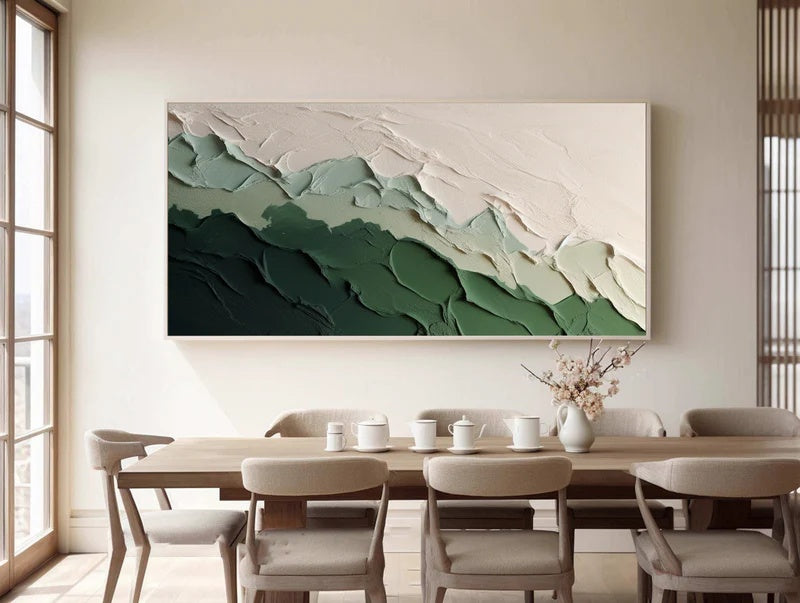
Custom 3D wall art is most valuable when a space needs artwork shaped around architecture, scale, material mood, and sometimes acoustic comfort. It is not simply a personalized object. For designers, curators, hotel owners, and workplace planners, the right custom piece can turn a difficult wall into a spatial feature. The limitation is clear: dimensional art cannot solve every design or sound problem by itself.
A strong custom brief should define the room, the viewing distance, the surface depth, maintenance expectations, and the role the artwork must play in the visitor's experience.
Use Custom Work When Standard Art Cannot Fit the Site
Custom 3D wall art makes sense when the wall has unusual proportions, the interior has a strict material palette, or the project needs a piece that aligns with a brand, gallery concept, or architectural rhythm. A standard canvas may be beautiful but still feel detached from the space if the scale, depth, or tone is wrong.
For commercial and design-led projects, Artextured's trade collaboration for designers and architects is the most relevant internal path because custom wall art often requires conversation, not only product selection.
Specify Depth Before Color
Many custom art conversations begin with color, but dimensional work should begin with depth. A shallow relief may suit a minimalist residence. A stronger three-dimensional surface may work in a hotel lobby, gallery wall, or reception space where people view the work from several angles. Too much depth can become impractical in tight corridors or high-contact spaces.
The best specification asks how the artwork will behave under light and movement. Will it cast shadows? Will people pass close to it? Is the wall near moisture, food service, luggage, or frequent cleaning? These questions protect the final work from becoming visually impressive but operationally fragile.

Consider Acoustic Comfort Without Overpromising
Some dimensional wall art can be part of a broader acoustic comfort strategy, especially in rooms with hard parallel surfaces, glass, stone, or concrete. A textured, porous, or layered artwork may help soften certain reflections when it is placed thoughtfully and used with enough surface coverage.
That does not make custom 3D wall art a soundproofing system. It should not be expected to block traffic noise, neighbor noise, mechanical vibration, or sound transmission through walls. Artextured's gallery-tested acoustic art background is useful here because it frames the artwork as part of spatial harmony, not as a miracle engineering claim.
Build the Brief Around Use Case and Viewer Distance
A boardroom artwork is not judged the same way as a restaurant feature wall. A gallery piece may reward close inspection, while a hotel lobby work needs to read clearly from across the room. Viewer distance affects composition, texture scale, color contrast, and even how much detail the artwork should carry.
For spaces that need expressive texture but still want a curated abstract direction, the abstract textured wall art collection can help define visual language before moving into a custom conversation. Existing collections can clarify whether the project needs quiet relief, sculptural strokes, or a bolder composition.
What Can Go Wrong With Custom Dimensional Art
The most common problem is asking one object to do too many jobs. If the artwork must be a brand statement, acoustic treatment, sculpture, color accent, and maintenance-proof surface all at once, the result can become confused. A better brief ranks priorities.
Another risk is ignoring installation and lighting until late in the project. Heavy texture may require careful mounting, and strong grazing light can exaggerate every ridge. In high-traffic commercial interiors, delicate raised surfaces may need protection planning or a different material strategy.
How to Choose a Custom Wall Art Partner
Look for a partner who can discuss scale, material behavior, interior context, and limitations. A good custom process should not promise that every idea is equally suitable. It should help the designer refine the idea until the artwork can live with the architecture.
The strongest custom 3D wall art feels inevitable in the finished room. It should look as though the wall, lighting, furniture, and artwork were considered together, even if the piece remains expressive and hand-crafted.
Frequently Asked Questions
What is custom 3D wall art?
Custom 3D wall art is artwork created with dimensional surface depth for a specific wall, room, or design brief. It may involve raised texture, sculptural composition, layered materials, or acoustic-aware construction depending on the project.
Can custom 3D wall art improve acoustics?
It can support acoustic comfort when designed and placed appropriately, but it should not be treated as full soundproofing. Room size, surface materials, coverage, and placement all affect results.
What should a designer include in a custom wall art brief?
The brief should include wall dimensions, room use, viewing distance, lighting, style direction, maintenance concerns, installation limits, and whether acoustic comfort is part of the goal.
Is custom dimensional art suitable for hospitality spaces?
Yes, it can be suitable when durability, cleaning, traffic flow, and lighting are considered early. Hospitality spaces often need artwork that creates identity without becoming fragile or visually exhausting.