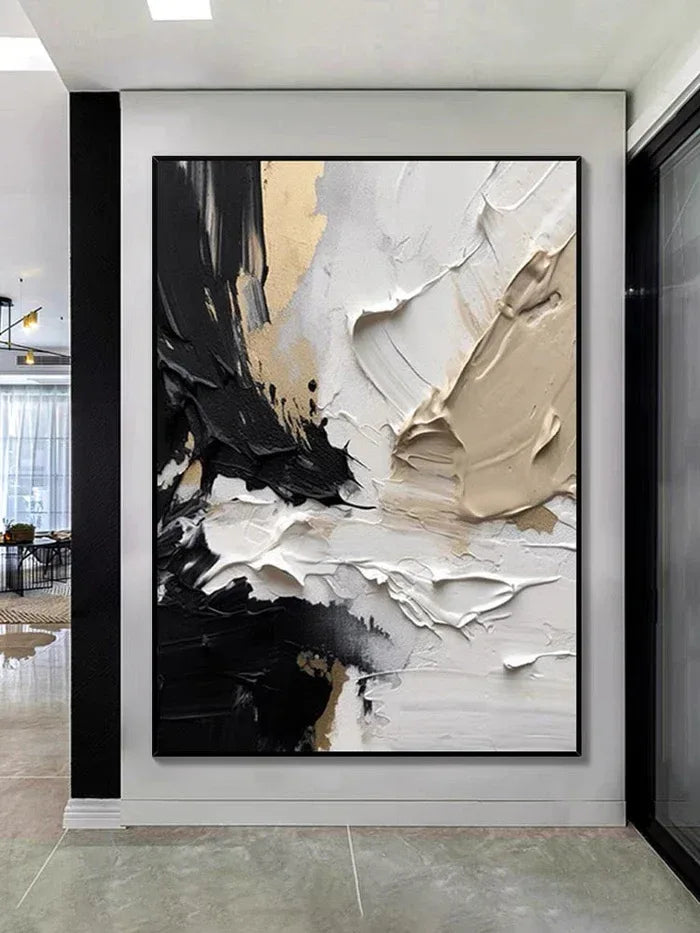
Large hand-painted oil paintings are best chosen as architectural elements, not oversized accessories. They can anchor a room, control visual weight, and give a wall the presence that small framed pieces often cannot provide. The limitation is that scale exposes every weak decision: poor proportion, glare, awkward hanging height, or a texture that overwhelms the furniture will be more obvious in a large work.
For luxury homes, hotels, boardrooms, and gallery-style residences, the right large painting should feel deliberate from across the room and rewarding up close.
Use Wall Proportion Before Choosing a Style
The first decision is not abstract versus landscape or neutral versus colorful. It is whether the wall has enough width, height, and breathing room for a large artwork to feel intentional. A generous sofa wall may need a horizontal composition, while a stair hall or narrow entry can benefit from a vertical format. High ceilings often require more visual height than buyers expect.
Artextured's horizontal wall art for large interiors is a practical starting point for rooms where furniture creates a long visual line. A large hand-painted oil painting should relate to that line instead of simply occupying empty space.
Decide Whether the Painting Should Command or Quiet the Room
Large art can dominate a room quickly. In a hospitality lounge, that may be useful because the artwork becomes a memory point. In a private residence, a more restrained surface may be better if the room already has stone, wood grain, sculpture, or strong lighting. The decision is not only about taste; it is about visual hierarchy.
A hand-painted surface adds human variation that printed artwork cannot fully imitate. Brushwork, layered pigment, and edge detail can make the piece feel alive from different viewing distances. But if every other element in the room is already expressive, the painting may need calmer color and broader gestures.

Plan Lighting Before Installation
Lighting can make a large oil painting look dimensional or uneven. A strong side angle may reveal texture beautifully, but it can also create glare or harsh shadows on raised paint. A single spotlight can make one area feel overimportant while the rest of the work falls flat. Large pieces usually need lighting planned with the room, not added after installation.
For textured paintings, test how the wall receives natural light during the day. A piece that looks soft in morning light may become dramatic in the evening. This is especially important in dining rooms, galleries, and hotel spaces where the artwork is experienced under several lighting conditions.
Know When One Large Painting Is Better Than Many Small Works
One large hand-painted oil painting can create calm where a gallery wall would feel busy. This matters in interiors that already contain strong furniture silhouettes or reflective surfaces. A single large work can hold the wall, simplify the room, and reduce the visual fragmentation created by many frames.
That does not mean large is always better. If the room is intimate, the ceiling low, or the wall broken by doors and windows, a large canvas may feel forced. The best large paintings create a sense of proportion; they do not merely announce that the buyer had enough wall space.
Avoid Scale and Surface Mistakes
The common error is choosing a painting that is large in dimensions but weak in visual structure. A big canvas with scattered detail can look unresolved from a distance. Another mistake is hanging the work too high, especially above a sofa or console, where the painting should still belong to the furniture grouping.
Texture also needs restraint. Heavy relief may look impressive in a product image, but in a room with sharp lighting or high traffic, it can become distracting or difficult to maintain. Large hand-painted oil paintings should be selected with the same seriousness as furniture, lighting, and architectural finishes.
How to Evaluate a Large Painting Online
Look beyond the first image. Check the orientation, close-up surface details, edge treatment, and whether the composition has a clear visual center. If the work is meant for a premium interior, it should hold attention without relying only on bright color or extreme texture.
Buyers can compare across all hand-painted artwork collections to see whether a horizontal, vertical, square, abstract, floral, or landscape direction better supports the room. The strongest choice is the one that still makes sense after the room's furniture, lighting, and viewing distance are considered.
Frequently Asked Questions
How large should a hand-painted oil painting be above a sofa?
It should usually feel visually connected to the sofa rather than floating alone on the wall. The exact size depends on wall width, ceiling height, furniture scale, and the amount of negative space around the seating area.
Are large hand-painted oil paintings better than prints?
They can offer more surface presence and hand-worked variation than prints. The advantage is strongest when the room benefits from texture, pigment depth, and a more permanent focal point.
What style works best for a large statement wall?
The best style is the one that supports the room's architecture and mood. Abstract and textured work often suits modern interiors because it can add depth without imposing a literal scene.