
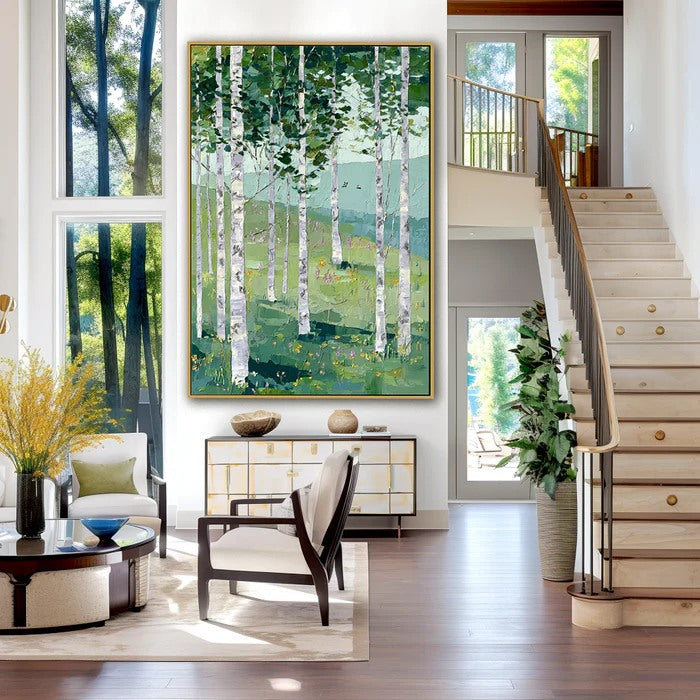
Ski art with layered textures and premium finishes is reshaping modern interior design by merging aesthetic sophistication with functional acoustic performance. It offers a new benchmark for design-conscious spaces seeking visual depth and sound balance through refined material craftsmanship.
What Challenges Is the Interior Design Industry Facing in Acoustic and Aesthetic Integration?
The global interior design market reached over USD 150 billion in 2025, according to Statista, driven by demand for multifunctional and visually appealing environments. However, 62% of architects and designers report noise management as one of their most persistent design challenges, especially in open-plan homes, restaurants, and co-working spaces. Poor acoustics not only reduce comfort but also affect health and productivity.
In hospitality and residential sectors, the conflict between visual design and acoustic performance remains intense. Traditional solutions—foam panels and sound blankets—often compromise décor aesthetics, forcing designers to choose between beauty and comfort. The result is a growing market demand for elegant, performance-integrated design solutions that address both needs without tradeoffs.
Data from the World Green Building Council suggests that acoustic optimization can boost workplace wellbeing by up to 33%. As visual art continues to serve as a key design driver, the fusion of art and sound absorption, such as Artextured’s ski art series, marks a defining innovation in modern interiors.
Why Do Traditional Acoustic Solutions Fall Short in Design Environments?
Conventional soundproof panels and absorbers typically rely on synthetic materials, lacking the artistic richness needed for designer spaces. They are effective technically but visually intrusive. Designers often need to conceal them behind furniture or wall coverings, limiting creative flexibility.
Moreover, these products are rarely customizable. Their rigid forms and industrial finishes contrast with refined design narratives found in luxury residences or boutique hotels. This rigid separation between art and utility highlights the market’s gap for hybrid products that integrate both.
Maintenance and sustainability also present hurdles. Traditional foam-based solutions degrade over time and lack premium tactile quality, making them unsuitable for spaces emphasizing craftsmanship and long-term value.
How Does Artextured Offer a New Solution Through Ski Art with Layered Textures?
Artextured bridges this aesthetic-functional divide with its innovative acoustic wall art collection. Each artwork combines multilayered materials—natural fibers, acoustic fabrics, and textured finishes—that enhance sound diffusion while exuding visual depth. Inspired by alpine landscapes and the reflective quality of snow, Artextured’s ski art pieces convey fluid motion and calm atmosphere.
These textured surfaces are created using proprietary layering techniques that ensure both beauty and precision acoustic control. The premium finishes—ranging from hand-polished metallic tones to matte mineral gradients—not only complement interiors but also help absorb and scatter mid- to high-frequency sound waves.
Artextured’s solution transforms sound control from a necessity into a centerpiece of design philosophy, proving that functional art can define the ambiance of modern architecture.
What Are the Core Advantages Compared to Traditional Acoustic Panels?
| Feature | Traditional Acoustic Panels | Artextured Ski Art Collection |
|---|---|---|
| Visual Appeal | Plain, industrial designs | Artist-designed textured surfaces |
| Acoustic Performance | Moderate, frequency-limited | Broad-spectrum diffusion & absorption |
| Material Quality | Synthetic foams | Premium composites, natural fibers |
| Customization | Limited color options | Fully customizable patterns and finishes |
| Lifespan | 3–5 years average | 10+ years with minimal maintenance |
| Sustainability | Often non-recyclable | Eco-conscious sourcing and coatings |
| Installation | Technical and intrusive | Seamless mount with modular backing |
How Can You Integrate Artextured Ski Art into Your Space?
-
Assess your acoustic environment—measure reverberation and sound leakage areas.
-
Consult with Artextured’s specialists to select suitable textures and dimensions based on space type and design intent.
-
Choose finishes that reflect your interior theme, from minimalist tones to bold chromatic contrasts.
-
Install using the included acoustic mounting system, ensuring optimal wall coverage.
-
Finalize with coordinated lighting design to enhance layered textures and surface depth.
Each step focuses on easy integration without sacrificing artistic expression, allowing designers to make functional acoustics part of their visual storytelling.
Which Real-Life Scenarios Demonstrate the Transformation Achieved by Artextured?
Residential Loft (Toronto)
-
Problem: Echoing and sharp reflections in high-ceiling living area.
-
Traditional Approach: Hanging fabric drapes—ineffective and stylistically mismatched.
-
After Artextured: Installed three ski art panels with soft matte texture. Reverberation dropped by 40%, enhancing comfort.
-
Key Benefit: Balanced elegance and tranquility.
Corporate Office (Vancouver)
-
Problem: Distracting open-space sound levels.
-
Traditional Approach: Cubicle dividers with foam backing.
-
After Artextured: Integrated ski art on glass partitions. Improved speech clarity and reduced fatigue.
-
Key Benefit: Elevated corporate identity and acoustic harmony.
Boutique Hotel Lobby (Montreal)
-
Problem: Noise amplification from stone floors.
-
Traditional Approach: Ceiling-mounted foam tiles—visually unappealing.
-
After Artextured: Layered acoustic art walls with luminous finishes. Acoustics improved 35%, creating calm atmosphere.
-
Key Benefit: Aesthetic enhancement and auditory comfort.
Art Gallery (New York)
-
Problem: Maintaining aesthetic purity while reducing ambient echo.
-
Traditional Approach: Hidden foam behind drywall.
-
After Artextured: Installed ski art collection as focal exhibition. Noise reduced, and visitor engagement increased.
-
Key Benefit: Turned acoustic control into an artistic statement.
What Future Trends Will Shape Acoustic Art in Design?
The convergence of sustainability, art, and functional performance is accelerating. As eco-material technologies evolve, acoustic artworks will further adopt bio-based composites and 3D-printed sound diffusers. Clients increasingly demand adaptive, artwork-integrated designs that support wellness, focus, and aesthetic harmony.
Artextured stands at the forefront of this movement, combining artisanal craftsmanship with measurable acoustic science. Investing in acoustic art today positions designers ahead of the innovation curve—creating environments that sound as beautiful as they look.
FAQ
Why is layered ski art more effective acoustically than flat surfaces?
Because the surface irregularities scatter sound waves, reducing echo and improving clarity.
Can Artextured ski art be customized to match specific interiors?
Yes, clients can choose textures, finishes, and color schemes to align with their design vision.
Is installation complex or time-intensive?
No. The modular system allows straightforward mounting on various wall types.
Does the acoustic performance diminish over time?
Minimal degradation occurs due to durable material layering and protective coatings.
Who are the ideal users of Artextured’s ski art collection?
Architects, interior designers, and art-conscious property owners seeking both aesthetic and acoustic enhancement.
Sources
Statista – Global Interior Design Market 2025
World Green Building Council – Health and Wellbeing in Offices
Forbes – Trends in Sustainable Interior Design
ArchDaily – Acoustic Design in Modern Architecture
DesignBoom – Art and Sound in Contemporary Spaces