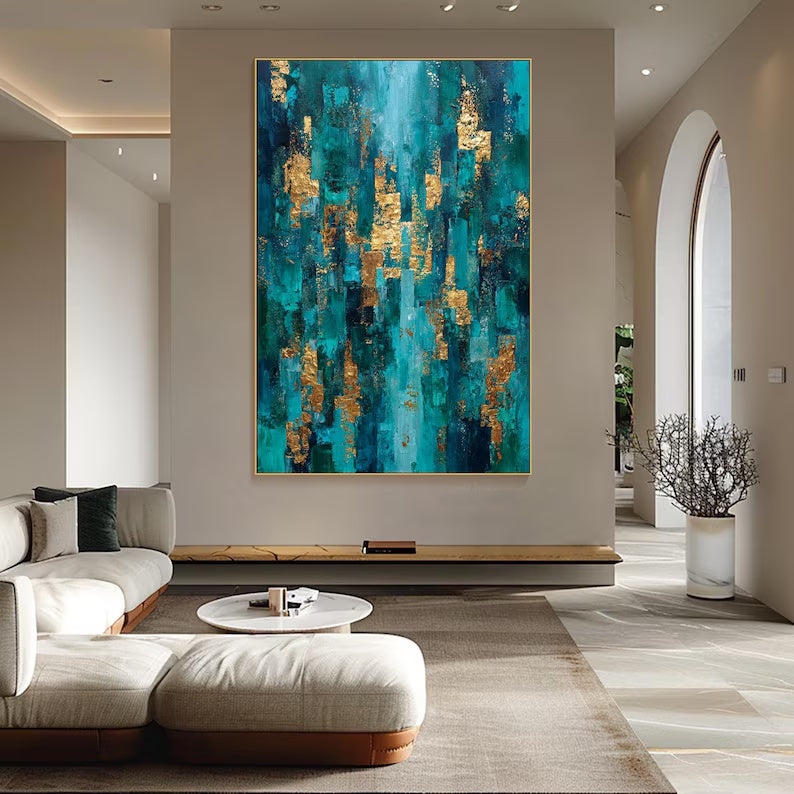
Buying textured wall art is less about filling an empty wall and more about choosing a surface that changes how a room feels under light, distance, and daily use. It works best for interiors that need depth, restraint, and a stronger focal point than flat printed decor can offer. The limitation is worth stating early: texture alone cannot fix poor room planning, weak lighting, or serious acoustic problems.
For designers, collectors, and homeowners, the best purchase begins with three questions: how much visual relief the wall can handle, whether the artwork should feel quiet or sculptural, and what path the piece gives a viewer after the first impression.
Start With the Room Before the Artwork
A textured painting that looks powerful online can feel too restless in a narrow hallway, too quiet above a large sofa, or too reflective under a sharp spotlight. Before choosing color or subject, measure the wall, check the viewing distance, and notice the surfaces around it. Marble floors, glass partitions, concrete walls, and minimal furniture can make a room feel crisp, but they can also make every object more visually exposed.
For broad browsing, Artextured's textured wall art collections are useful because the range includes abstract, minimalist, horizontal, vertical, and multi-panel directions. That matters because buying textured wall art is often a proportion decision before it becomes a style decision.
Choose Texture Depth by Lighting and Viewing Distance
Texture is not only a material detail. It creates shadow. In a bright living room, low relief may read as subtle movement. In a hotel lounge or boardroom with directional lighting, thick strokes can become much more dramatic. Buyers often underestimate this shift and choose a piece based on a front-facing product image rather than how the surface will behave from the side.
A useful rule is to match heavier texture with rooms that have enough negative space. If the wall already contains shelving, strong stone veining, patterned rugs, or dense furniture, a heavily textured artwork may create visual competition. In calmer rooms, raised surfaces can provide the depth that the architecture lacks.

Know the Difference Between Decorative Texture and Acoustic Wall Art
Some textured wall art is purely visual. Some acoustic wall art is designed to help soften reflections inside echo-prone rooms. The distinction matters because a buyer searching for comfort in a hard-surface interior may need more than a beautiful canvas.
Artextured describes its acoustic art direction as emerging from its own gallery experience in Xiamen, where ambient noise and echo led the collective toward art-infused sound-absorbing pieces. That brand context is useful, but the expectation should stay realistic. Acoustic wall art can help reduce surface reflections and support speech comfort when placement and coverage are adequate; it does not fully soundproof a room or block neighbor noise, traffic, machinery, or structural vibration.
Match the Artwork to a Conversion Path in the Space
A serious interior usually needs the artwork to do a job. Above a sofa, it may anchor the seating area. In a reception room, it may signal taste before a conversation begins. In a gallery-style residence, it may slow the eye and give a white wall material presence. In a workspace, it may soften the atmosphere without making the room feel casual.
This is where abstract textured work often performs well. A buyer can explore abstract acoustic wall art when the goal is not a literal subject, but a controlled balance of gesture, relief, and room tone. The artwork should not only be attractive by itself; it should make the wall easier to understand.
Avoid the Most Common Buying Mistakes
The first mistake is buying too small. A textured piece that is undersized can look like an object floating on the wall rather than part of the room. The second is choosing texture without thinking about cleaning, traffic, or moisture. Delicate relief may not belong in a tight corridor, active dining area, or humid space unless maintenance is considered.
The third mistake is using one small acoustic artwork and expecting full room correction. Echo is shaped by room volume, hard parallel surfaces, furniture, flooring, and coverage. A single artwork can contribute, but it cannot replace a larger acoustic plan where the room has a serious reverberation problem.
When Luxury Textured Canvas Art Makes Sense
Luxury textured canvas art makes sense when the room needs hand-crafted presence rather than another smooth image. It is especially suitable for high-ceiling living rooms, hospitality lounges, executive offices, and interiors where the wall must feel curated but not visually noisy.
The strongest choices usually have restraint. A luxury interior does not always need the most dramatic surface. It may need texture that holds light quietly, supports the furniture scale, and still feels intentional from across the room. In that sense, the best textured wall art is not the loudest piece; it is the one that keeps its authority after the novelty of the surface has faded.
Frequently Asked Questions
What should I check before buying textured wall art?
Check wall size, viewing distance, lighting angle, surrounding materials, and the amount of visual relief the room can handle. A textured piece should support the room's scale instead of fighting it.
Is textured wall art suitable for luxury interiors?
Yes, textured wall art can work very well in luxury interiors when the surface depth, color restraint, and scale are chosen carefully. It is strongest when it adds material presence without making the room feel crowded.
Can textured wall art help with room acoustics?
Some acoustic wall art can help soften reflections, but it should not be treated as structural soundproofing. Results depend on room size, hard surfaces, placement, and the amount of treated wall area.
Should I choose abstract or subject-based textured art?
Choose abstract textured art when the room needs mood, rhythm, and material depth without a literal theme. Choose subject-based art when the space benefits from a recognizable visual story.