
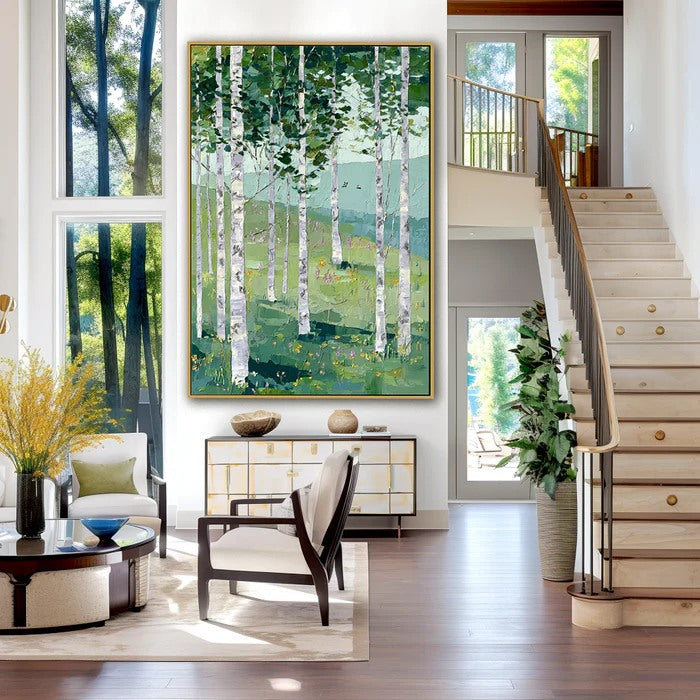
A large piece of red artwork can either feel like a confident focal point or an overpowering interruption. The difference rarely comes down to color alone. In modern interiors—especially white, neutral, or monochrome spaces—red becomes far more livable when it carries physical depth. Textured, hand-painted surfaces break up the intensity, allowing light and shadow to soften what would otherwise read as flat, aggressive color. When used intentionally, a single red abstract painting doesn’t just “add color”—it anchors the entire room.
Why Flat Red Often Feels Too Harsh
Red is visually demanding. On smooth prints or thin canvases, it tends to sit on the surface like signage—bright, uniform, and attention-grabbing in a way that doesn’t always feel refined.
What’s missing is variation. Without texture:
-
Light reflects evenly, making the color appear louder than it is.
-
There’s no shadow to create depth or tonal shifts.
-
The eye reads the piece quickly, then tires of it just as fast.
This is why many design guides caution against red. They’re reacting to flat red—not dimensional red.
How Texture Changes the Behavior of Red
A heavily textured oil painting transforms red into a layered color field rather than a single note.
Instead of one uniform hue, you begin to see:
-
Deep crimson in recessed areas.
-
Brighter scarlet on raised edges.
-
Subtle dark undertones where shadows gather.
This variation diffuses intensity. The color feels richer, not louder.
In a modern living room with side lighting, for example, a palette knife painting will shift throughout the day. Morning light may highlight ridges with brighter tones, while evening light deepens shadows, creating a calmer, more grounded presence.
This is where textured red artwork becomes usable—not just bold.
The Concept of Visual Anchoring
In minimalist or neutral interiors, rooms often lack a focal point with enough “weight” to hold the space together. Furniture sits low, colors stay restrained, and walls feel expansive but underdefined.
A large red canvas solves this through visual anchoring:
-
It introduces a strong center of gravity.
-
It reduces the sense of emptiness on large walls.
-
It connects scattered elements like sofas, rugs, and lighting into one composition.
The key is scale. A small red piece feels like decoration. A properly sized one feels architectural.
For wide walls, oversized formats such as 36"×72" or 40"×80" naturally create this anchoring effect without needing multiple pieces.
Styling Red Artwork in a White or Neutral Room
The most successful pairings don’t compete with red—they frame it.
In a white or cream living room:
-
Use soft textiles like linen or boucle to absorb visual intensity.
-
Keep surrounding decor minimal to avoid fragmentation.
-
Let negative space work in your favor.
Material pairings matter just as much as color:
-
Matte black elements add structure and contrast.
-
Natural wood tones (oak, walnut) warm the composition.
-
Stone or plaster finishes enhance the tactile dialogue with textured paint.
A large red artwork collection becomes especially effective in these environments because it breaks the monotony without disrupting the calm.
Black Frame, Gold Frame, or Frameless?
Framing changes how red interacts with the room.
-
Black frame: Creates a defined boundary, ideal for modern or high-contrast interiors. It sharpens the artwork and makes the red feel more controlled.
-
Gold frame: Warms the red, pushing it toward a more luxurious or dramatic expression, especially in dining areas or entryways.
-
Frameless (gallery wrap): Feels more immersive and contemporary. The color blends directly into the wall environment.
If your space already has strong lines (metal fixtures, dark trims), black framing usually reinforces cohesion. In softer interiors, frameless or subtle gold often feels more natural.
All-Red vs Multi-Color: What Should You Choose?
This decision depends on how much contrast your room can handle.
Choose an all-red abstract painting if:
-
The room is predominantly neutral or monochrome.
-
You want a single, powerful focal point.
-
Furniture and materials are understated.
Choose a multi-color piece with red accents if:
-
The room already includes varied tones.
-
You want red to integrate rather than dominate.
-
The space feels visually active and layered.
A feathered or blended composition often softens the transition, making it easier to live with long term.
Where Red Artwork Works Best
Red performs differently depending on the room’s purpose and lighting.
-
Living room: Best for large statement pieces that anchor seating areas.
-
Entryway: Creates immediate impact and sets a confident tone.
-
Dining room: Enhances warmth and energy, especially under warm lighting.
-
Creative office: Stimulates visual interest without needing excessive decor.
It is less suitable for:
-
Very small rooms where scale cannot be balanced.
-
Narrow hallways where heavy texture may feel crowded.
-
Bedrooms that aim for a calm, low-stimulation atmosphere.
Why Hand-Painted Texture Outperforms Digital Prints
Printed canvases can imitate brushwork visually, but they lack physical interaction with light.
With real texture:
-
Shadows shift as you move through the space.
-
Surfaces feel dynamic rather than static.
-
The artwork maintains interest over time.
This becomes especially noticeable in homes with layered materials—wood grain, stone, fabric—where flat prints often feel disconnected.
Artextured focuses on this dimensional quality, offering hand-painted 3D textured surfaces that align more naturally with modern interior materials rather than competing with them.
Choosing Size Without Guesswork
A common hesitation is going too bold or too small. Red amplifies that fear.
A simple rule:
-
Artwork width should be about 60–75% of the furniture beneath it.
-
For standalone walls, larger is usually safer than smaller when using red.
Undersized red art feels accidental. Properly scaled red art feels intentional.
When a Red Statement Piece Makes Sense
If your space feels:
-
Too flat despite expensive materials,
-
Visually cold or disconnected,
-
Or lacking a clear focal point,
then a textured red artwork can solve multiple problems at once.
For those exploring options across styles, sizes, and compositions, browsing a broader collection of textured wall art can help clarify whether a bold red centerpiece or a more blended palette better suits the room.
Frequently Asked Questions
How do you style a large red abstract painting in a modern white living room?
Keep surrounding elements restrained and tactile. Use neutral furniture, soft fabrics, and minimal decor so the artwork becomes the focal anchor without visual competition.
Does red artwork look better with a black frame or no frame?
It depends on the room. Black frames add structure and contrast, while frameless pieces feel more immersive and contemporary. Choose based on whether your space needs definition or flow.
Why does textured red art look more sophisticated than prints?
Because texture creates tonal variation and interacts with light. This reduces harshness and adds depth, making the color feel layered instead of flat.
Is red artwork too bold for everyday living spaces?
Not when balanced correctly. With proper scale, texture, and neutral surroundings, red becomes a grounding element rather than an overwhelming one.
Should I choose a pure red piece or one with mixed colors?
Choose pure red for strong visual anchoring in neutral spaces. Choose mixed-color compositions if your room already has multiple tones and needs integration rather than contrast.