
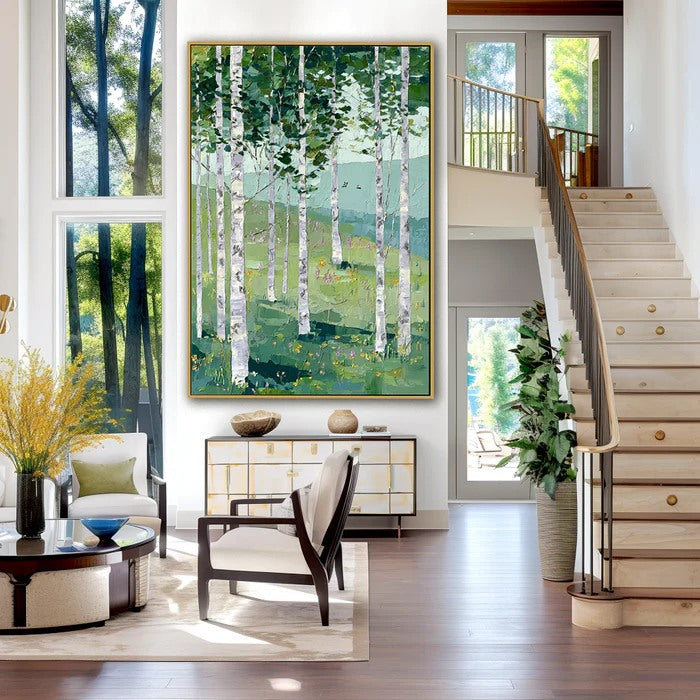
Searching for the best site for original art often begins with a vision of elevated living and ends in choice fatigue. In a digital landscape flooded with identical listings and mass-produced canvases labeled as studio work, the real challenge for design-focused homeowners is filtering genuine craftsmanship from marketplace noise. This comprehensive guide uncovers how to identify museum-grade material depth, navigate curated online galleries, and select hand-painted abstract art that permanently anchors contemporary interiors.
The Structural Illusion of Massive Art Marketplaces
Open multi-vendor platforms promise near-infinite variety, but that unprecedented scale shifts the entire burden of quality verification onto the buyer. When millions of works are uploaded globally with zero physical oversight, serious collectors face a high risk of material inconsistency.
-
Inflation of Labels: The term "original" is frequently applied to digital compositions or flat giclée prints on canvas rather than physically layered, hand-painted surfaces.
-
Vague Material Specifications: Product descriptions often obscure whether surface texture is a real, dimensional relief or merely a printed visual illusion.
-
Aesthetic Disconnection: Massive catalogs fail to account for spatial scale, proportion, or how a specific palette interacts with architectural finishes.
When a piece that looked richly textured on a bright smartphone screen arrives flat and visually lightweight, it fails to hold its own against premium raw materials like marble, microcement, warm oak, or matte plaster. For a high-end interior, this visual mismatch disrupts the design balance of the entire room.
What Defines a True Original Art Piece Online
Original artwork carries physical authorship and material weight that cannot be replicated by digital machinery. A hand-painted canvas exhibits visible artistic decisions made in three dimensions, serving as a material object rather than a flat print.
-
Dimensional Surface Depth: Layered oil or acrylic paint builds physical relief, creating delicate micro-shadows that shift naturally under changing room light throughout the day.
-
Organic Texture Variation: Genuine studio work features directional brushstrokes and palette knife ridges that display subtle, human irregularities instead of perfectly uniform, mechanical repetition.
-
Dynamic Lighting Interaction: High-quality physical media interacts fluidly with ambient side-lighting and warm overhead fixtures, adding spatial depth to minimalist compositions.
-
Material Authenticity Signals: High-resolution, macro-imagery on a reputable site reveals tangible paint buildup and crisp edge definitions rather than pixel smoothness or blurred print dots.
Without these concrete physical attributes, large-scale art pieces recede visually into the background, failing to establish the focal presence required to anchor a sophisticated space.
Comparison of Sourcing Channels for Contemporary Spaces
The distinction between open e-commerce marketplaces and specialized boutique design studios becomes clear when evaluated through structural procurement standards rather than basic aesthetics.
| Sourcing Criterion | Open Multi-Vendor Marketplaces | Curated Boutique Galleries |
| Authenticity Verification | Unverified; highly dependent on independent seller claims | Standardized; backed by a controlled studio pipeline |
| Material Transparency | Low; surface depth and paint quality vary widely | High; physical specifications and raw materials are uniform |
| Visual Cohesion | Fragmented; thousands of clashing styles and tones | Curated; intentional palettes designed for modern interiors |
| Procurement Efficiency | Low; requires hours of filtering and searching | High; targeted collections tailored to specific room archetypes |
| Spatial Performance | Unpredictable scale and weight in premium rooms | Engineered for exact architectural scale and presence |
Why Boutique Curation Optimizes Modern Interior Design
Specialized online art brands operate on a disciplined studio model rather than an open aggregation system. Instead of hosting thousands of unverified third-party sellers, they manage a tight pipeline of trained artists, ensuring structural reliability and design cohesion.
A highly edited portfolio ensures that every canvas is built with premium layered texture, explicitly evaluated for how it performs alongside high-end furnishings. This specialized approach eliminates the typical guesswork of online art acquisition, transforming an unpredictable search into a confident design decision.
For minimalist interiors, material execution is paramount. Minimalist art demands impeccable craftsmanship because a restrained palette leaves nowhere to hide canvas flaws or flat textures. A hand-painted, highly tactile minimalist canvas anchors a room without relying on loud, distracting colors.
Strategic Guidelines for Scaling Art to Residential Spaces
Selecting a permanent work of art requires evaluating the room's architecture, function, and lighting framework before exploring styles.
-
Define Spatial Function: A principal living room requires a bold structural anchor with heavy texturing, whereas an executive office or primary bedroom benefits from quiet, sweeping directional movements that promote focus and calm.
-
Measure Architectural Proportions: Art should balance the furniture underneath it. On a primary wall above a 3-meter sofa, a floating, undersized canvas fractures the room's scale; a sprawling triptych or large statement canvas honors the architecture.
-
Audit Light Angle and Quality: Heavily textured abstract works perform at their peak where natural light strikes at an angle, such as long entryways, or under directional ceiling spotlights that catch physical paint ridges.
-
Establish Tonal Bridges: Use a restrained palette that directly mirrors the subtle undertones of your space, echoing the raw linen of your upholstery, the stone of a fireplace hearth, or deep wood cabinetry.
-
Verify Custom Bespoke Options: Premium spaces often require non-standard dimensions. Sourcing through structured brands that provide exact custom sizing ensures the finished work fits your wall parameters precisely.
-
Confirm Specialized Art Logistics: Heavy, large-scale original paintings require high-test protective packaging, insured global shipping, and transparent transit support to avoid damage and delivery delays.
Practical Architectural Scenarios
Scenario One: A minimalist living room with flat, neutral walls
-
The Traditional Mistake: Hanging a flat, digital print that causes the wall to look empty, cold, and commercial.
-
The Strategic Solution: Installing a hand-painted, heavy-textured neutral triptych. The layered surface catches ambient light, introducing warmth and organic depth without introducing visual clutter.
Scenario Two: A formal entryway with harsh, angular natural light
-
The Traditional Mistake: Placing a framed glass print that reflects blinding glare, obscuring the artwork completely.
-
The Strategic Solution: Mounting an original unglazed textured oil painting. The angled sunlight strikes the raised paint ridges, casting elegant micro-shadows that shift beautifully from morning to dusk.
Scenario Three: A high-end corporate home office requiring a video backdrop
-
The Traditional Mistake: Leaving the wall bare or hanging an interchangeable mass-market poster.
-
The Strategic Solution: Displaying a sophisticated, minimalist abstract painting that signals curated, design-forward taste and professionalism.
Frequently Asked Questions
What makes an original textured painting superior to a premium print?
An original painting possess true physical dimensionality. Dabs of oil or acrylic paint form physical ridges and valleys across the canvas surface. This material depth captures real light, shifting in character depending on the time of day and room illumination, a dynamic quality that flat digital prints cannot replicate.
How can a buyer verify that a piece is genuinely hand-painted when purchasing online?
Buyers should look for high-resolution macro photography that shows close-up angled details of the brushstrokes, visible canvas weave integration, and raw paint ridges. Independent buyer verification on platform like Trustpilot Reviews provides reliable, third-party insight into a brand's material quality.
Is minimalist textured art suitable for transitional or traditional homes?
Yes. While minimalist textured art is optimized for contemporary, clean-lined interiors, its neutral color palette and emphasis on texture allow it to act as a quiet visual bridge in transitional or soft-contemporary spaces, balancing older architectural features with modern styling.
How does custom sizing impact the production and delivery time of original art?
Bespoke ordering and custom sizing require specialized canvas construction and dedicated painting time by studio artists, followed by a meticulous drying phase for heavy oil or acrylic layers. Trustworthy design platforms outline these structural timelines explicitly on their comprehensive policy pages, such as the Artextured Studio Profile.
Why do large multi-vendor marketplaces struggle to provide high-quality original art?
Because their core business model relies on volume rather than curation. Open marketplaces allow automated, unvetted uploads from thousands of global accounts. This allows mass-produced items and low-grade digital prints to crowd out genuine hand-painted fine art, making it incredibly time-consuming for design professionals to source authentic works.