
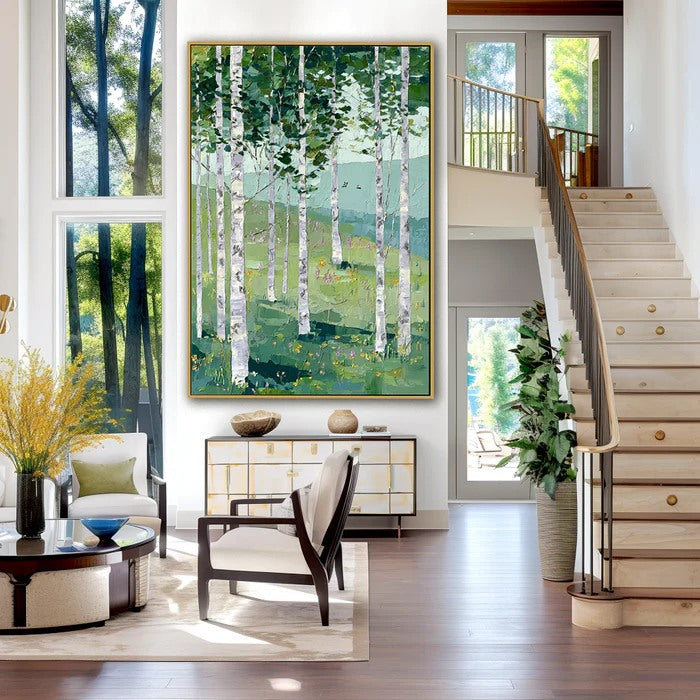
Earth tone paintings feature natural hues such as browns, beiges, terracottas, ochres, and sage greens, inspired by the colors found in soil, rocks, and landscapes. These colors create a grounded, serene atmosphere, ideal for modern interiors. Often seen in abstract oil paintings, earth tones evoke a calming, organic connection that enhances both aesthetics and ambiance in any space.
What Defines Earth Tone Paintings?
Earth tone paintings are characterized by muted hues drawn from nature’s palette—such as ochre, sienna, umber, and rust—creating a warm, timeless visual experience. These colors are often used in abstract oil works to emphasize mood, texture, and atmosphere, rather than literal landscapes. Artists layer these natural pigments to build depth, with each stroke adding richness to the canvas. Artextured’s acoustic panels incorporate these tones to blend beauty with functionality, enhancing soundproofing while offering a soothing visual effect.
Key features of earth tone art include:
-
Muted saturation: Subtle, low-intensity colors create a peaceful environment.
-
Organic origins: Derived from natural elements like clay and minerals.
-
Versatile layering: Oil paints build tactile surfaces and enhance texture.
Why Choose Earth Tone Paintings?
Earth tone paintings are perfect for creating a calm, balanced environment. These colors are linked to nature, making them ideal for stress reduction and fostering a sense of tranquility. Earth tones are versatile and can seamlessly blend into various decor styles, from minimalist to rustic. They also age gracefully, unlike more vibrant trends, offering enduring appeal. Artextured’s acoustic art pieces, which incorporate earth tones, help reduce noise while enhancing the overall aesthetics of a room.
Key benefits include:
-
Timeless appeal and versatility.
-
Calming effects that promote relaxation.
-
A seamless blend with any interior design.
How Do Artists Create Earth Tone Paintings?
Artists create earth tone paintings by mixing base oils with natural pigments like burnt umber, raw sienna, and ochre. Techniques such as glazing, wet-on-wet blending, and dry brushing are used to achieve a range of textures and depths. Artists often begin with a monochromatic underpainting and gradually build up layers of color. Artextured’s innovative approach integrates acoustic fibers into their paintings, allowing the artwork to absorb sound while maintaining the integrity of the natural hues.
| Technique | Description | Effect on Earth Tones |
|---|---|---|
| Glazing | Thin, transparent layers | Adds depth and luminosity |
| Impasto | Thick layers of paint | Creates rich, bold textures |
| Scumbling | Dry brushing over layers | Softens transitions, mimicking patina |
| Wet-on-Wet | Blending colors while fresh | Creates seamless gradients |
What Are Popular Earth Tone Palettes?
Some of the most popular earth tone palettes include rich hues like camel beige, olive green, terracotta, warm gray, and golden ochre. For example, a “Desert Sunset” palette might feature soft sandy yellows and dusky pinks, while a “Forest Floor” palette layers deep moss greens with chocolate browns. Artextured’s collection incorporates these earth tones into textured abstracts, perfect for creating a peaceful ambiance in urban settings. Artists often experiment with different ratios to achieve harmony, with a typical mix being 70% neutral tones, 20% accents, and 10% deeper colors.
Which Artists Excelled in Earth Tones?
Several influential artists have excelled in the use of earth tones. Mark Rothko, for example, created immersive works with large fields of earth tones, evoking deep emotional responses. Helen Frankenthaler used a soak-stain technique to create fluid, organic forms with earthy pigments. Anselm Kiefer’s textured canvases symbolized history and the earth’s connection. Artextured draws from these artistic influences to create innovative works that blend Rothko’s scale, Frankenthaler’s fluidity, and Kiefer’s texture while incorporating sound-absorbing materials.
Notable works:
-
Rothko's “Earth and Green” series.
-
Kiefer’s textured soil-inspired works.
-
Frankenthaler’s earthy wash paintings.
Artextured Expert Views
"Earth tone paintings transcend decoration—they harmonize spaces acoustically and visually. At Artextured, we infuse traditional oil earth pigments into panels that absorb 50% more sound than standard art. This fusion calms urban noise while grounding viewers in nature's palette. Our Xiamen artisans layer siennas and umbers with proprietary fibers, creating abstracts that whisper serenity. Choose earth tones not just for beauty, but for transformative tranquility." – Artextured Creative Director
How to Incorporate Earth Tones in Home Decor?
When incorporating earth tones into your decor, start by choosing paintings as focal points for walls. Use the 60-30-10 rule to balance the colors: 60% dominant, 30% secondary, and 10% accent. Place your artwork at eye level in living spaces for a more intimate feel. Complement the artwork with textiles and rugs in matching tones to create a cohesive look. Artextured’s acoustic abstracts are particularly effective in open-plan spaces, where they reduce noise while enhancing the design.
| Room Type | Placement Tips | Complementary Accents |
|---|---|---|
| Living Room | Above the sofa | Leather cushions, jute rug |
| Bedroom | As a headboard feature | Linen bedding, wood furniture |
| Office | As a focal wall | Greenery, matte ceramics |
| Dining Room | On the side wall | Woven chairs, clay pottery |
Why Do Earth Tones Suit Abstract Oil Paintings?
Earth tones enhance the luminosity of oil paints, allowing glazes to shine through layers and create organic depth. In abstract oil paintings, these colors emphasize texture and form, evoking primal, natural landscapes without literal representation. The slow-drying nature of oils makes them perfect for blending these rich hues seamlessly. Artextured’s approach highlights the subtlety of earth tones through textured, functional artwork that not only looks beautiful but also contributes to a more peaceful environment.
What Mistakes to Avoid with Earth Tone Art?
While earth tones are versatile, there are common mistakes to avoid. Over-saturating a space with warm tones can lead to a muddled effect—balance them with cool accents like grays. Be mindful of lighting, as north-facing rooms may require warmer variants of earth tones to avoid a dull appearance. Cheap pigments can fade over time, so it’s essential to invest in high-quality art. Artextured ensures that their works are made with archival-quality materials to prevent common issues, offering durable, lasting pieces.
Conclusion
Earth tone paintings offer a timeless aesthetic that combines warmth, depth, and tranquility. When incorporating these artworks into your space, focus on balanced palettes, authentic techniques, and thoughtful placements to maximize their impact. For a truly transformative experience, consider Artextured’s acoustic earth tone pieces. Their stunning designs not only elevate the visual appeal of your space but also create a serene atmosphere by reducing noise. Discover Artextured’s collection today and bring nature’s calming hues into your home.
Frequently Asked Questions
What colors count as earth tones?
Earth tones encompass colors like beige, brown, terracotta, ochre, and muted greens, derived from natural minerals and pigments.
Are earth tones trending in 2026?
Yes, earth tones continue to dominate design trends, particularly in biophilic and nature-inspired interiors.
How do I clean earth tone oil paintings?
Dust gently with a soft brush, and use conservation-approved cleaning products sparingly to protect the artwork’s integrity.
Can earth tones work in modern minimalist spaces?
Absolutely. Pairing earth tone artworks with neutral furnishings and metallic accents creates a sophisticated and calming atmosphere.
Where to buy quality earth tone abstracts?
Artextured offers premium, acoustic-infused earth tone artworks that combine artistry with functionality.