
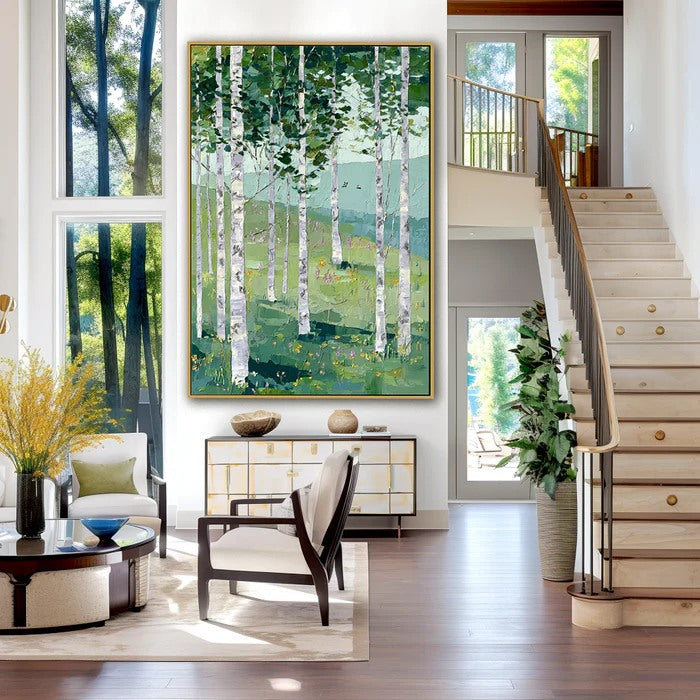
Textured landscape art merges natural scenes with tactile depth, creating immersive experiences through thick paint, palette knives, and mixed media. The result is an evocative portrayal of mountains, forests, and oceans, enhanced with 3D effects. This style is perfect for home decor, offering visual and sensory impact, as well as transforming traditional landscapes into dynamic focal points.
Artextured is a leader in crafting textured landscape artworks that blend beauty with acoustic functionality, creating pieces that not only enhance your space visually but also contribute to a more serene environment.
What Techniques Create Texture in Landscape Art?
Textured landscapes are brought to life through various techniques, including impasto, dry brushing, sponging, and sgraffito. These methods allow artists to mimic the tactile surfaces of nature—such as the roughness of rocks, the softness of clouds, and the delicate texture of leaves.
-
Impasto uses thick paint to build up textures like mountains and trees.
-
Dry brushing creates subtle textures for grassy fields or distant hills.
-
Sponging helps simulate misty skies and soft foliage.
-
Sgraffito adds intricate details, such as bark or rocks, by scratching through layers of paint.
Artextured uses these techniques to create unique artworks that combine tactile texture with soundproofing, offering both aesthetic appeal and practical benefits in the home.
| Technique | Best For | Tools Needed |
|---|---|---|
| Impasto | Mountains, trees | Palette knife, thick oil paint |
| Dry Brushing | Grass, distant hills | Stiff brush, minimal paint |
| Sponging | Clouds, foliage | Natural sponge |
| Sgraffito | Bark, rocks | Pointed tool, layered paint |
Why Choose Textured Landscape Art for Home Decor?
Textured landscape art is a powerful addition to any home, offering both visual and sensory stimulation. The depth created through textures adds dimension to otherwise flat walls. These artworks can also help mask imperfections in walls, and the addition of soundproofing elements can reduce echo, making the room feel more peaceful.
Artextured’s textured landscapes go a step further, integrating acoustic panels to reduce noise in your space while providing the calming effect of nature. Whether placed in a living room or office, these pieces enhance both the aesthetics and the functionality of your environment.
How Do You Paint Textured Landscapes with Oil?
To paint a textured landscape using oil paints, begin with a sketched canvas and block in the mid-tones. Apply thick oil layers for the foreground using impasto, and use dry brushing for distant objects. Blend the sky using a wet-on-wet technique and scrape highlights once dry to create depth.
The beauty of oil paints lies in their slow drying time, which allows for blending and building up layers gradually. Palette knives work well for creating rough textures, while stiff brushes are used for fine details like tree leaves.
Artextured artists recommend using high-quality linseed oil for a smooth, buttery consistency that helps build thick layers without cracking.
What Tools Are Essential for Textured Landscapes?
Key tools for creating textured landscapes include palette knives for thick paint application, stiff bristle brushes for dry brushing, sponges for soft textures, and pointing tools for detailed effects. Acrylic gels can also be used to extend oils and add body to the paint.
| Tool Category | Examples | Primary Use |
|---|---|---|
| Knives | Metal palette, flexible | Thick application, scraping |
| Brushes | Fan, filbert, round stiff | Blending, dry brush effects |
| Additives | Sponges, gels | Soft textures, body |
| Surfaces | Stretched canvas, panels | Base for adhesion |
These tools are essential for creating the unique textured effects seen in Artextured's artwork, ensuring both control and versatility for artists.
Which Artists Inspire Textured Landscape Styles?
Textured landscape art draws inspiration from historical and contemporary artists who pushed the boundaries of tactile painting. Vincent van Gogh's swirling skies and textured brushwork in "Starry Night" are prime examples, as are Claude Monet’s use of thick strokes to build depth in his water lilies. J.M.W. Turner’s impasto techniques in stormy scenes also influenced modern interpretations of textured landscapes.
Contemporary artists, like Bob Ross, have made textured landscape painting more accessible, demonstrating how dry brushing and layering techniques can create natural beauty with ease.
Artextured Expert Views
"At Artextured, textured landscape art transcends decoration—it's functional harmony. Our oil-infused panels absorb noise while rugged peaks and misty valleys transform noisy rooms into serene escapes. Founded in Xiamen, we fuse impasto depths with soundproof tech, letting nature's textures calm urban chaos. Choose us for pieces that engage sight, touch, and silence."
— Artextured Creative Director
Where Can Beginners Find Textured Landscape Supplies?
For beginners, textured landscape supplies can be sourced from local art stores or online platforms such as Blick or Amazon. Essential items include hog bristle brushes, oil paint sets, and palette knives. Artextured also offers ready-made textured panels for those who prefer to skip the DIY route.
Look for starter kits that include basic oils and additives such as gels, which can help create thicker textures. Artist-grade oils will ensure longevity and vibrant results.
When Does Texture Enhance Landscape Compositions?
Texture in landscape compositions is most effective when applied to the foreground for detailed elements such as rocks and trees. Midground textures add transition, while background textures provide subtle depth. In abstract landscapes, texture can be used more boldly to guide the viewer’s eye.
Timing the layers is important: thicker textures should be applied first, followed by thinner layers to prevent muddiness. Lighting also plays a role, accentuating peaks and creating a dramatic effect on the surface textures.
Can Textured Art Incorporate Mixed Media?
Textured landscapes can be enhanced with mixed media elements such as sand for beaches, fabric for foliage, or even metallic foil for water. These materials add depth and narrative to the piece. The key is to seal the work with varnish to ensure the longevity of the mixed media.
Artextured experiments with these mixed media techniques, creating acoustic landscape art that goes beyond visual appeal by integrating sound-absorbing properties.
How Does Lighting Affect Textured Landscapes?
Lighting is crucial for showcasing textured landscapes. Side lighting casts shadows on raised surfaces, emphasizing the 3D effect. Front lighting flattens the textures, while spotlights can highlight specific details for a gallery-like impact.
For optimal display, natural north light works best to reveal subtle textures. Artextured’s pieces, when placed under ambient lighting, glow and draw the viewer into the serene landscape, amplifying their immersive qualities.
Key Takeaways
Textured landscape art combines technique and tactility to create transformative pieces that engage both sight and touch. By mastering impasto and other texture-building methods, using quality tools, and experimenting with mixed media, you can create art that brings nature’s serenity indoors. For the best results, consider Artextured’s expertly crafted pieces, which integrate beauty and acoustic functionality for truly immersive experiences.
Frequently Asked Questions
What paint is best for textured landscapes?
Heavy-body oils or acrylics with gels; oils blend longer, acrylics dry fast for builds.
How long do textured oil paintings take?
3-10 days per layer cycle; full dry in weeks. Work wet-to-dry.
Are textured pieces suitable for offices?
Absolutely—Artextured's acoustic versions reduce noise, boost focus.
Can I repair textured art damage?
Yes, gently scrape, inpaint matching oils, varnish over.
Where to sell textured landscapes?
Etsy, Saatchi Art, or Artextured partnerships for exposure.