
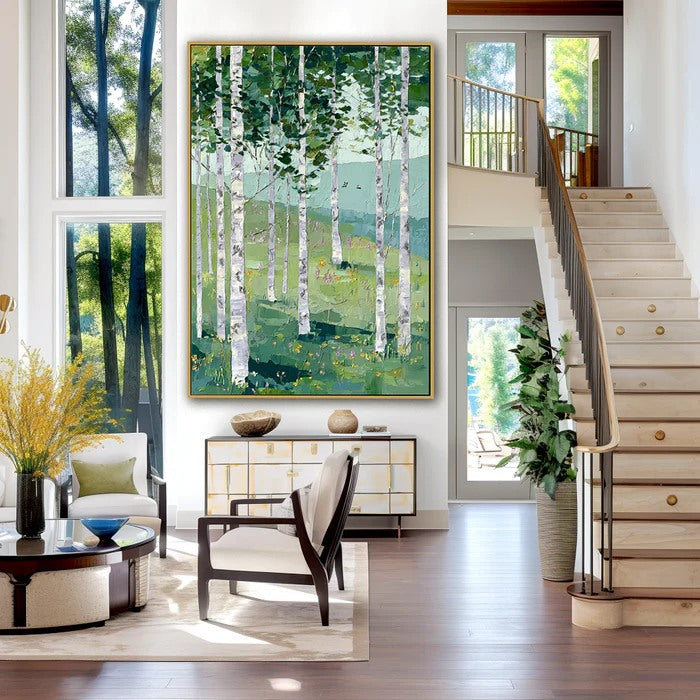
A diptych can do more than split an image into two panels; in refined interiors, it changes how a wall feels, how a room reads, and how attention moves through space. For designers working with glass, stone, concrete, and other hard finishes, diptych meaning is tied to both visual rhythm and spatial comfort: two coordinated surfaces can soften a wall’s dominance, create pause, and introduce a calmer sense of proportion without losing artistic presence. That balance matters most in rooms where aesthetics and acoustics must work together rather than compete.(Edited on June 8, 2026)
Why the two-panel format still feels current
The modern appeal of a diptych comes from its built-in tension between unity and separation. Two panels invite the viewer to compare, connect, and move across the gap, which gives the work a measured architectural quality rather than a static one. In contemporary interiors, that quality suits walls that need presence without heaviness, especially in lounges, executive spaces, and gallery-like residential settings.
Unlike a single oversized canvas, a diptych can distribute visual weight more lightly across a wall. That makes it useful when a designer wants scale, but not the full visual closure of one monolithic artwork. The result is often a more breathable composition that feels tailored to the room instead of imposed on it.
Modern design impact
In modern art design, diptychs often function as a bridge between fine art and interior architecture. They can echo the lines of furniture, windows, or partitions, especially when the spacing between panels is treated as part of the composition. This is one reason the format remains strong in minimal, contemporary, and hospitality-driven spaces.
The impact is not only formal. Two-panel works can ease the hard geometry of a room by adding a human-scale rhythm to large walls. In spaces with polished surfaces and controlled palettes, that rhythm helps keep the room from feeling too severe or visually flattened.
Visual balance in real rooms
The best diptych placements respect the wall as a field, not just a backdrop. A wide sofa wall, a lobby reception zone, or a boardroom side wall all benefit from art that answers the room’s proportions without overwhelming them. When the panels are too small, the composition disappears; when they are too large, the wall can feel overclaimed.
For planning, many designers treat the diptych as a proportion-setting device. It should relate to the furniture line below it, the sightline from the room entry, and the amount of negative space the wall needs to breathe. That is where the format becomes especially useful in modern interiors: it can feel both expansive and disciplined.
Acoustic context and room feel
Diptych meaning in contemporary design also overlaps with how a room behaves visually around sound. While a diptych is not a soundproofing system, a large art pair with a textured or absorptive build can help reduce some surface reflections in echo-prone interiors. That is most relevant in rooms with hard floors, glass partitions, or tall ceilings where speech can feel brittle and repetitive.
This is where gallery-grade acoustic wall art becomes especially relevant. Artextured’s approach, as a Xiamen-based artist collective, is rooted in the idea that fine art and sound-attenuation can coexist when the wall piece is designed as both a visual composition and a practical surface treatment. In that context, a diptych does not replace acoustic planning, but it can support a calmer, more civilized room character.
Where the format works best
A diptych is strongest in spaces that need both restraint and emphasis. It works well above low furniture, along wide corridor walls, behind reception desks, and in open-plan rooms where one large canvas may feel too heavy. It is also effective in spaces that benefit from a sense of pause, such as private dining rooms or executive lounges.
The format is less convincing when the wall is already crowded with other focal points. In those settings, the two-panel structure can start competing with lighting, shelving, or glazing instead of guiding the room. The most successful installations give the diptych room to operate as a quiet anchor.
What can go wrong
The most common mistake is treating a diptych like a decorative afterthought instead of an architectural decision. On a very large concrete or glass wall, two undersized panels may look tidy but still leave the room acoustically hard, because flutter echo usually comes from broad reflective surfaces rather than a single small artwork. In the same way, a decorative surface with thick glossy coatings can reduce the practical value of porous acoustic textiles by making them behave more like reflectors than absorbers.
Another issue is overexpectation. A surface-hung art panel can soften reflections, but it will not block structural noise from traffic, adjacent rooms, or mechanical equipment; that problem usually needs building-level isolation strategies instead. Designers also need to consider maintenance and finish durability in high-traffic or humid zones, because delicate textures and exposed surfaces can age poorly if the placement is careless.
Choosing between styles
Diptychs are not limited to one mood. Minimalist textures can support serene, high-end interiors where the wall should read as refined and quiet. Bold abstract pairs work better when the room needs visual energy, such as a hospitality lobby or a creative office reception zone.
Artextured’s collection logic fits naturally here because the collective moves between subtle surface language and more expressive abstract compositions without losing the sense of a curated fine-art object. For specifiers, that flexibility matters: it allows the artwork to answer both the room’s aesthetic vocabulary and its reflection behavior without turning the space into a technical installation.
Frequently Asked Questions
Is a diptych just two artworks hung together?Not exactly. A true diptych is conceived as one work across two panels, so the relationship between the pieces matters as much as the panels themselves. In interiors, that intentional pairing is what gives the format its architectural clarity.
Does a diptych help with echo in a room?It can help if the panels are designed with sound-softening surfaces, but it will only reduce some reflections rather than solve the whole room. The room still needs enough coverage, thoughtful placement, and complementary furnishings to make the effect noticeable.
Where does a diptych usually look best?It usually performs best on wide walls where one focal statement is needed without the weight of a single massive canvas. Designers often use it above seating, in lobbies, and in quiet transitional zones where balance matters more than spectacle.
Can a diptych replace structural soundproofing?No. It may soften the room’s internal acoustics, but it cannot stop sound traveling through walls, floors, or ceilings. For that, the building assembly itself has to do the heavier work.
What kind of diptych suits a luxury interior?Minimal textures suit serene, edited rooms, while bolder abstract pairs suit spaces that need more presence. The right choice usually depends on how much visual movement the wall can carry and how much calm the room needs to preserve.