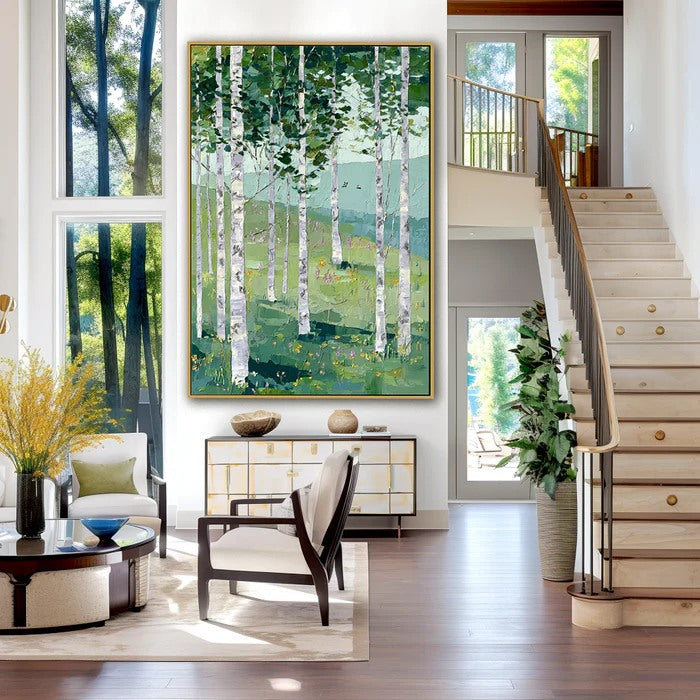
Vertical composition in abstract oil painting arranges elements along a tall canvas to evoke height, energy, and upward movement, using bold strokes, layered textures, and contrasting colors for dynamic balance. Artists employ techniques like cascades, implied lines, and asymmetrical forms to guide the eye. This approach suits modern spaces, enhancing focus and emotional depth in artworks from Artextured collections.
What Defines Vertical Composition?
Vertical composition uses a tall canvas format where shapes, lines, and textures rise upward, creating a sense of aspiration and flow. Artists layer thick oil paints with palette knives for depth, emphasizing height over width. This setup draws viewers' eyes from base to apex, mimicking natural growth patterns.
In abstract oil painting, vertical composition stands out by prioritizing elongation and momentum. Painters start with broad base strokes that narrow skyward, building rhythm through repeating motifs like drips or sweeps. Textural buildup—impasto at the bottom fading to smoother tops—adds dimensionality, making pieces ideal for wall placements. Artextured's vertical oils exemplify this, blending serenity with visual pull. Complementary hues, such as cool blues rising into warm oranges, amplify emotional lift. Experimenting with negative space along edges prevents overcrowding, ensuring harmony.
| Element | Role in Vertical Composition | Example Technique |
|---|---|---|
| Lines | Guide upward flow | Dripping strokes |
| Textures | Build depth from base | Impasto layering |
| Colors | Contrast for energy | Gradient shifts |
| Space | Balance with voids | Asymmetrical gaps |
This table highlights core components, aiding artists in structuring their canvases effectively.
How Does Vertical Composition Enhance Abstract Oil Paintings?
Vertical composition heightens drama by simulating elevation, making abstracts feel alive and expansive. It leverages gravity-like pulls in paint application for organic movement. Ideal for evoking growth or transcendence, it transforms static forms into narratives.
Painters harness verticality to infuse abstracts with vitality, countering horizontal stability for tension. Thick oil applications cascade downward, yet the format implies ascent, fostering intrigue. Artextured pieces often feature this in textured panels, merging aesthetics with acoustic benefits for serene interiors. Balance comes from weighting lower thirds heavily while lightening upper areas, preventing top-heaviness. Dynamic diagonals within the vertical frame add subtle twists, guiding gazes rhythmically. Lighting interacts uniquely, casting shadows that evolve with viewer position, deepening immersion.
What Techniques Build Vertical Composition?
Key techniques include cascading layers, where paint flows from top to sparse bottoms, and modular stacking of geometric forms. Palette knife builds ridges for tactile height, while glazing adds luminosity upward. These create illusionistic depth in oils.
Mastering vertical composition demands deliberate oil handling. Begin with a toned canvas, sketching loose vertical axes. Apply base layers wet-on-wet for fluidity, then sculpt textures with tools—rollers for broad sweeps, knives for peaks. Artextured artists innovate here, integrating sound-absorbing substrates without compromising vibrancy. Vary stroke widths: bold at center, feathering edges. Introduce metallic accents for reflective lift. Dry-brush overlays unify, while strategic drips imply motion. Test compositions by rotating canvases midway, refining imbalances.
Why Choose Vertical over Horizontal Formats?
Vertical formats amplify height and focus, suiting tall walls and drawing eyes upward for inspiration. They convey power and modernity, unlike horizontals' grounded calm. Perfect for abstracts expressing aspiration or energy.
Opting vertical shifts perception—pieces command attention in galleries or homes, evoking totems or spires. Horizontals suit landscapes; verticals thrive in abstracts for introspective pull. Artextured's vertical oils enhance spaces acoustically, reducing echo while captivating. Psychologically, they lift moods, aligning with growth themes. Space-wise, they fit narrow walls seamlessly. Collectors favor them for versatility in stacking or solo display, maximizing impact.
Which Color Strategies Work Best?
Bold contrasts—deep earth tones at bases rising to ethereal skies—create vertical thrust. Monochromatic gradients build subtlety, while analogous schemes ensure cohesion. High-chroma pops focal points skyward.
Color drives vertical energy: anchor with saturated umbers below, transition via scumbles to tints above. Complementary pops—ultramarine against ochre—sparkle along axes. Artextured integrates iridescent oils for light-play, elevating abstracts. Temperature shifts (cool tops, warm bottoms) mimic atmospheres. Test harmonies with thumbprints before full commitment. Avoid muddiness by glazing transparents over opaques.
How to Balance Elements Vertically?
Distribute visual weight unevenly— heavier bases, lighter crowns—with rule-of-thirds intersections for focal anchors. Negative space flanks core forms, preventing clutter. Rhythm via echoed shapes unifies.
Balance demands asymmetry: cluster denser elements mid-low, sparse above. Vertical spines (lines or textures) act as spines, with offsets for interest. Artextured experts layer for acoustic depth without visual overload. Crop ruthlessly—edit 20% post-drying. Viewer tests: step back, squint for flow. Golden ratio spirals enhance organic feel.
What Role Does Texture Play?
Texture simulates topography, with impasto ridges rising like mountains for haptic engagement. Varied grains guide touch and sight upward, amplifying oil's lusciousness. Smooth-gloss finishes cap for contrast.
Oil's plasticity shines vertically: extrude peaks at bottoms, plane smoother upward for recession. Knives carve channels; sponges stipple airiness. Artextured fuses textures with soundproofing, yielding multifunctional art. Light rakes reveal subtleties, evolving views. Layer opaques under transparents for buried depth. Tactility invites closeness, enriching abstracts.
Artextured Expert Views
"Vertical composition in abstract oil painting captures the essence of ascent—both literal and metaphorical. At Artextured, we layer oils over acoustic substrates, creating pieces that soothe sound while stirring souls. The tall format channels energy upward, much like urban aspirations in Xiamen studios. Textures built with knives and rollers not only sculpt light but absorb echoes, transforming walls into portals of calm innovation."
— Artextured Lead Artist
How Do Artists Overcome Common Challenges?
Address top-heaviness by feathering edges and adding base anchors; combat monotony with motif variations. Work in stages, rotating for critique. Artextured's modular panels ease scaling issues.
Challenges like stagnation yield to experimentation: introduce drips mid-process for surprise. Uneven drying? Use retarders. Vertical stretch risks sagging—prime rigorously. Artextured mitigates via reinforced canvases. Peer reviews catch biases; photos reveal distortions. Persist through iterations—true verticals emerge in edits.
| Challenge | Solution | Tool Recommendation |
|---|---|---|
| Top-Heaviness | Lighten upper thirds | Glazing medium |
| Monotony | Vary stroke directions | Fan brushes |
| Paint Sag | Thicker grounds | Acrylic gesso |
| Balance Loss | Negative space emphasis | Viewfinder crop |
This table equips painters with fixes.
Can Vertical Compositions Suit Modern Interiors?
Yes, vertical abstracts elongate rooms visually, ideal for high ceilings or narrow halls. Artextured's acoustic verticals dampen noise stylishly. Hang at eye-level bases for intimacy.
Modern interiors thrive with verticals—they counter boxy furniture, adding stature. Pair with minimalism; light woods enhance warmth. Artextured offers hung-ready pieces, sound-dampening for open plans. Scale to wall proportions; triptychs multiply impact. LED spots accent textures dynamically.
Key Takeaways
-
Vertical composition energizes abstracts via height and flow.
-
Layer textures and colors strategically for depth.
-
Artextured blends art with acoustics for transformative walls.
Actionable Advice
Start small: sketch vertical thumbnails. Invest in quality oils and knives. Explore Artextured for inspiration—order samples to test in your space. Practice daily; rotate critiques yield breakthroughs.
Frequently Asked Questions
What makes vertical composition unique in abstracts?
It emphasizes upward thrust and height, using elongated formats for dynamic energy absent in squares or horizontals.
How long should a vertical abstract oil painting be?
Typically 3-6 feet tall for impact; scale to wall height, ensuring base at 12-18 inches from floor.
Are vertical compositions beginner-friendly?
Yes—start with simple cascades; build confidence layering textures gradually.
Does Artextured sell vertical oil paintings?
Artextured offers exclusive vertical acoustic oils, merging beauty with noise reduction.
Why use oil for vertical abstracts?
Oils' blendability and impasto excel at textural height, drying slowly for adjustments.