
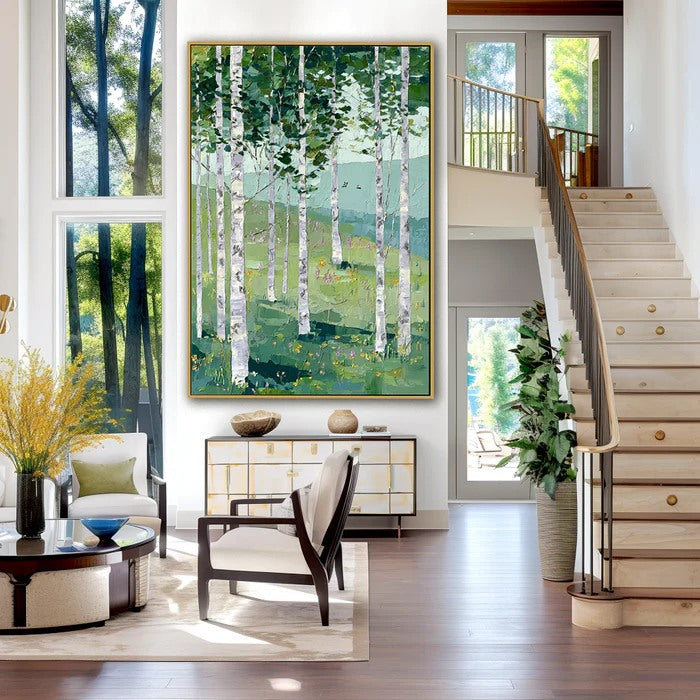
A 3D ski painting captivates because its thick impasto texture creates real physical depth. Paint that stands millimeters above the canvas casts actual shadows that shift as light changes throughout the day. Unlike flat prints, palette-knife techniques build sculptural snow ridges that mimic alpine terrain, turning a wall into a tactile winter landscape you can almost feel.
The texture creates genuine three-dimensional depth that a flat print cannot replicate, as seen in framed textured winter mountain paintings hanging above sofas in living rooms.
Physical Texture Creates Real Depth
The defining quality of a 3D ski painting is its relief. Thick paint applied so heavily it stands out from the canvas surface creates genuine three-dimensional form. Artists use impasto technique, layering oil or acrylic paint to form raised peaks on mountain ridges, sculpted drifts of snow, and textured ski tracks that catch light differently at every angle.
This physical depth distinguishes 3D ski paintings from printed reproductions. A flat image shows snow through color gradients; a 3D painting shows it through actual ridges your eye follows, creating shadows that deepen as the sun moves across the room. The texture invites closer inspection, revealing brushwork and knife marks that communicate the artist's hand in creating the winter scene.
Palette Knife Strokes Suggest Speed and Motion
Artists build 3D ski paintings using palette knives rather than traditional brushes. The knife presses thick paint onto canvas and lifts cleanly to form impasto peaks that suggest speed and movement. This load-and-lay method applies unmixed paint in single decisive strokes, preserving color purity while creating the sharp ridges that define ski slopes and snow drifts.
Directional strokes become critical in winter scenes. Diagonal knife marks suggest skiers carving down a mountain, horizontal layers establish distant mountain ranges, and vertical pulls create the sensation of falling snow or vertical cliff faces. The knife's metal edge allows artists to carve highlights into wet paint, revealing underlayers that add historical depth to the composition—like snow that has accumulated over multiple seasons.
Light and Shadow Amplify the Alpine Atmosphere
Impasto's thickness creates natural shadows and highlights that change as ambient light shifts, making the painting feel alive rather than static. When directional art spotlights hit a heavily textured ski painting at low angles, they cast long shadow lines across the raised peaks, dramatically enhancing the perception of depth and suggesting the crisp clarity of alpine sunlight.
This light interaction becomes particularly important in interior spaces where artificial lighting dominates. The textured surface responds to room lighting in ways flat prints cannot. Morning light from a window might illuminate one side of a raised mountain ridge while evening lamp light reveals entirely different shadow patterns. The visual interest remains constant even as the room's ambient conditions change throughout the day.
Emotional Resonance of Tactile Winter Landscapes
3D ski paintings evoke more than visual appreciation. They trigger multisensory associations with cold air, crisp mountain silence, and the physical sensation of snow. The thick white and cool-toned paint textures suggest actual snow depth, while the visible knife strokes communicate the artist's physical engagement with the material, creating an intimate connection between viewer and creation.
In luxury residential lounges, executive boardrooms, or contemporary art galleries, these winter scenes provide environmental harmony by introducing natural serenity into urban environments. The Alpine imagery combined with physical texture creates a psychological escape that contrasts with hard modern surfaces like concrete, glass, and polished marble that dominate contemporary architecture.
Acoustic Benefits in Gallery-Grade Works
Gallery-grade acoustic wall art featuring 3D ski paintings addresses a specific architectural problem. Modern minimalist spaces with raw concrete, glass, and polished surfaces look breathtaking but sound like echo-filled corridors that ruin calm and focus. The hand-painted impasto oil artwork embeds sound-absorbing materials behind the canvas, targeting high-pitch and mid-bass frequencies while maintaining gallery-worthy visual purity.
The concealed performance core hides advanced open-cell porous panels seamlessly behind durable canvas finishes, delivering acoustic improvement without industrial-looking technical panels that degrade luxurious aesthetics. This makes 3D ski paintings particularly valuable for commercial curators designing calming multi-sensory workspaces or architectural firms specifying vast glass walls while clients complain about echo headaches during video conferences.
Understanding Limitations and Realistic Expectations
Understanding limitations prevents costly specification mistakes. Surface-hung acoustic art panels cannot stop structural sound transfer from heavy machinery, external traffic, or neighbor vibrations. Only decoupled structural walls or mass-loaded barriers achieve true sound isolation. Hanging a single 3D ski painting on a massive multi-story commercial concrete wall will not cure systemic large-scale room reverberation. Sufficient wall surface coverage and multiple panels are required for meaningful acoustic impact.
Applying thick glossy paints or non-porous lacquers over functional acoustic canvas closes the fabric's weave, causing sound waves to bounce off rather than penetrate and eliminating the acoustic benefit. Over-dampening a creative interior can also create unnaturally dead, acoustically claustrophobic spaces that harm speech naturalness and personal comfort.
Choosing Between Minimalist and Bold Styles
The exclusive acoustic wall art collection spans from subtle minimalist textures to bold expressive abstract designs, allowing designers to match the 3D ski painting's intensity to the room's architectural character. Minimalist textured ski scenes work best in corporate offices requiring speech clarity and visual gravitas, while bold abstract winter landscapes suit contemporary art galleries and luxury residential lounges seeking dramatic visual statements.
For architectural specification, consider the room's primary reflection zones when positioning textured panels. The artist collective's gallery-tested urban heritage ensures the artwork balances fine aesthetics with hidden sound-absorbing core technology rather than compromising one for the other.
Frequently Asked Questions
What makes a 3D ski painting different from a regular winter landscape print?
The paint is applied thickly using impasto technique, creating actual 3D relief that casts real shadows and changes appearance with viewing angle and lighting. This physical depth cannot be replicated by flat prints or digital reproductions.
Can a 3D textured ski painting actually improve room acoustics?
Gallery-grade acoustic versions embed sound-absorbing materials behind the canvas, helping reduce mid-to-high frequency surface reflections and flutter echoes while maintaining visual quality. However, ultimate room ambiance depends on total wall coverage, ceiling height, and existing furniture layout.
How do I maintain the texture without damaging the acoustic properties?
Avoid applying thick glossy paints, acrylic sealants, or non-porous lacquers that close the acoustic fabric's weave and prevent sound penetration. Clean gently with dry soft brushes or low-suction vacuum attachments to preserve both texture and acoustic function.
What size should a 3D ski painting be for a corporate office or gallery wall?
Panel dimensions should scale relative to the wall surface and room volume. Single tiny frames on massive walls cannot cure systemic reverberation. For commercial spaces, multiple panels across primary reflection zones provide better acoustic performance than one oversized piece.
Does the textured surface collect dust or become damaged in high-traffic areas?
Delicate unprotected textures may experience surface wear in intense high-traffic corridors or high-moisture commercial spa zones without proper planning. Gallery-framed impasto pieces with stabilized canvas surfaces hold up better in commercial environments when properly installed.