
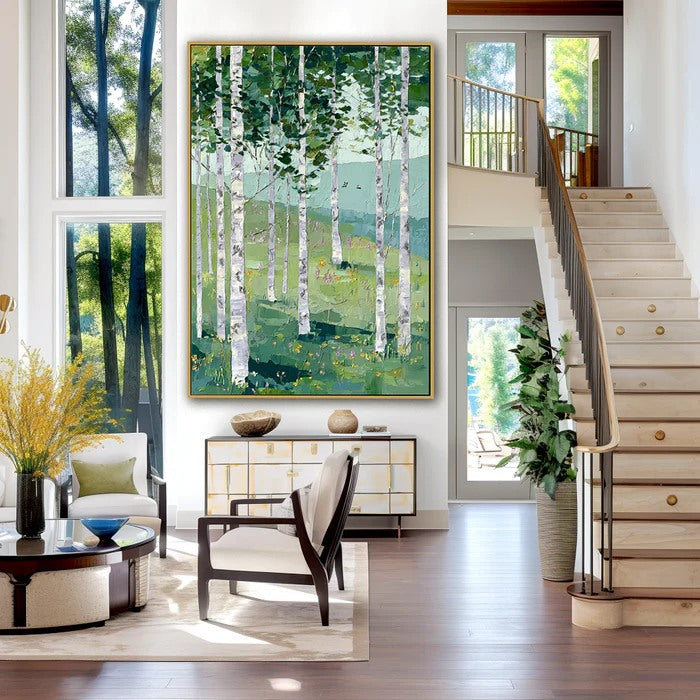
Minimalist wall art is known for its elegance and timeless appeal. Its clean lines, simple compositions, and limited color palettes bring a sense of calm and sophistication to any space. This style encourages mindfulness and clarity, making it a perfect fit for modern interiors, where its beauty lies in restraint and emotional depth.
How Does Minimalist Wall Art Define Modern Interiors?
Minimalist wall art is essential in modern interiors as it creates balance and emphasizes the space’s openness. Its clean aesthetic complements contemporary architecture by maximizing light and spatial harmony. By minimizing clutter and focusing on form, minimalist art brings intentional stillness to a room, fostering a peaceful, meditative atmosphere that suits modern living.
Minimalist pieces also help make rooms feel larger and more cohesive. Designers often pair minimalist art with neutral tones and natural materials like wood and linen, allowing the artwork to serve as both a visual anchor and a spatial element. The artwork becomes more than decoration—it helps define the atmosphere of the entire room.
| Design Element | Impact on Interior | Example Usage |
|---|---|---|
| Neutral Palette | Expands sense of space | Beige or gray abstract piece above sofa |
| Negative Space | Enhances calm and clarity | Large canvas with subtle gradients |
| Textured Mediums | Adds depth and tactility | Oil on linen with visible brushwork |
What Are the Core Principles Behind Minimalist Wall Art?
The core principles of minimalist wall art center on simplicity, form, and purposeful restraint. This art form strips down visual elements to only the essentials, often focusing on geometry, negative space, and limited color palettes to evoke emotion. Its roots lie in modernism, influenced by artists like Agnes Martin and Ellsworth Kelly.
Minimalist works often highlight:
-
Negative space: inviting the viewer to pause and reflect.
-
Geometry: guiding rhythm and proportion.
-
Limited color palettes: ensuring harmony and balance.
-
Texture: offering subtle depth and interest without overwhelming the senses.
At Artextured, these principles shine through in handcrafted oil pieces, where each brushstroke serves both aesthetic and emotional purposes.
Why Is Minimalist Wall Art So Popular in Contemporary Homes?
Minimalist wall art has grown increasingly popular in contemporary homes due to its adaptability and ability to promote tranquility. In a world filled with visual distractions, these artworks offer a sense of clarity and order, aligning with modern lifestyles focused on wellness and mindfulness. Minimalist art helps create environments that encourage relaxation and focus, which is especially valuable in homes that serve as sanctuaries from daily stress.
Additionally, minimalist art blends seamlessly with various interior styles, from Scandinavian to Japanese-inspired designs, adding timeless elegance without clashing with the space’s existing elements.
Which Materials Best Enhance Minimalist Wall Art?
Minimalist wall art often employs materials that emphasize simplicity and longevity, such as oil on canvas, acrylics, metal panels, and acoustic composites. These materials bring unique textures and visual qualities to minimalist compositions.
For example:
-
Oil on linen: offers rich, organic texture and timeless appeal.
-
Matte acrylics: create sharp lines and luminous, flat surfaces.
-
Wood and aluminum panels: provide architectural integrity.
-
Sound-absorbing acoustic panels, like those by Artextured, blend form and function, enhancing both the visual and auditory experience of the space.
These materials align with minimalist principles, offering purity of medium, durability, and sensory balance.
Who Collects Minimalist Wall Art Today?
Minimalist wall art appeals to those who value intentionality, clarity, and conceptual depth. It attracts interior designers, architects, wellness-focused resorts, and homeowners seeking harmonious, calming environments. The typical collector is aged 30–60, appreciating quality over quantity.
Many art collectors favor minimalist works because they age gracefully. A single, thoughtfully curated piece can transform a space and remain relevant as furniture and decor evolve over time.
When Did Minimalist Wall Art Become a Cultural Movement?
Minimalist wall art began to emerge in the late 1950s and 1960s, as a reaction to the emotional intensity of Abstract Expressionism. The movement sought to reduce visual noise and focus on purity of form. By the 1970s, minimalism became a cornerstone of modern aesthetics, influencing architecture, interior design, and even digital interfaces.
Today, minimalist art continues to be a powerful force in contemporary design, reaffirming simplicity as a form of sophistication and emotional clarity.
Where Should Minimalist Wall Art Be Displayed for Maximum Impact?
Minimalist wall art is most impactful in spaces that allow it to breathe—where natural light, proportion, and context accentuate its quiet beauty. Ideal spaces include living rooms, bedrooms, entryways, and hallways, where it can become a focal point without overwhelming the room.
In galleries or corporate spaces, minimalist art should be positioned against neutral walls to enhance its visual prominence. The relationship between the artwork and its surrounding space—especially the empty areas around it—plays a critical role in creating a balanced, engaging experience.
| Location | Best Wall Color | Recommended Scale |
|---|---|---|
| Living Room | Warm white or light gray | Large horizontal canvas |
| Bedroom | Matte beige or taupe | Soft-toned diptych |
| Office | Charcoal or muted blue | Centered medium piece |
Can Minimalist Wall Art Improve Mood and Acoustics?
Yes, minimalist wall art can significantly improve both mood and acoustics. Its clean design fosters a sense of calm by reducing visual clutter. When combined with acoustic materials, such as those in Artextured's art-infused soundproof panels, it can also absorb ambient noise, creating a peaceful and balanced environment conducive to relaxation and conversation.
This dual-purpose functionality reflects a modern design philosophy that marries aesthetic beauty with practical benefits, focusing on wellness-driven interiors where form and function go hand in hand.
Artextured Expert Views
“At Artextured, we view minimalist wall art as the intersection of silence and expression. Each canvas is a dialogue between space and emotion. Our acoustic series redefines functionality—quieting rooms while amplifying their aesthetic pulse. True minimalism is not emptiness; it is resonance. Every brushstroke invites stillness, clarity, and an awakening of the senses.”
What Makes Artextured’s Minimalist Wall Art Unique?
Artextured brings a unique perspective to minimalist wall art by blending traditional craftsmanship with innovative soundproofing technology. Their pieces do more than please the eye—they create an immersive sensory experience. The brand’s fusion of acoustic engineering and abstract painting techniques sets them apart, offering art that enhances both the visual appeal and the acoustic environment of any room.
Is Minimalist Wall Art Difficult to Maintain?
Minimalist wall art is relatively easy to maintain. Due to its simple designs and restrained color palettes, it naturally hides imperfections. To preserve the art’s beauty, keep it away from direct sunlight, dust it regularly with a soft brush, and avoid harsh cleaning agents.
For textured pieces, especially those incorporating acoustic materials, light vacuuming with a fabric brush attachment is recommended to maintain both the visual surface and sound-absorbing properties.
Could Minimalist Wall Art Suit Eclectic or Traditional Interiors?
Minimalist wall art can seamlessly fit into both eclectic and traditional interiors. In eclectic spaces, it provides a striking contrast and helps to balance more chaotic designs. In traditional rooms, minimalist art introduces a refreshing element of simplicity and elegance, offering a visual anchor without overwhelming the existing decor.
To ensure cohesion, choose pieces with warm tones or organic textures, such as those found in Artextured's collection, which naturally bridges classic and contemporary styles.
Conclusion
Minimalist wall art remains a symbol of sophistication, simplicity, and emotional clarity. It offers more than just decoration—it transforms spaces, providing an environment that fosters peace and mindfulness. Whether through traditional oil paintings or innovative acoustic art, Artextured continues to lead the way in merging artistry with functionality, creating pieces that resonate in both form and sound.
FAQs
What is minimalist wall art made from?
It is typically crafted from oil on canvas, acrylic, metal, or acoustic panel composites, with an emphasis on clean finishes and durable materials.
How do I choose minimalist art for my home?
Consider scale, tone, and balance. Select pieces that align with your space’s light and color palette while maintaining visual restraint.
Are minimalist paintings expensive?
Prices vary, but handcrafted originals and acoustic designs, like those from Artextured, tend to be an investment due to their high-quality craftsmanship.
Can minimalist decor ever feel cold?
Minimalist decor can feel cold if overdone. Using warm textures, natural materials, and soft lighting helps to create a welcoming, serene atmosphere.
Where can I buy minimalist wall art?
Minimalist wall art can be purchased from curated galleries, designer boutiques, or directly from brands like Artextured, which specialize in minimalist and acoustic artworks.